Beyond Ads: What Creators Ask Us Most About Running a Successful Kickstarter
Most Kickstarter projects deliver successfully, but the ones that struggle often fall victim to the same avoidable mistakes.


Over the years, we’ve worked with thousands of Kickstarter creators across categories ranging from Tech and Design to Games and Publishing. For this piece, we also reviewed questions and feedback directly from creators we've worked with to identify the topics they are most curious about and frequently ask us about.
Many creators know Jellop as “the ads company.” But the truth is that successful crowdfunding campaigns are rarely just about ads. Reward structure, pricing, shipping, positioning, launch momentum, and understanding Kickstarter psychology all matter just as much.
Here are some of the most common questions creators ask us, along with the advice we tend to give.

“How should I price my rewards?”
Reward pricing is one of the most underestimated parts of crowdfunding.
Many creators approach Kickstarter pricing the same way they do in traditional ecommerce. But Kickstarter backers behave differently from regular online shoppers. They’re typically early adopters who value exclusivity, innovation, and being among the first, which means they are often less price sensitive than creators initially assume.
One of the most common mistakes we see is underpricing.
A good rule of thumb is to price your rewards around 3-5x your incremental production cost. That margin is important because crowdfunding comes with acquisition costs, platform fees, fulfillment expenses, and operational overhead. If your pricing is too low, it becomes extremely difficult to scale paid promotion profitably later on.
There are also a few structural decisions that can meaningfully impact campaign performance:

Keep reward tiers simple
Too many reward options can create decision fatigue. We recommend keeping the structure understandable and allowing customization through add-ons instead.
Use add-ons strategically
Add-ons are one of the most effective ways to increase average order value without increasing acquisition costs.
Accessories, extra units, consumables, or products from previous campaigns work very well here. We’ve found that add-ons tend to convert best when priced around 20–25% of the main product price.
Think carefully about shipping
Shipping can dramatically impact conversion rates.
Kickstarter traffic is highly international, so limiting shipping regions can reduce both organic conversions and advertising performance. Whenever possible, we recommend offering worldwide shipping through a reliable fulfillment partner.
As a general guideline:
- For U.S. backers, free shipping tends to perform best for smaller products.
- For larger products, try to keep shipping under ~10% of the product price.
- International shipping ideally stays under ~20% of the product price.
Don’t ignore psychological pricing
It sounds simple, but pricing endings matter. Reward tiers ending in “9” ($49, $99, $149) consistently outperform rounded pricing.
And finally: don’t be afraid to price higher if the value supports it. Kickstarter backers are often more focused on perceived innovation and uniqueness than bargain hunting.
“How do I calculate a profitable ROAS?”
This is probably the single most important financial question creators should understand before launching paid ads.
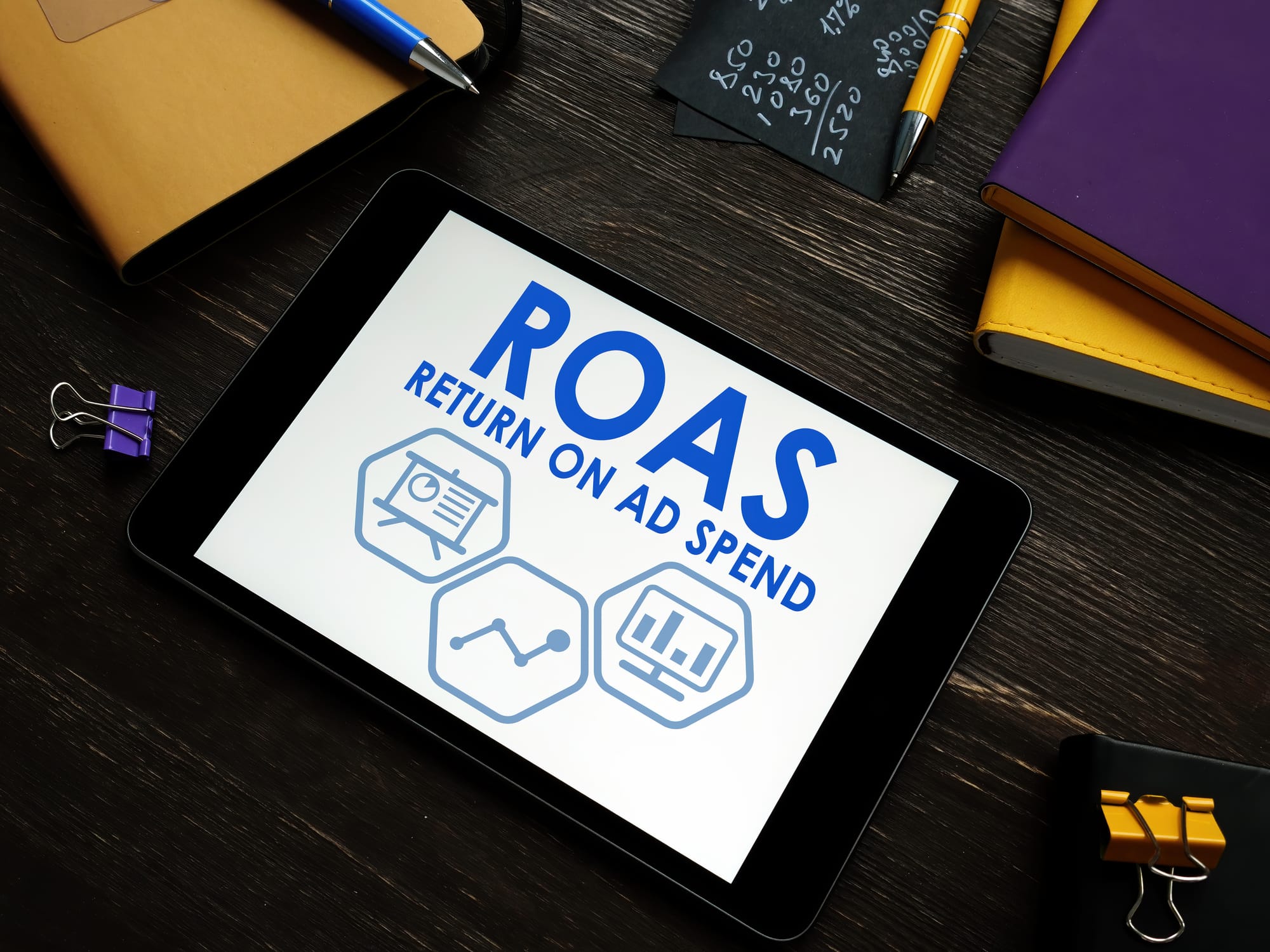
ROAS (Return on Ad Spend) is simply revenue generated from ads divided by the ad spend:
ROAS=Revenue/Ad Spend
But the more important concept is your minimum acceptable ROAS - the point at which paid acquisition still makes economic sense for your campaign.
For each ad-generated pledge, creators typically need to account for several layers of costs. Depending on the project, roughly 20–33% goes toward cost of goods sold (COGS), roughly 15% toward ad management, and another ~10% toward platform, payment processing, and pledge management fees. What remains is effectively the portion available for advertising spend.
For example, if your COGS represent roughly 33% of the selling price, the break-even ROAS formula looks like this:
ROAS=1/(75%-COGS)
In practice, that usually translates to a minimum ROAS target somewhere around 2-2.5x once a safety margin is added.
Please note: Your minimum ROAS is not the average ROAS you expect throughout the campaign. It’s the threshold that helps determine when ads should continue scaling and when budgets should begin pulling back. Early in a campaign, returns are often significantly higher, but as spend increases, efficiency naturally declines due to diminishing returns.
One of the biggest differences between crowdfunding and traditional ecommerce is that breaking even on paid acquisition can still be highly valuable. Paid backers don’t just contribute revenue - they also strengthen social proof, improve conversion rates, increase organic visibility on Kickstarter, help campaigns rank higher within the platform, expand your future customer base, and create long-term customer lifetime value beyond the initial pledge itself.
That’s why crowdfunding economics are often very different from standard e-commerce acquisition models.
“What Should my Average Order Value be?”
There’s no universal “ideal” average pledge size, but Average Order Value (AOV) has a major influence on how large a campaign can realistically become.

Historically, larger Kickstarter campaigns tend to have meaningfully higher AOVs. Five-figure campaigns often average under $200 per backer, while six-figure campaigns often average more than $250 per backer. That doesn’t mean creators should artificially inflate pricing regardless. But it does mean that structuring rewards to increase AOV - through bundles, premium tiers, and add-ons - can dramatically improve acquisition economics.
In many cases, it’s simply easier to scale advertising around a $199 product with healthy margins than a $49 product with extremely tight economics. A higher AOV creates more room for advertising spend, which can help generate more momentum, visibility, social proof, and ultimately more organic growth throughout the campaign.
“Where do you guys advertise?”
Today, most of Jellop’s crowdfunding advertising runs across Meta (Facebook and Instagram), Google, and Reddit. While Meta typically accounts for the majority of spend due to its scale and targeting capabilities, the actual media mix varies significantly from campaign to campaign based on the category, audience behavior, creative performance, and where we see the strongest returns in real time. While this discussion focuses on paid media, a meaningful share of our overall contribution also comes from email and SMS marketing through our First Backer service.

We optimize budgets for all campaigns and ad sets daily based on real-time performance data. This budget reallocation occurs at multiple levels: between platforms such as Meta, Google, and Reddit; between individual properties within Meta, such as Facebook and Instagram; and between specific ad sets and campaigns.
That process includes pausing underperforming segments while scaling variations that perform similarly to top-performing audiences, creatives, and targeting strategies.
“Do I need a huge social following or past Kickstarter success to work with Jellop?”
No. Having a large audience certainly helps, but it’s not a prerequisite.
Some creators launch with established brands, large email lists, active communities, or previous crowdfunding experience. Others come to Kickstarter with their very first product and almost no existing audience. We’ve seen successful campaigns come from both ends of that spectrum.
What matters far more is whether the campaign itself has strong fundamentals: a compelling value proposition, clear positioning, strong creative assets, and, most importantly, an effective project video. Kickstarter is a discovery platform, and visitors often make a decision within seconds. If the product isn't immediately understandable or compelling, many will leave before fully engaging with the campaign.
That said, preparation before launch plays a huge role in success. The strongest campaigns typically enter Day 1 with momentum already building through pre-launch leads, followers, VIP groups, press outreach, community engagement, and early-bird demand. Early traction creates social proof, and on Kickstarter, social proof compounds quickly. Strong Day 1 performance can improve conversion rates, increase organic visibility on the platform, and create momentum that carries throughout the campaign.
“What role does paid promotion actually play in a successful launch?”
Paid promotion is important, but it’s only one part of the equation.
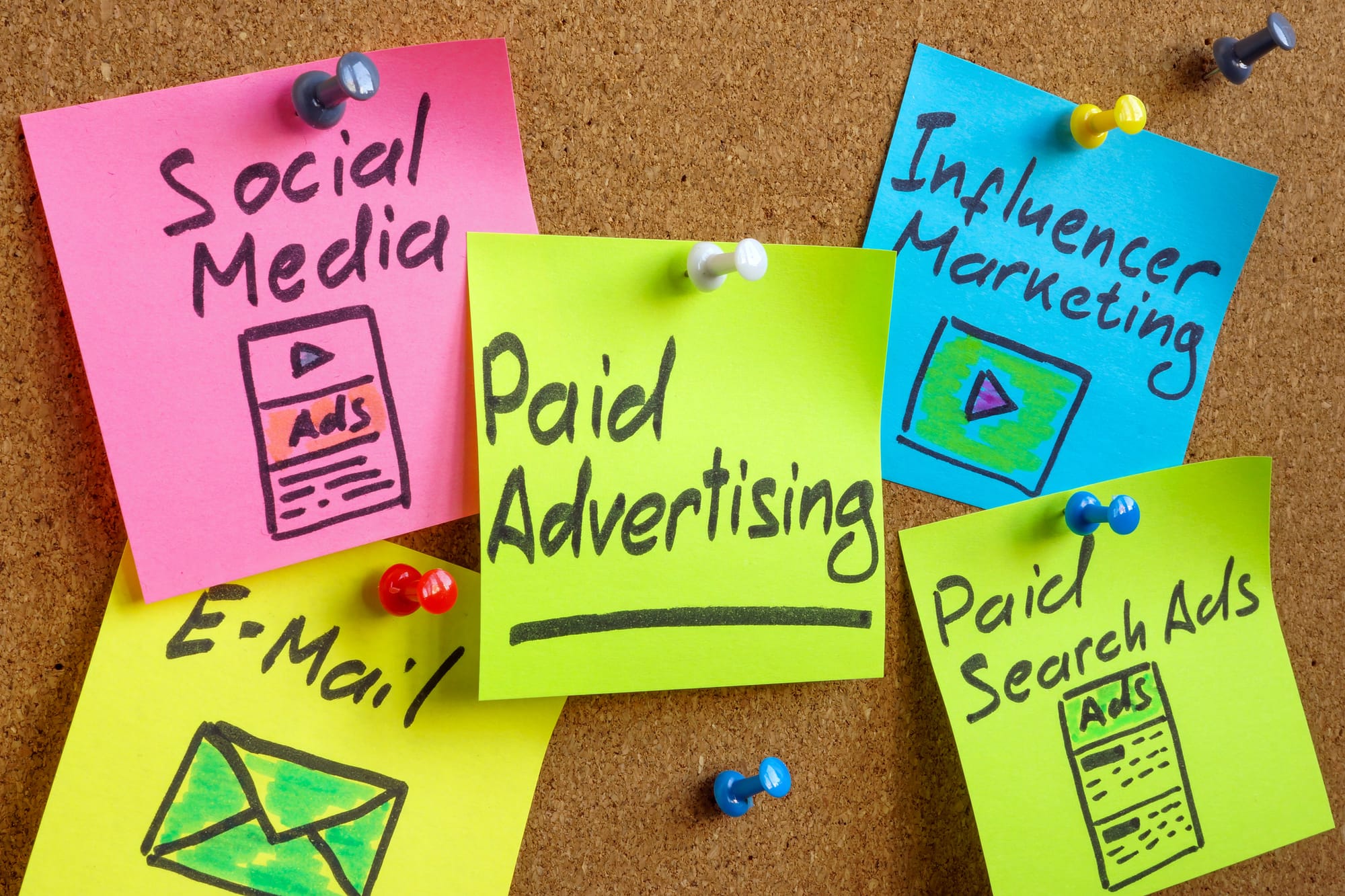
In almost every Kickstarter campaign, virtually all pledges originate from three primary sources:
- Paid promotion traffic: Backers who click through ads on platforms like Meta, Google, and Reddit.
- Organic Kickstarter traffic: Backers who visit Kickstarter.com, click through Kickstarter newsletters, and find the campaign via social outlets.
- Creator’s “own” traffic: Backers generated from pre-launch leads, past projects, or the creator’s existing client base.
The balance between these sources can vary significantly. For instance, a project selected as a "Project We Love" or one that starts catching fire will naturally see a higher share of organic traffic. Similarly, creators who invest heavily in pre-launch campaigns to collect sign-ups and deposits are likely to grow their relative share of "own" traffic.
To gain a more accurate view of paid promotion’s impact, we analyzed a sample of 5,207 projects we've supported. We calculated the relative contribution of our ad campaigns and email marketing campaigns.
Our analysis found that paid promotion accounted for an average of 41% of total pledges. In 34% of the projects, the contribution ranged from 30% to 50%. In 80% of the projects, the contribution of paid promotion fell within the 20% to 60% range.
Since the beginning of 2015, Jellop has worked with over 7,500 Kickstarter campaigns with more than $1.5B raised between them.
