
Case Study: 15 Lessons From Makera’s $15M Kickstarter Success
The innovative D+T company offer 15 foundational tips for finding success in your own crowdfunding projects

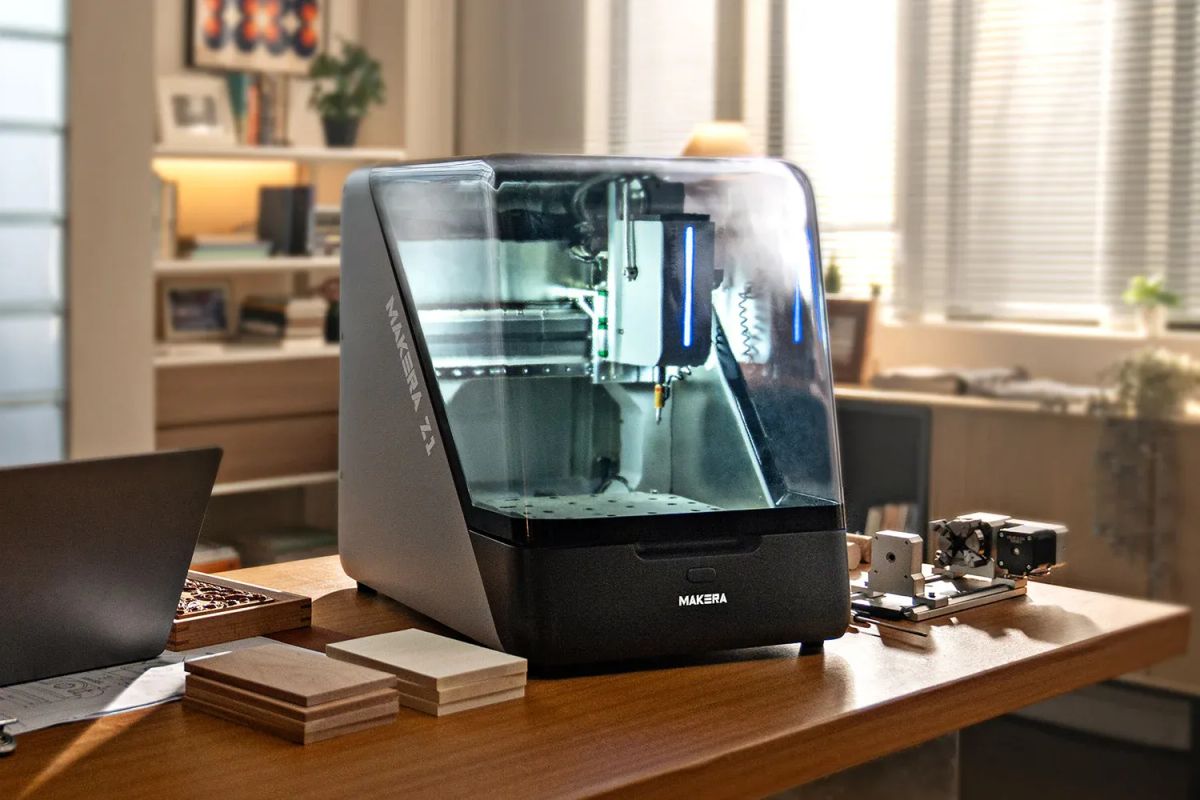
Makera's a manufacturer of Desktop CNC machines. They've run three very successful campaigns on Kickstarter, including their most recent for the Makera Z1 Desktop CNC, which launched with a goal of $99,850 and finished with a total of more than $10 million.
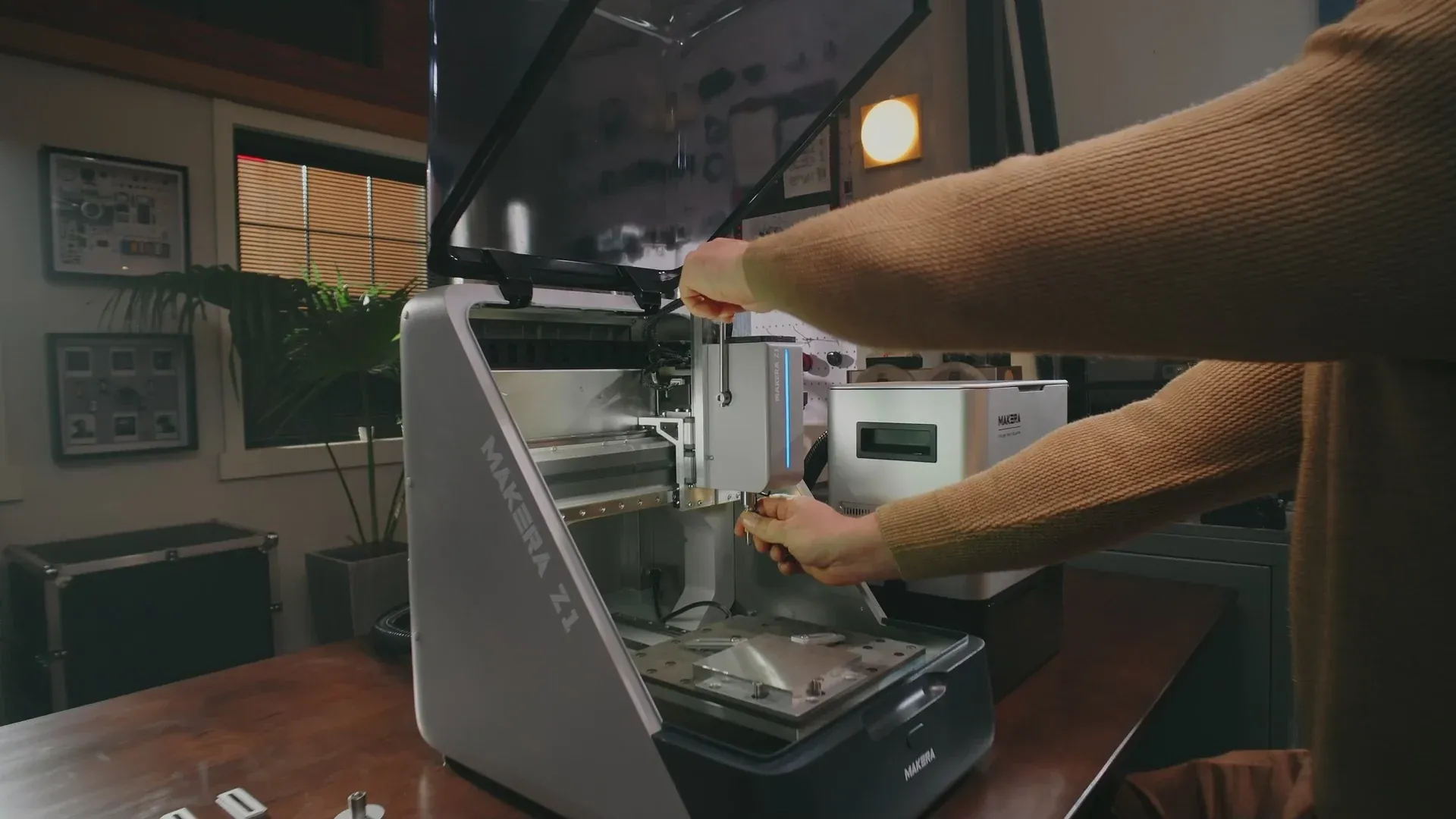
For those not in the know, a CNC Machine's an automated, programmable machine with highly-precise movements that are controlled by pre-programmed software. You can use it to automate cutting, drilling, milling, etc. For instance, in the project video for the Z1 Desktop CNC, Makera show someone using it to create a complex 3-D remote control model. Or, you could use it for simpler things like a cutting boards, phone cases, signs, etc.
Each of Makera's campaigns has done better than the one before it—which didn't happen by luck. We reached to Makera with some questions and gleaned these 15 Essential Lessons from our conversation.
01. Solve a real problem (don’t chase trends)
Our first campaign succeeded because we focused on a pain point we’d personally experienced—desktop CNCs being either too complex for beginners or too limited for serious projects. Build something you or a clear audience needs; authenticity resonates more than flash.
02. Build trust with tangible proof
For first-time creators, trust is everything. Invest in a polished prototype, share KOL reviews, or showcase your manufacturing facility (even short clips work). These details reduce uncertainty—backers want to see you’re prepared to deliver.
 Brandon Stosuy
03. Underpromise and overdeliver
Be transparent about timelines, potential delays, and product limitations. Backers appreciate honesty over hype—if you say a tool works with 5 materials, don’t imply it works with 10. We’ve always shared progress updates (even the messy ones) and delivered on every commitment, which builds long-term trust. Keep it simple, stay focused on your audience, and prioritize integrity over speed. It’s 90% community and 10% preparation—luck rarely plays a role.
04. Build relationships before launch
We didn’t “start” gathering interest when the campaign went live—we nurtured it for months. We shared behind-the-scenes development (e.g., testing the Z1’s spindle speed on aluminum), asked for feedback on prototypes, and created a waitlist for early access. By launch day, we had a group of engaged followers who felt invested in the product’s success.
 Kickstarter
05. Leverage past backers
Our first two campaigns’ supporters became our biggest advocates. We reached out to them pre-launch with exclusive previews and early-bird perks—they shared the campaign with their networks, creating organic momentum.
06. Lead with clarity, not hype
The first 48 hours are critical—we opened with a straightforward video showing the Z1 machining metal, wood, and plastic, plus clear details on specs, pricing, and perks. No jargon, just “here’s how this solves your problem.” Experience helps, but even first-timers can replicate this by prioritizing community over promotion.
07. Build a foundational checklist
We don’t “have it locked in”—every campaign is different: market needs shift, new competitors emerge, or backers ask for unexpected features. But we do follow a foundational checklist to stay on track:
- Finalize and test product prototypes (we had 50+ beta users vet the Z1 to catch flaws).
- Build community pre-launch (nurture followers with behind-the-scenes updates and feedback loops).
- Prioritize transparency: Draft clear risk disclosures (e.g., “Global shipping may add 2–4 weeks”) and be open about limitations.
- Plan pre-launch promotion to drive early momentum (our waitlist and past backer outreach helped us hit our initial goal fast).
 Brandon Stosuy
08. Stay flexible
For the Z1, we added the optional 4th axis mid-development because our community begged for it. Worry isn’t a bad thing—it keeps us meticulous. But we trust the process: if we’ve solved a real problem, listened to our community, and been transparent, the rest follows.
09. Define "success" for yourself
Success, for us, isn’t just funding amount—it’s three things:
- Product-market fit: Did we build something backers actually use and love? After our first campaign, we tracked how many users were still using our CNC 6+ months later (over 80%)—that’s success. For the Z1, our goal is to see it in home workshops, small businesses, and classrooms, solving real tasks (e.g., custom parts, STEM projects).
- Backer satisfaction: Are we delivering on our promises, and are backers happy with the product and support?
- Sustainable growth: Can this campaign fund the next phase of Makera’s mission (e.g., improving software, adding accessories)? We set a modest funding goal that covers production and R&D—anything beyond that is a bonus.
 Brandon Stosuy
10. Define "failure" for yourself
Failure, to us, would be building a product that collects dust or letting backers down (e.g., missed deadlines without communication). We don’t chase “viral” numbers—we chase impact.
 Mána Taylor
11. Understand why you're using the platform
Kickstarter aligns perfectly with our mission to make professional fabrication accessible—here’s why it’s our platform of choice:
- It’s a community, not just a store: Backers on Kickstarter are curious, supportive, and excited to be part of innovation. They don’t just buy a product—they fund a vision. For Makera, this means we can launch niche, specialized tools (like the Z1) that might not get traction on mass-market platforms.
- Feedback loops are built-in: Kickstarter lets us engage with backers during the campaign—they point out flaws, suggest features, and help us refine the product before full-scale production. The Z1’s AeroDust™ collection system was improved thanks to a backer’s comment about dust management in small workshops.
- Trust and credibility: Kickstarter’s reputation for vetting projects gives first-time buyers confidence. For a brand like ours (focused on technical tools), that seal of approval helps overcome the “unknown” barrier.
12. Keep in mind that it's about more than just funding
It’s not just about funding—it’s about partnering with people who believe in making fabrication more inclusive.
13. Understand why you're doing what you're doing
This work is rewarding because we get to see our tools empower others: a student building a robot for a science fair, a small business owner machining custom parts for their product, a teacher using the Z1 to make STEM lessons hands-on. That impact is why we do what we do. It’s taught me (and our team):
- Humility: No matter how much we learn, there’s always more to discover. Our first CNC had flaws—backers told us, and we listened. We’ve learned to set ego aside and prioritize user feedback over our own assumptions.
- Resilience: Developing hardware is messy—prototypes fail, suppliers delay, and plans change. This work has taught us to stay calm, adapt quickly, and focus on solutions (not problems).
- The power of focus: Early on, we tried to add too many features to our tools. We’ve learned that doing one thing well (making user-friendly, precise CNCs) is better than doing 10 things mediocrely.
It’s challenging, but seeing our tools in action makes every setback worth it.
 Sarah John
14. Keep your mission as your north star
Our journey has always been driven by one core mission: making professional-grade fabrication accessible to everyone.
Each product we create is not a reset, but a progression—learning from real users, refining the experience, and removing barriers step by step. We started with Carvera to prove that desktop CNC could be powerful and automated. Then came Carvera Air, expanding usability and affordability.
Now, the Makera Z1 takes the next leap: it solves the “middle ground” problem where desktop CNCs were either “beginner-friendly but limited” or “professional but intimidating.” We combined industrial specs (0.01mm spindle runout, 150W motor) with user-centric features (AI Craft, mobile control, shared project library) to bridge that gap—directly responding to feedback from our first two campaigns’ backers, who wanted better precision, more material compatibility, and even easier workflows.
15. Take your time to get things right
As for what’s next: We won’t rush to launch a new product—instead, we’ll focus on supporting Z1 backers with software updates, accessories (like the 4th axis), and educational resources (lesson plans for teachers, tutorials for hobbyists). Long-term, we want to build a complete ecosystem—hardware, software, and content—to empower makers, educators, and small businesses to turn ideas into real, high-quality products with ease. Our mission doesn’t end with a machine; it ends when creation becomes effortless for everyone.
Of course, not every creator’s path looks the same—and it doesn’t need to. What stands out in Makera’s story isn’t just the scale of their results, but the mindset behind them: solving a real problem, building trust, listening to your community, and taking the time to get things right. These are principles any creator can apply, whether you’re experimenting with your first idea or refining a product you’ve been dreaming up for years.
Bring Your Idea to Life with Kickstarter.
Join the thousands of visionary creators choosing to put their ideas into action on Kickstarter. Start your free project draft today and explore all the tools you need to turn your vision into reality.
Get Started