
Case Study: Why Gamely Returned to Kickstarter After Selling 1 Million Games
10 years after launching Randomise, Hazel Reynolds is back on Kickstarter with The Curator, her most ambitious game to date.

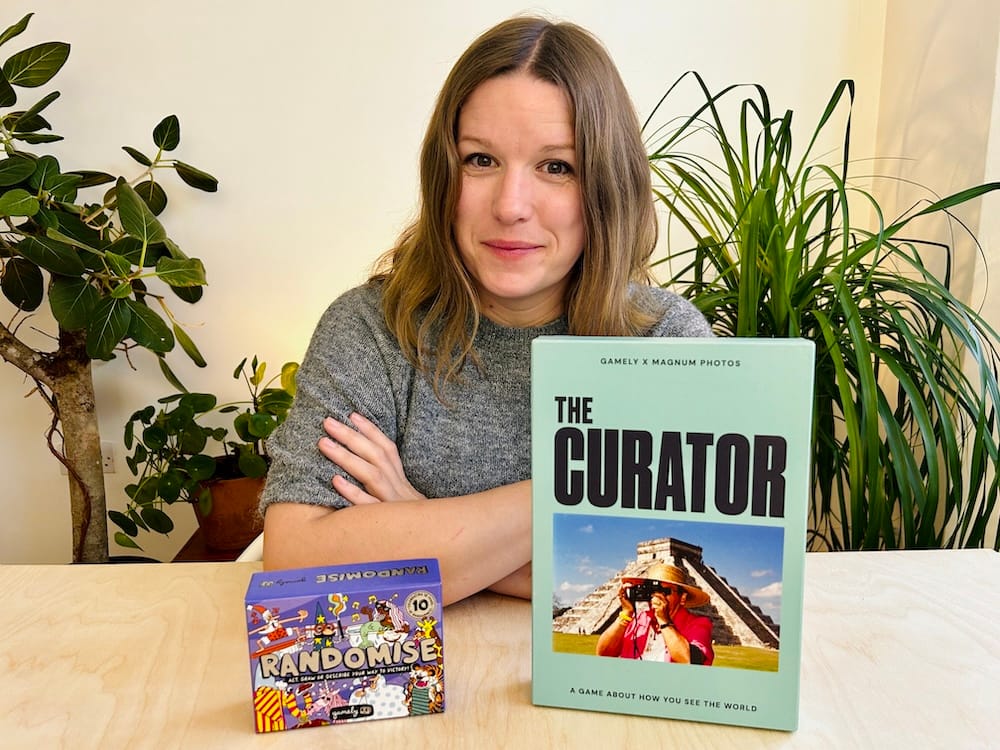
Gamely Games was founded in 2015 when Hazel Reynolds created Randomise with the goal of getting her little sister to put down her iPad. It worked, so she created her first Kickstarter to get the game into the world and into more folks' homes (and, maybe, to help more teens get off their iPads).
10 years later, Gamely is a team of five, has sold over a million games and released more than a dozen different titles, including Gullible, Six Second Scribbles, Truth or Trap, and Soundiculous—and Reynolds is back on Kickstarter, launching a campaign for Gamely's ambitious game to date, The Curator.
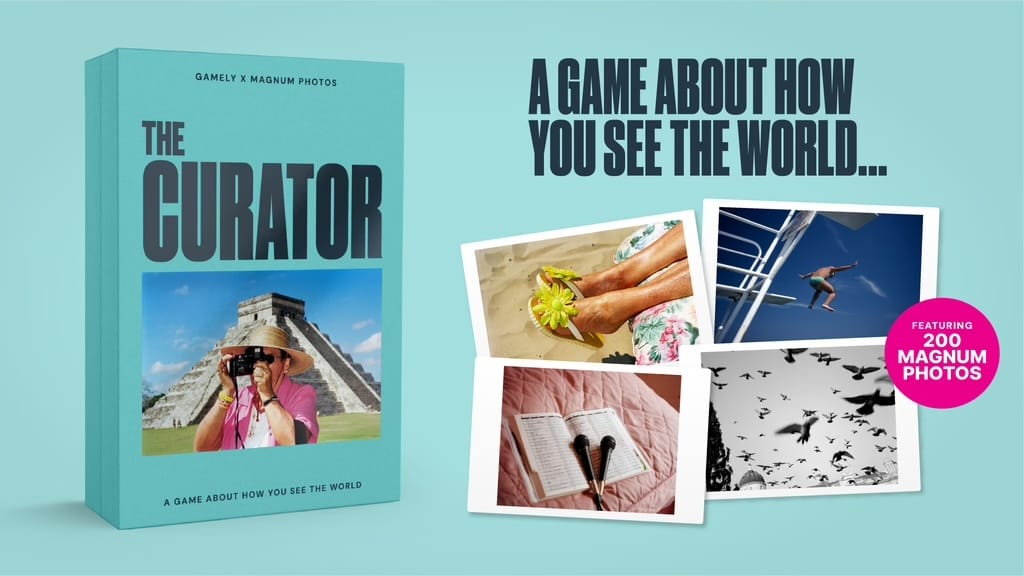
It's a new kind of game for the company. It's also an official collaboration with the prestigious photo company, Magnum Photos (which was founded back in 1947). We spoke with Hazel about The Curator, why she decided to return to the platform, what she's learned from her first campaign, partnering with a historic company like Magnum, and how Kickstarter's changed her life.
You launched your first game, Randomise, 10 years ago. Why did you decide to return to Kickstarter, a decade later, for The Curator?
We loved that first Kickstarter experience. We had no idea what we were doing, but we had a very positive experience the first time around.
I invented this game for my little sister. We wanted to see if I could turn it into a thing and, we put it on Kickstarter. I think we sold about 400 games and we raised three and a half thousand pounds, which was just enough with the manufacturing. At that point it was very much about funding the game and proving that it was something people would buy.
The process of going through it and building that Kickstarter, building that pitch for the game, was very healthy in the game development process. It really gave us that validation that it was something that people would want to buy and want to play, and that carried through as well throughout running our company. Also, having that "funded on Kickstarter" badge of honor helped us in many ways. It helped us get into the Amazon launchpad scheme that was designed for exciting startups. It helped us with retail. The fact that we were funded on Kickstarter gave it that validation. It opened a lot of doors for us.
So, yeah, we had a really positive experience the first time. It didn't go wild. It's not going to go down in the history of Kickstarter as wildly successful, but it was enough for us to build this whole company that's become our life. We have very fond memories of our first one.
The reason we're coming back this time: It feels quite nice, 10-year anniversary, full circle. But the main reason is that The Curator is totally different to any of the games we've made before. It's a very creative game. It's a very beautiful game. There's definitely going to be overlap with our current party game audience, but there's also a huge opportunity with a new audience, anyone who loves photography or creativity, who maybe doesn't play a lot of games or maybe who do play games.
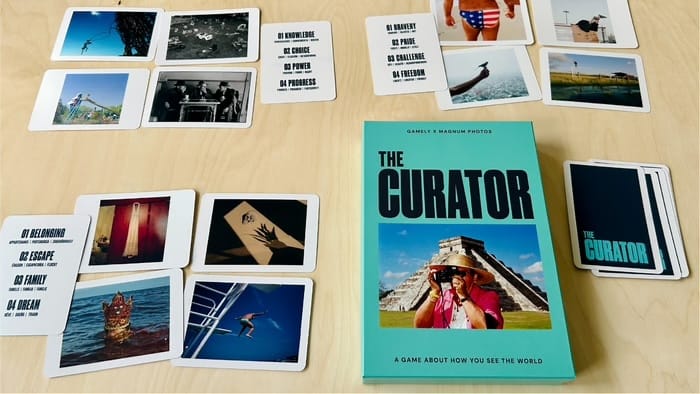
This kind of crossover of the art and photography world with modern board games, it's a really nice sweet spot. We felt like the Kickstarter audience would be that creative, innovative audience that would appreciate this kind of product. So, it feels nice to go back to Kickstarter and almost bring it to life with that community that helped us start all those years ago.
We have no idea how many games to print because we've never made anything like this before. We love it. We think it's beautiful. The people we've played it with love it. But until you put it out there and see if anyone buys it, you just don't know, and I think Kickstarter is a great place for that. We just have no idea how many to produce and doing a Kickstarter gives that as well—seeing what the appetite is out there.
A decade in, I imagine you have strategies for getting the word out. When people are doing their first Kickstarter, some just launch it cold. They're like, "Here's my Kickstarter." But it takes awareness, getting the word out there, so when it does start, people are ready—that pre-launch page is like a "save the date."
Yes. We did very little the first time around 10 years ago. We've done much more than we did the first time. Have we done enough? We don't know. I'd say, the main thing we tried to do is get the game to the people who we think would be its best audience. We've sent out, we've made up prototypes, some really nice prototypes and sent those out to reviewers, game reviewers on Instagram. They've done all their reviews, they've been sharing it with their followers, and then we'll hopefully get them to line up to re-share when it goes live next week.
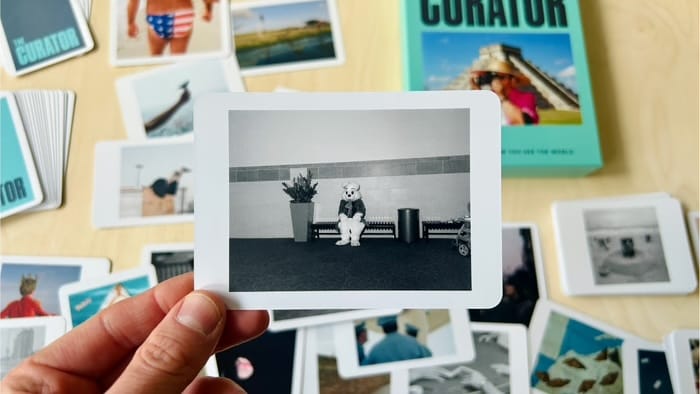
We've primed our mailing list, so everyone who is signed up to our mailing list. We've been running things on our Instagram, little spotlights on some of the different photographers that we've got featured in the game, and showing behind the scenes. And then we've dabbled with a little bit of Facebook and Instagram advertising, too. We had quite a lot of click-throughs, but I guess we can re-target them. We know who's normally interested in it, and hopefully we can re-target them when the campaign goes live.
But actually the biggest thing for us is our partner Magnum Photos. They have a huge mailing list and if all goes to plan, our campaign will launch and on a couple of days later, Magnum will email their huge mailing list. If they email tens of thousands of people who love Magnum Photos, and if 300 of those don't buy the game, then maybe we shouldn't make the game.
 Trent Chute
If we can't get 300 pledges from Magnum fans, then maybe it will just be a really good test, a very hard-working test of the market.
It's one of those things I keep telling myself: It's probably going to be fine. Do you know what though? Even if we don't make our target, I would have been proud to have tried. This is a project that's been really close to our heart. It's a passion project. This is a project that we're making because we love the game and we want a copy in our house, and now we have these beautiful prototype copies.
It's all been worth it, because we've got the game. We can play it with our friends, we can enjoy it. I think I will be proud to have tried to make something this beautiful and special, even if we don't make our target.
You'll make your target. It's a great game!
I hope it's unlikely we won't make our target, but you know you've got to look at the worst-case scenario! I don't think I'd have any regrets because we sat on this game for a long time and we thought, "It's too different to what we do, it's a bit more of a niche audience potentially." But it's my favorite game we've made, and I can't believe we've managed to create it with Magnum photos, the most beautiful photos. Yeah, I'll have no regrets, even if we don't make our target because we will have tried. I think that's important, to try and make beautiful things.
 Eric Steuer
What makes a game successful for you? Is it successful if people play it, if it's out in the world, or just to have completed it?
My absolute favorite thing about making games is the reviews and the feedback we get from people. Every now and then I'll go into the reviews on Amazon or some emails that we receive and that's what makes me want to get up and keep making games for people.
We get a lot of feedback, particularly people who've got teenagers who are hard to connect with. When I read their stories like, "Okay, I've got a 13-year-old that wants to play all those video games, but this is the game that's helped us connect and now he wants to play it every night."
Or we also have a lot of things with grandparents and young children, where people find it hard to find that activity that will connect older grandparents and the kids. It gives me goosebumps, these moments where they've had that total connection, where people have put down their screens. It's that magical moment when you realize that you haven't looked at your phone for an hour. That's what we want to create for people, that space and those moments and those memories they'll always have.
 Kickstarter
So, yeah, I think for me, a successful game is one that has brought people together and given them those magical moments that they'll remember forever. Obviously, the more people it reaches, the better. So the more games that we get out there, the better. But it's those moments and when you read about those moments, that's fun. It brings me joy.
I've got my own memories, too. My Nan is 86 now and I make her try all of my games. I've got so many memories of her playing the games and us connecting on that level. Games create that magical sphere where people are so present in a way that you're not often these days.
It's cool that Kickstarter's gotten to be a part of this journey.
Honestly, Kickstarter changed my life. My company wouldn't exist and be where we are today without Kickstarter. I don't know what would have happened if Kickstarter didn't exist–we just wouldn't be here today. I've got a nice life now where I get to make games for a living and hang out with my children and be in control of my destiny. A lot of that came from using Kickstarter, so it's literally helped me create my dream life.
 Kickstarter Staff
That's something people don't always think about. Funding the project is just the start. So many jobs have been created by Kickstarter, so many unexpected or hope-for career paths.
It's fascinating. You've got the value of the product that's funded, but then, yeah, we've gone on and created this whole big business. You don't always get visibility of that in Kickstarter. You don't always see the next chapter.
We've tried to be a good company as well. We've tried to do good with the opportunities we've had. We've donated 10% profits to charity from the beginning. I think we've donated over 150,000 pounds now to charities. We also give away thousands of games every year to good causes, and we try and make sure our products are good for the planet and people as well to play it. We use FSC paper, we're all plastic free and we manufacture everything in Europe and America.
We want to be the Patagonia of our industry. It's important, and I think you can run a really good company and still be profitable and still be successful and sustainable. Often in the media it's like, "profit or people, profit or planet."
In our experience, we've chosen the good thing, we've chosen the right thing, and we've ended up building a successful, profitable company that is doing things. And we can go to sleep at night and we can rest easy. We've looked after our conscience. Sometimes you don't have to choose between things... You can have it all sometimes. But, yeah, choosing the right thing is our priority.
I love that we don't have any investors and don't have to answer to anybody. We can choose the right thing because it feels right, without having to justify it to anyone. It feels very good.
The Curator is up now on Kickstarter.
