
Creator Spotlight: How Game Designer Peter McPherson Stays Curious About the Everyday
The brain behind LODGE, Tiny Towns, and Wormholes discusses defining goals, finding the soul of a project, and what he views as success.

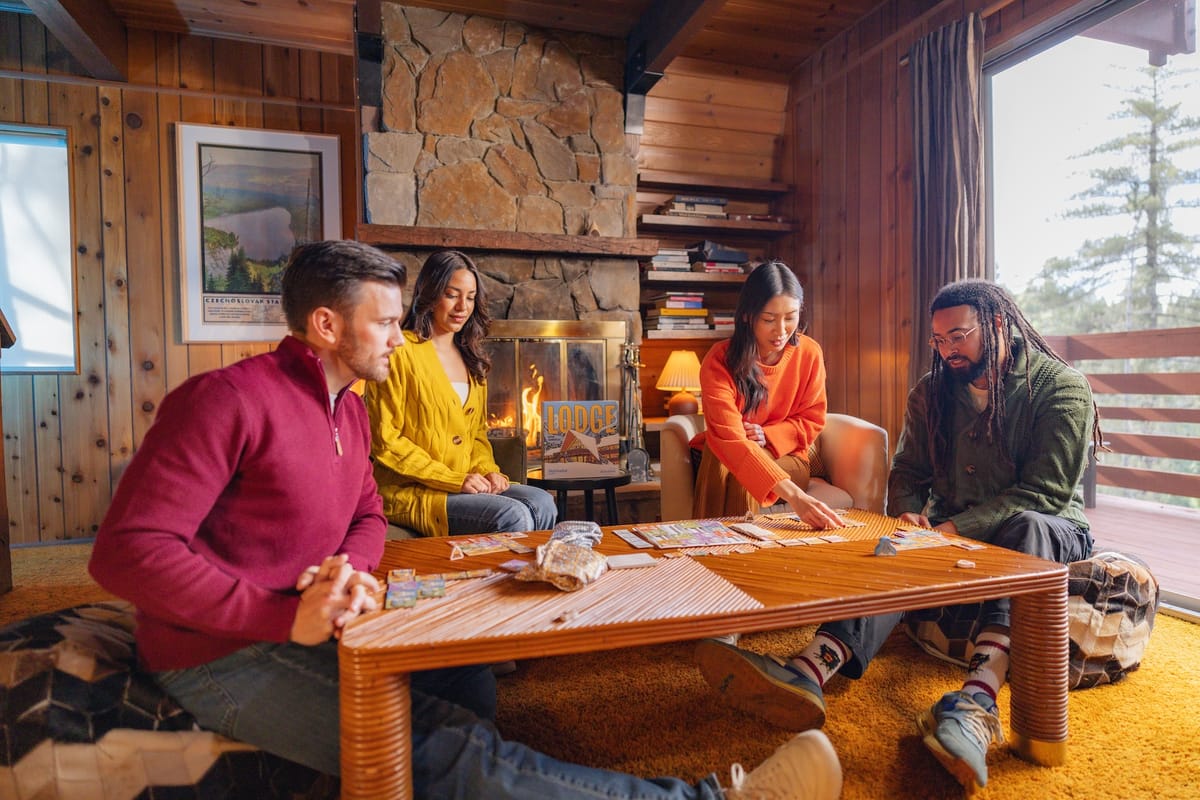
PickPocket Games was founded with a mission of creating accessible, high quality games. As they put it, "When done right, board games have a unique ability to bring different people together over a shared experience. At PickPocket, our mission is to make games you can share with anyone."
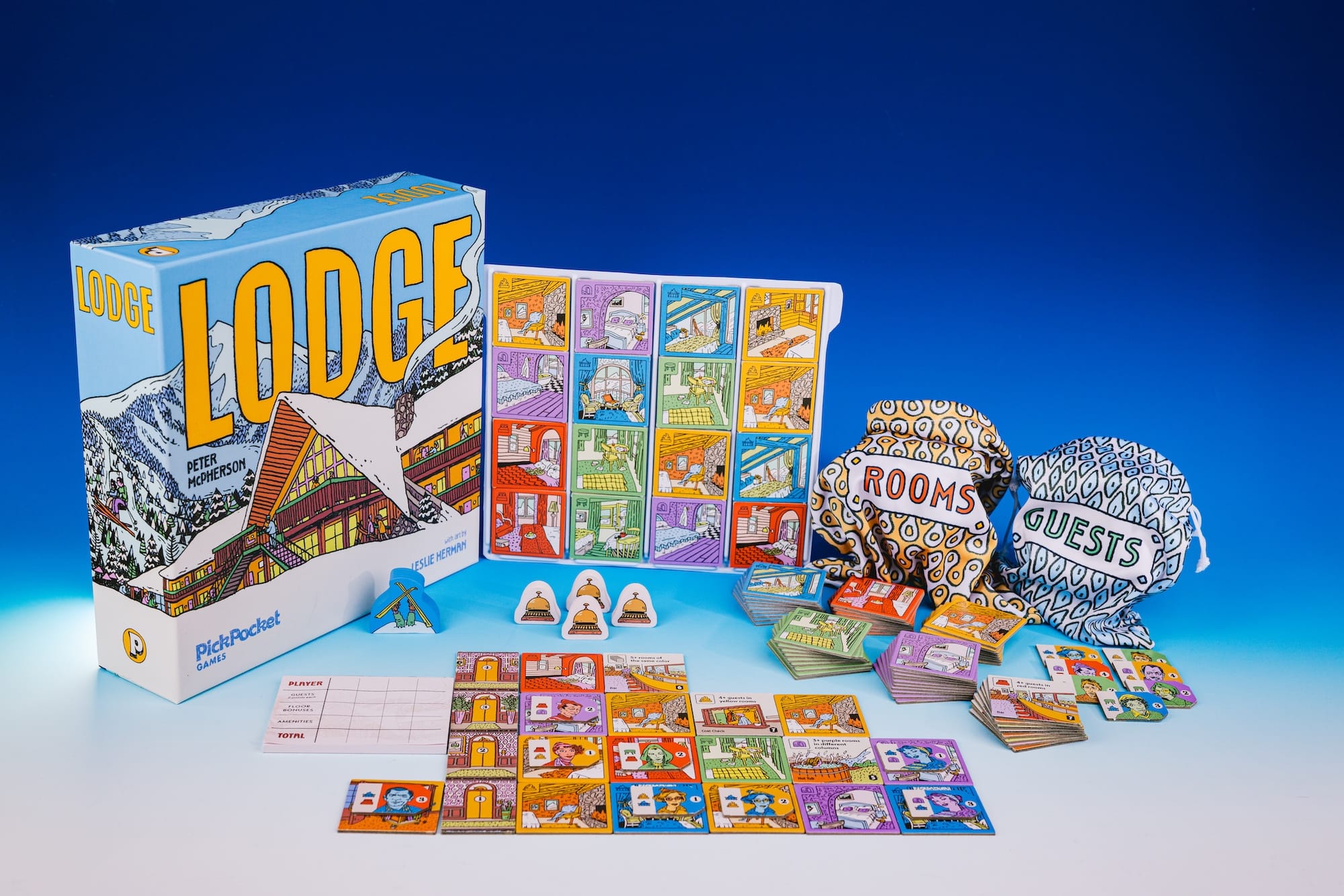
Their newest, Lodge, is a hotel building game set in the Swiss Alps. (Its Kickstarter campaign is up now through February 19).
Lodge was created by Peter McPherson, a board game designer and rulebook writer from Upstate New York whose games, including Tiny Towns (AEG, 2019), Wormholes (AEG, 2022), and Fit to Print (Flatout Games, 2023), are known for their tight spatial puzzles and tactile gameplay.
Kickstarter Games Outreach Lead Nicole Amato spoke with McPherson, about defining goals by what he has control over, working as a full-time parent, and being curious about the everyday.

How do you determine what the soul of a game is, or what is the most important idea?
Fit to Print is a game that had a clear soul. I thought about what would a newspaper game feel like: frantic energy and the impossibility of perfection. Those were the two main energies. That's when it's easy, when a game is really about evoking something very specific. With something like Wormholes, the soul was less clear. I wanted people to move through space really fast and to connect planets, and I think that was a strong idea, but there were many many more ways to go about it. It wasn't immediately clear what type of game it was supposed to be, and it took a whole bunch of different forms throughout development. There were just more questions to ask. I don't know how to do it deliberately—how to deliberately have that specific kernel of an idea—but projects always go much easier when I have that from the start.
How do you start a project? And how do you know when a project is done?
Most game ideas do start out as a Google Keep document in my phone, writing out "what if this, what if that" for a game idea, and I'll just sort of run with it. It becomes almost a stream of consciousness thing of writing down every possible idea I have. And then hopefully early-ish on in this brainstorming process, I come down to the core tension of the game. Here's what players are doing, here's the theme, this is their goal, this is what tools they have to move toward that goal. Once I reach that point, the ideal situation is that I'm so excited about the idea that I create that first early prototype. Or, sometimes I think I have a pretty good working system in my head and I will go to my game design notebook and write down what I think the starting rule set could be: a list of the bare minimum components I need to design to make this work and then I go from there. Both of these routes I think can work pretty well... Ideas where it's not quite as clear how that system is going to function, it's more important to get it on the table first, to feel out where the boundaries are going to be.
Done for me usually means when it's ready to be pitched to a publisher. I believe very much in a healthy development cycle for a game and I want it to be grilled and tested by other people. I know I'm never going to have a game in an unchangeable state before I start pitching it, even though I try to get it as close as possible. What that looks like for me is a game where I have done unguided testing on it from a rules document that is hopefully clear enough and doesn't have any glaring issues. I am not getting a lot of negative feedback from play testers; people are simply saying they want to play this game again; I've gone through three or four play tests without major changes and it's starting to lock in. That used to be a bigger number. Like with Tiny Towns, I probably did 100 or 150 play tests of that before I started pitching.
How do you define creative success and how do you define failure?
I try to define goals in terms of things I have control over. If success looked like getting a game signed with a publisher or published, that would be out of my control. And I think I'd be pretty frustrated. It's definitely a success, but success for a creative project means a game that I am happy with, that I enjoy playing, that my friends and family ask me to play. I have a drawing game called Artiste that I have just about given up hope on signing. My friends really love it, and every once in a while I'll take it back out and we'll play, and I'm so happy with that game even though I don't think it's really publishable. But I'm so happy with it as a creative product. I don't think there's anything wrong with making a game just for yourself. I think in many ways that’s a fantastic goal.
What does your curiosity look like and how do you explore?
I think my curiosity is mostly day-to-day. I really try to resist pulling out my phone when I'm in a public place and I'm waiting in line somewhere, especially if I'm somewhere familiar. I'll instead play the game of, what things can I notice in the space I've been in 100 times that I haven't noticed before? Or I'll eavesdrop a little bit and see what interesting bits of conversation I can pick up on. I just try to be really present and take things in. Or if I'm going for a walk somewhere, I'll very simply look up instead of down. I try to enjoy being mindfully present when I can and pick up on things that way. And then I also try to remain curious about art in general, especially things I don't particularly enjoy. I'm fascinated by things that I don't like at all but other people love, because I can still discover what it is they love about those things. Even if it doesn't end up fostering a love in me for those things, it's still interesting to understand why these things click for other people and not for myself.
Can you give me an example?
Wheel of Time is a good one, because I like modern fantasy quite a bit and I love epic fantasy. So I read the first couple of those a few years ago. And while they didn't click for me, and it's a very long, ambitious series to read, I understand the magic that is there for other people. And now I understand a bit of that culture for people.
Do you have a day job that you balance with your creative work?
I'm a full-time stay-at-home parent as my current day job. It's really interesting being a parent and a game designer. I don't know if balance is the right word. I wouldn't say I balance it against game design, but I try to treat it as my main thing and then I find time for game design when I can. Sometimes this looks like playing with my daughter and thinking about an idea, then taking quick notes on my phone when I can because I try not to look at my phone too much around her. So I can really work through a lot of ideas while I'm just playing with Bluey toys with her. I've had some great ideas and great breakthroughs while brainstorming with her. Otherwise it means waking up at 5:30 or 5:45 most days to get in what work I can and then working in the evening until my brain becomes total mush and I need to lie down. I think it's possible to work on games as a parent, but it's difficult to feel like I'm full-time game designer right now. And that's absolutely fine.
How did you manage to create a path outside the established system?
I have always wanted a career outside the established system. I grew up with a father who was a cartoonist, and so he was home most of the time doing his creative work all hours of the day, and I really admired that creative lifestyle. I have always wanted something similar of being immersed in creativity and the freedom and flexibility that it gives you. As to how I did it, I wish I could give myself more credit, but it's definitely a whole lot of luck and a whole lot of thanks to people who have made this strange career path possible for me. So AEG obviously giving me a huge first chance with Tiny Towns and doing a ton of marketing for that game back when it came out, not to mention all of the early reviewers who grabbed on to that game and interviewed me. I've had really wonderful experiences with this industry on the whole.
