
Creator Spotlight: How One Question Inspired Hood Sensory
How a conversation with her sons led one creator to reimagine what comfort clothing can do.

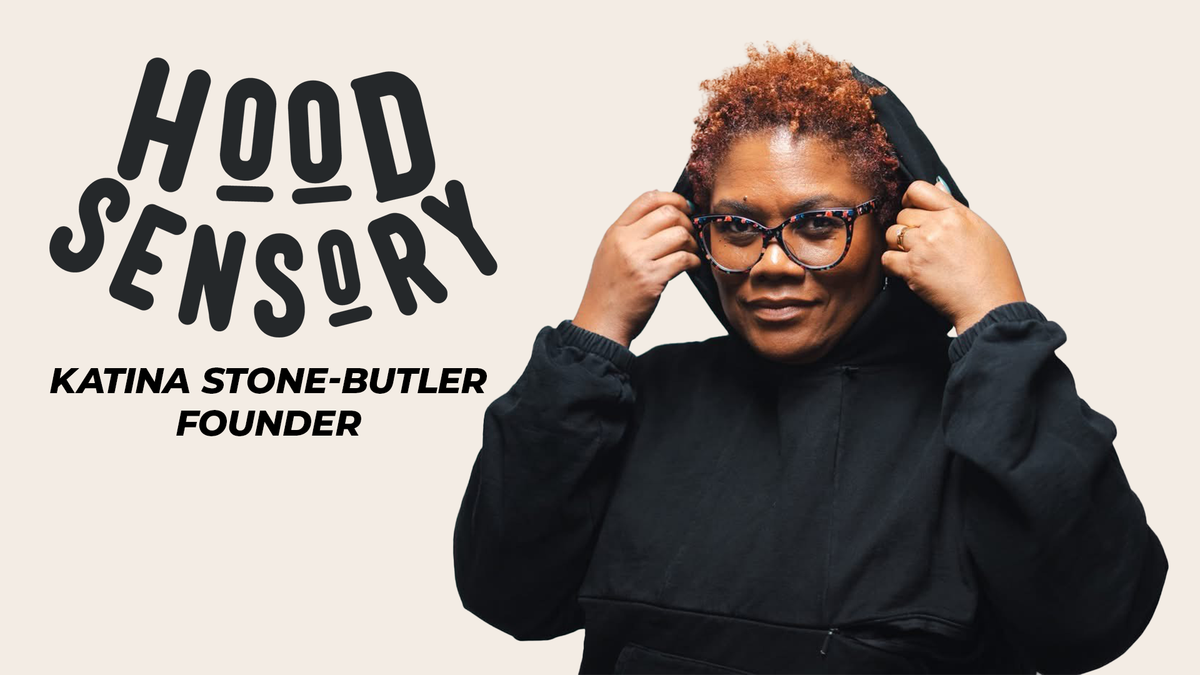
A simple question can change everything. For Katina Butler, the founder of Hood Sensory, it started with noticing something small at home that didn’t quite make sense and choosing to pay closer attention. That moment led to a deeper understanding of sensory needs and, eventually, to a product designed to support them.
You’ve said a simple question about why your kids wore hoodies in the summer sparked everything. Can you take us back to that moment?
It really was that simple. It was June 4th, 2020. I noticed my sons were wearing hoodies in the middle of the Texas heat again, and I pressed them about it like I had several times before. I never got a clear answer. They didn’t have the words, which was unusual for them.
But that day, I paused. I realized something was happening that I didn’t fully understand.
At the time, everything felt overwhelming, and the pandemic magnified that. What I began to see was that their hoodies weren’t just about comfort or habit; they were helping them regulate. That led me down a path of learning about grounding, mindfulness, and sensory overload.
I also learned something about myself. Through that process, I came to understand that I’m neurodivergent, with my own sensory sensitivities. That realization gave me language for things I had felt my whole life.
 Kickstarter
Before Hood Sensory became a product, what did comfort or self-regulation look like in your family’s everyday life?
It looked like improvising. Hoodies, blankets, headphones, stepping away from noise, pacing, or carrying small objects that helped bring focus and calm.
People often find ways to regulate long before they have language for it.
That summer made me more aware and more curious. Instead of trying to control those behaviors, I started paying attention to what was actually helping.
Many products begin with market research, but yours started from lived experience. How did that shape your approach?
I didn’t start with spreadsheets or trends. I started with my family, my friends, and my community. Within that group, there’s a wide range of sensory needs, so we became the focus group.
I also bring 25 years of experience in healthcare, along with friends who are medical, mental health, and disability professionals. And I’ve spent decades on my own mental health journey. All of that informed the design.
Even now, we continue listening, through social media, our community, and in-person events. That feedback still shapes how we build.
Was there a specific feature that felt non-negotiable?
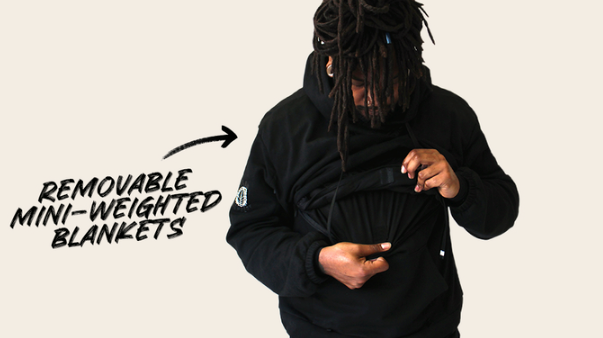
The removable mini-weighted inserts, without a doubt.
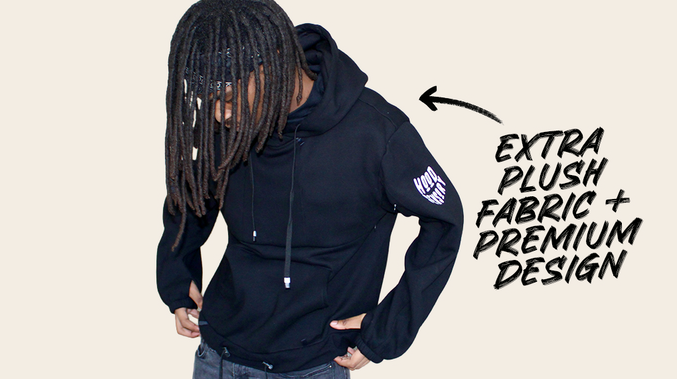
We wanted the hoodie to look “normal” on the outside but function in a meaningful way underneath. The ability to add weight without bulk—and even heat or cool the inserts—became central to the design.
Weighted blankets had already been life-changing for me. I also remembered lying under my great-great-grandmother’s heavy quilts as a child—that deep pressure feeling stuck with me. I wanted to bring that into something wearable.
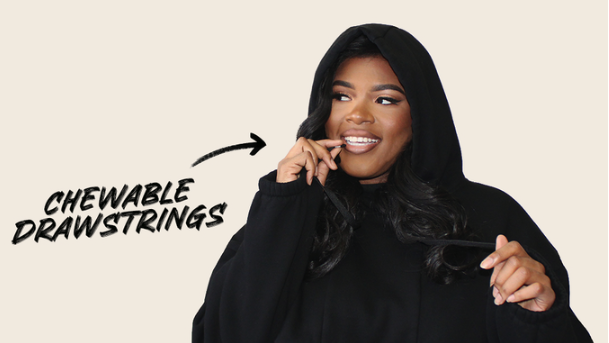
From there, the rest of the system developed: compression sleeves, quiet ventilation zippers, tactile elements like fidget loops, and chewable drawstrings. It all works together to support regulation in real time.
How has being a neurodivergent founder shaped the way you build?
It’s given me a different lens. Things I once thought were preferences are actually sensory needs—things like texture, pressure, and sound.
It also taught me patience. Sensory needs vary widely, and no product will work for everyone. The goal became thoughtful flexibility, creating something adaptable that we can continue to evolve.
 Kickstarter
Did you feel like you were building something you didn’t see reflected in the market?
Absolutely. A lot of sensory-support products feel clinical or are designed for young children. But sensory needs don’t disappear as people get older.
I wanted to create something that supports regulation while still looking like something people would genuinely want to wear.
What surprised you most about turning this idea into a product?
How much persistence it takes. There are so many layers—design, materials, manufacturing—and I had to learn a completely new industry.
But every step also brought validation. From the development process to the community response, it became clear there was a real need for this.
Was there a moment when you doubted whether you could bring this to life?
There have been moments of doubt from the very beginning. I started with a stick figure sketch and no background in fashion design.
But what keeps me going is my family, my community, and seeing the impact. The hoodie is now patent-approved, we’ve gained traction locally, and the Kickstarter campaign reached nearly 45% of its goal in less than a week.
Still, the most meaningful moments are when people try it on and connect with it.
 Kickstarter
What advice would you give to creators building something deeply personal?
Pay attention to the things people overlook. Many meaningful ideas start with small observations.
You don’t need a perfect plan; curiosity is enough to get you started. If you keep asking questions and stay open, the path will reveal itself.
When someone puts on a Hood Sensory hoodie for the first time, what do you hope they feel?
I hope they feel relief and more at ease in their own bodies. I want them to feel a sense of agency, like they have tools to regulate and move through the world with more comfort and confidence.
