
Creator Spotlight: How Ten Hundred Built a Trading Card Game With His YouTube Community
Artist and YouTuber Ten Hundred invited fans into every step of the process. The result: a community-built card game that funded in just two minutes.

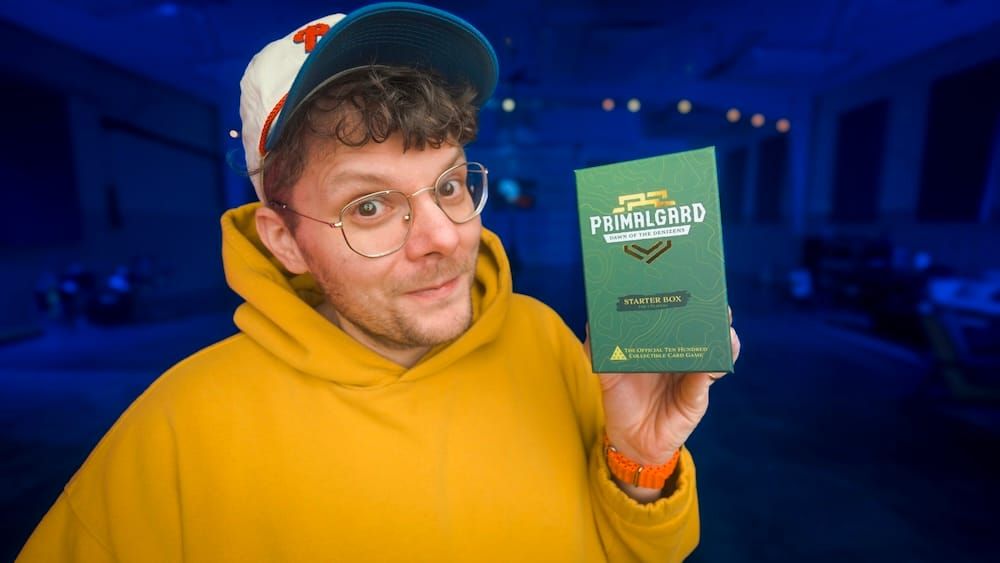
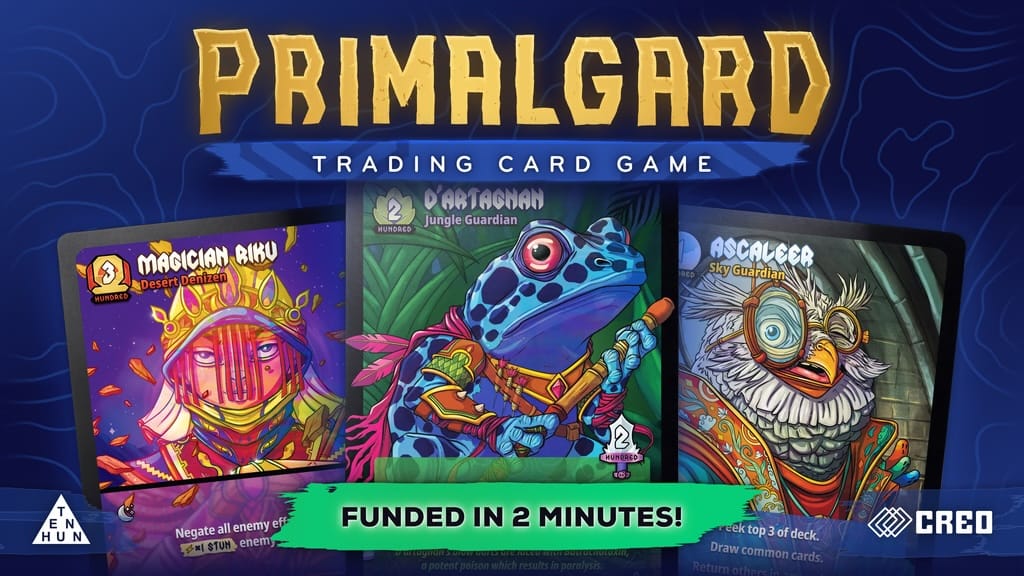
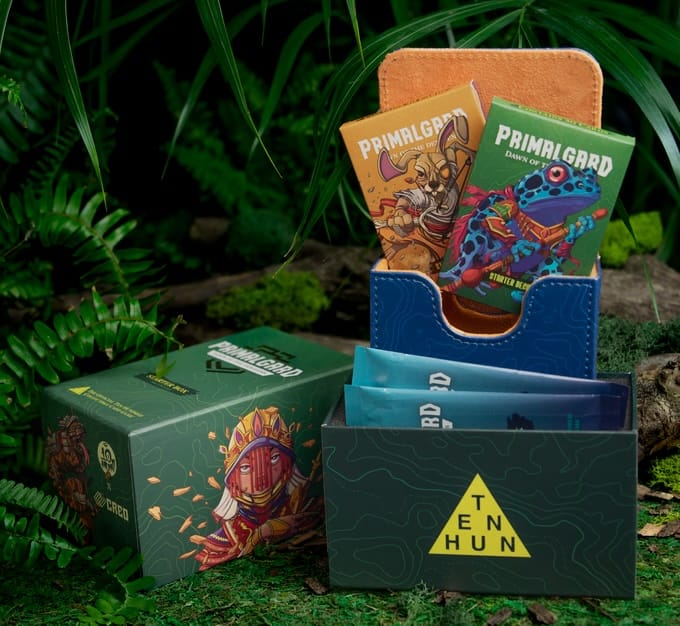
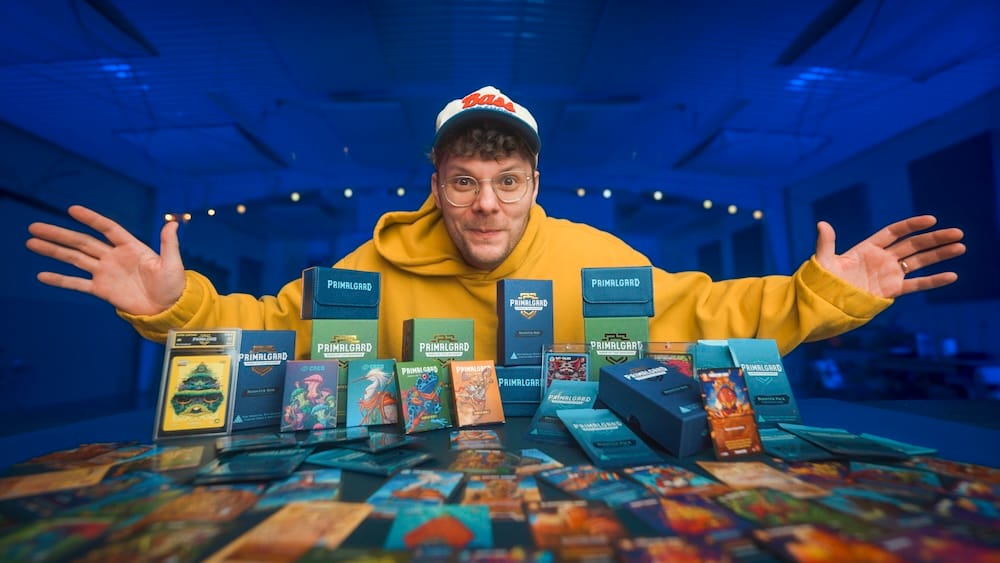
PRIMALGARD is a fast-paced, two-player trading card game. In it, the players are asked to manage biome-based decks (Desert, Ocean, Sky, Jungle) and try to reach 10 hundred population points, using so-called "Guardians, Denizens, and Watchers," all with what's described as "a unique simultaneous card reveal mechanic." The players play at the same time, so it moves quickly.
Both topical and fantastical, it's the brainchild of game creator, Ten Hundred, aka the South West Michigan artist Peter Robinson, who created Primalgard's 320+ unique collectible cards in collaboration with his 856K YouTube subscribers.
This unique, all-hands-on-deck approach has resonated with backers: Not only did PRIMALGARD fund in 2 minutes, it's now 3622% funded, with almost three weeks to go in its campaign.
We were curious about Robinson's open-door policy into his process and so we asked him about it, along with other aspects about how he does what he does.
Your project met its funding goal in two minutes. How did you manage to have so much interest at the very start of your campaign? Can you offer some tips to first-time creators?
There's the classic stuff like sending emails, posting on all the social platforms, ongoing Discord discussions, etc.
We also launched a public beta so anyone could playtest the game and offer feedback. We also had an exclusive card that I illustrated, available only to people who signed up to support before the Kickstarter launched. And we had some early bird items to generate interest right at launch.
But most importantly, I documented the game's creation from day one all the way until launch in a series of videos on my YouTube channel.
My tip for first-time creators is: don't be afraid to open up about your process to your audience.
Find ways to share your story with them and let them make it their own story in some small way. I try my best to make the projects I am involved in feel like the whole community's project and not just my own.
Can you explain that collaborative process for folks who may not be familiar with it?
As the YouTube videos came out, viewers guided important decisions via comments and community polls. They weighed in on the art, design, and gameplay. We even made spreadsheets of all the fan suggestions in the comments, allowing me to search keywords to see how many people discussed a particular aspect of the game.
We made some pretty major changes to the game based purely on audience feedback. There were even some changes where I disagreed with the viewers, but I went with the audience's preference over my own.
Ultimately, many of them probably felt connected to the game in ways beyond just financial support because they were able to help with the project too.
So I think the folks who watched the series were ready to support when it was time to launch the Kickstarter.
What makes a good creative collaboration?
First: Having people who are genuinely excited to work together, and excited about the project, is super clutch.
Second: I think it's helpful to have some defined roles for each person, but have people who are flexible enough to step outside of their roles in order to make the project the best it can be.
Third: Chill vibes.
With a success this big, I imagine there's also a lot of stress. How do you avoid burnout?
The biggest stress with this game for me, was the sheer amount of artwork I needed to create. It's around 200 unique illustrations plus all the packaging and design.
Luckily, I was able to break the game down into segments. The game has four biomes, and each biome contains three card types.
So I could say, "Ok, over the next two weeks I am gonna make eight Guardian cards from the Jungle Biome."
I think breaking it up into chunks like that helped save me from feeling completely overwhelmed.
And a key component to making this project less stressful than previous ones is partnering with CREO Cards.
For those who don't know, CREO is a Canadian company that specializes in designing, manufacturing, and distributing trading cards, tabletop games, etc. How has partnering with them helped?
Firstly, CREO handled the lion's share of the game design and balancing, but still allowed me to weigh in on gameplay decisions every step of the way.
Secondly, CREO has launched dozens of collectable card projects. They have tons of experience with manufacturing and fulfilling these types of games. That was a huge weight off my shoulders, allowing me to focus all my energy on the creative side of the project.
On my previous Kickstarter, it was more stressful because I was figuring out a lot of it on my own. This one has been so much easier with the whole team at CREO involved.
 Kickstarter Staff
There are clearly many fans of card games—and your work. This is likely part of the project's success, but why do you think this project, in particular, has been so successful? Why has it connected with an audience?
I think, because I shared every single step of the creation of this game on video, people saw the amount of work and thought I put into it. Additionally, This project in particular has allowed me to do more world building and lore than any other project I have ever done. I also think the nature of the game sparks that collector bug that lives in all of us. I think it's pretty exciting to chase down your favorite character or a particular rare card.
 Brandon Stosuy
What do you get out of this creative work and what has it taught you about yourself?
I consider art a way to absorb the world around me, process it through my own filters, and then release it onto the canvas. It's kinda therapeutic in that way.
So creative work in general is always fulfilling to me. But Primalgard, in particular, taps into a lot of my favorite things. Like Character design, world building, lore, fantasy, strategy, competition and collecting.
It was just a ton of fun to build this whole thing up from scratch and create a little world with these cards.
It's taught me... or, maybe reminded me of something I already knew: That with hard work, a good team, and an amazing community you can achieve something epic! (Also, working with CREO has taught me to implement more spreadsheets and organization tools into my workflow.)
What's something you wish someone told you when you began to make art?
Stop being so hard on yourself. Every mistake and bad drawing is a step in becoming better. In many ways, mistakes are more important and valuable than the successes.
