
Creator Spotlight: Why Simone Giertz Turned to Kickstarter for Her Latest Invention
The award-winning inventor behind products like the Folding Hanger and Everyday Calendar explains why she decided to bring her Laundry Chair to Kickstarter.

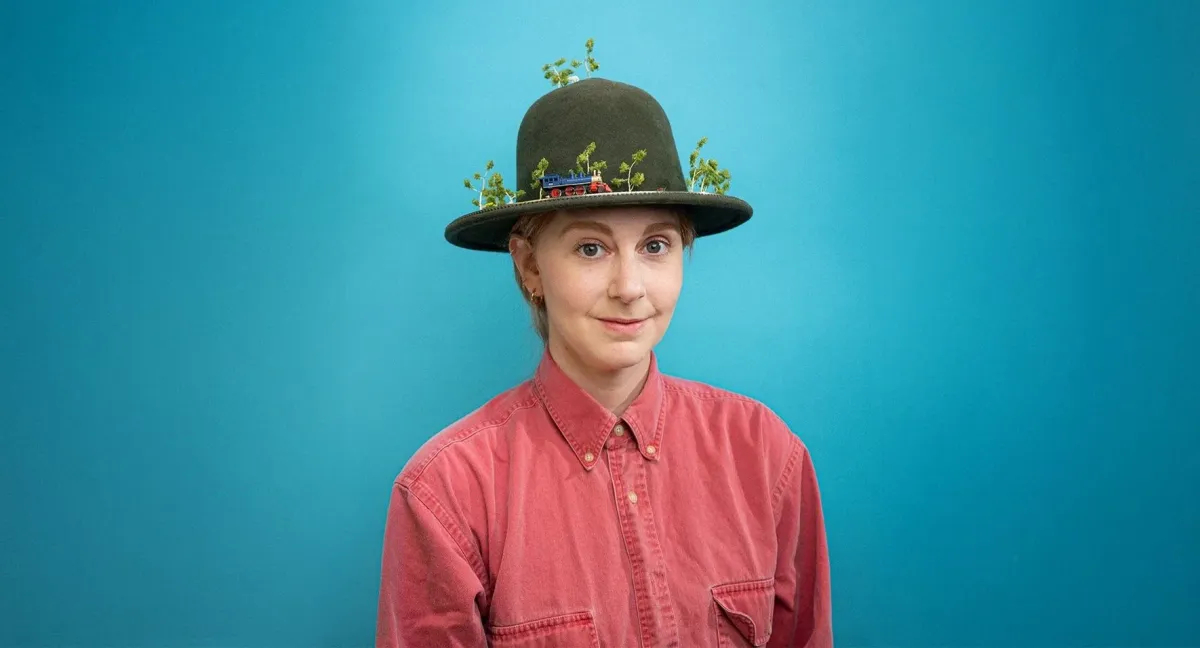
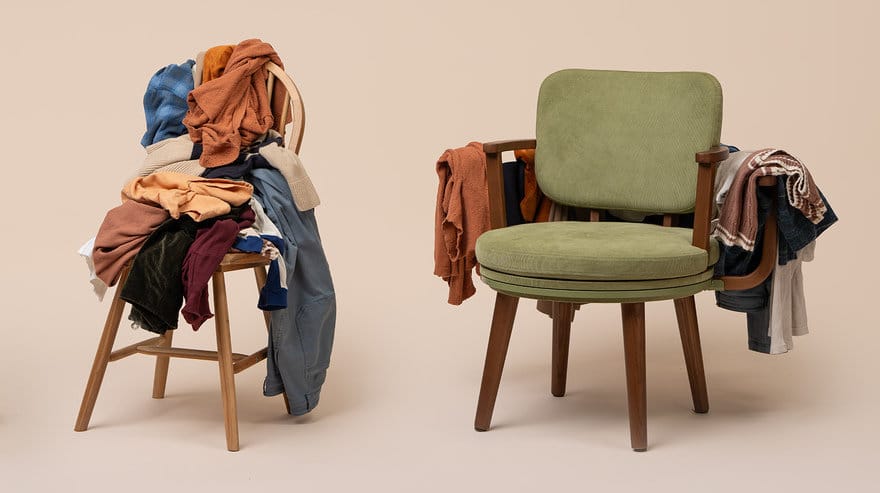
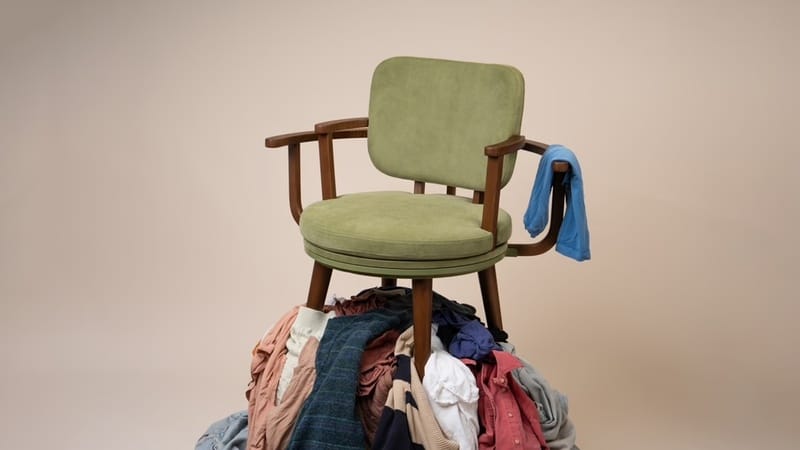
Simone Giertz is a Swedish inventor and YouTuber. She recently launched a Kickstarter campaign for her Laundry Chair: A Better Place for Half-Dirty Clothes, which led to one of the most viral social media posts in Kickstarter history.
It's clearly caught folks' attention, so we caught up with her and asked about dealing with creative blocks, dreaming up complex solutions to simple everyday life problems, and why she decided to use Kickstarter for her newest invention.
(You can read more from Simone at our sister site, The Creative Independent.)
I’m imagine you have more ideas than the projects you do. How do you decide, “I’m going to try this one out” versus “This is just a fleeting idea that’s going to pass.” Or do you try to give every idea a shot?
I have a list on my phone that is just high and low an absolute wasp’s nest of ideas. Usually it depends; if it’s a product then it’s just if this is this something that I want myself. If it’s a YouTube video, it’s often a negotiation between, is this something that I’m excited about or is this something that would make for an interesting video or thumbnail and title? So, yeah, I feel like no matter the context you’re in, you have to make creative compromises. And that is the very minor creative compromise I have to make.
How did you decide which products to bring to a Kickstarter project? I know you’ve had tons of projects. There’s a couple on Kickstarter, but many that are not.
It’s projects that I cannot fully pull off with what I have. So, it’s the more ambitious projects, the ones that are outside of the scope and budget of what we’ve already done. I think it’s just such a cool way of flipping the order in which you do things.
One of my big learnings from last year was when I launched my first furniture piece in August and it didn’t sell as well as we hoped it would. We ended up racking up really high storage fees at our fulfillment center and we were like, "Okay, how can we make sure this doesn’t happen with our next piece?" And it's like, "Oh, we do Kickstarter that's the way to do it."
Kickstarter was the way to get up to the minimum order quantity with our factories, but helped us make sure that we could actually ship out those units and that they don't end up in a fulfillment center.
I need outside investment to get them to market. I also need to make sure that the units we produce are actually going to ship out to customers.
 Etai Rahmil
I figured maybe you were going with the stuff that could sell on a larger scale—the Everyday Calendar, the Foldable Coat Hangers, the Laundry Chair. These could be used by tons of people, and they could really go super mass market. I was wondering if that was part of it.
No, it's really just like, "This is something that I need outside investment to get to market," and I also need to make sure that the units we produce are actually going to ship out to customers.
It's practical, but then it's interesting with the newsworthiness of things. I think things being on Kickstarter is just more newsworthy than somebody launching a product on their website.
Kickstarter was the way to get up to the minimum order quantity with our factories, but helped us make sure that we could actually ship out those units and that they don't end up in a fulfillment center. - Simone Giertz
With the most recent project, the Laundry Chair, was this an idea that was nagging at you for a while—or just one day struck you?
It was nagging at me for a while. I was on vacation and for some reason it just struck me and I was like, “Okay, I need to work on it now.”
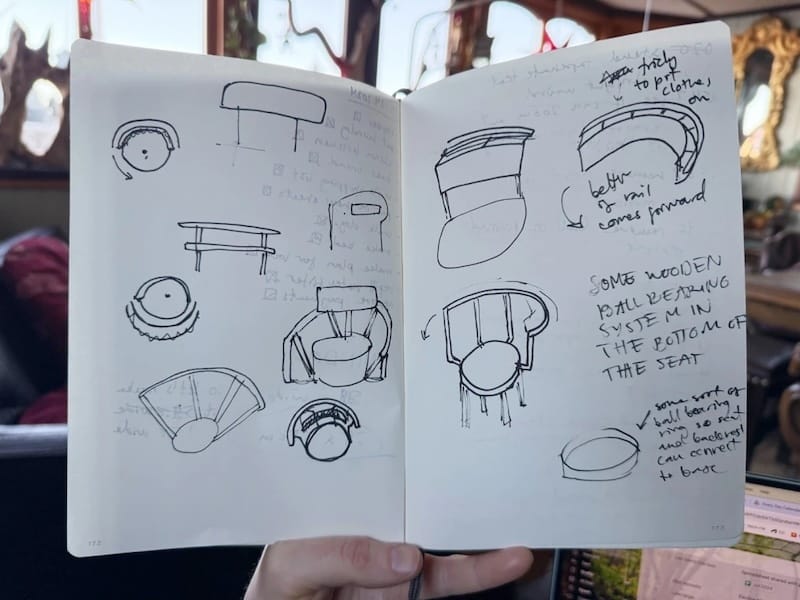
I started sketching. It was my stepdad’s parents house in Palm Springs and I remember them having a chair in the guest room that I was staying in. I was like, “This one’s kind of good proportions.” I started measuring off of it and sketching off of that. Some projects are like, “Okay, we’re going to work on this” and you kind of have to grab the projects, and then there are some projects that just grab you. This was definitely one of the projects that grabbed me and was like, “No, you’re going to work on me right now.
Something I appreciate about your projects is that you're thinking about solutions to daily situations. That said, it also feels like an art project in many ways.
I don’t think I’m cool enough to be an artist. It’s more of a thought exercise of like, How can we solve the problems that are so common that we don’t even really think about them as problems? How can we make something that turns it on its head a little bit? That is really the sweet spot for me right now.
It reminds me of when you go to someone’s house and they’re like, “Oh yeah, our hot water doesn’t work in this room, so we’ve created this work-around for it.” Many people create these sorts of everyday workarounds, but they do it on their own and don’t think to expand it to other people who have the same problem. It’s an interesting oeuvre—to have created a bunch of different projects like that.
Yeah. I really want to follow my enthusiasm wherever it goes. For now I’m so happy just finding those little pieces of friction in your life and spending an obscene amount of time trying to work around it.
