
Eight Kickstarter Campaigns Later, Here's What FLYOS Would Tell New Creators
The Montreal-based studio, FLYOS, is known for immersive narrative experiences like Vampire: The Masquerade — CHAPTERS and Rayman: The Board Game. What's next?

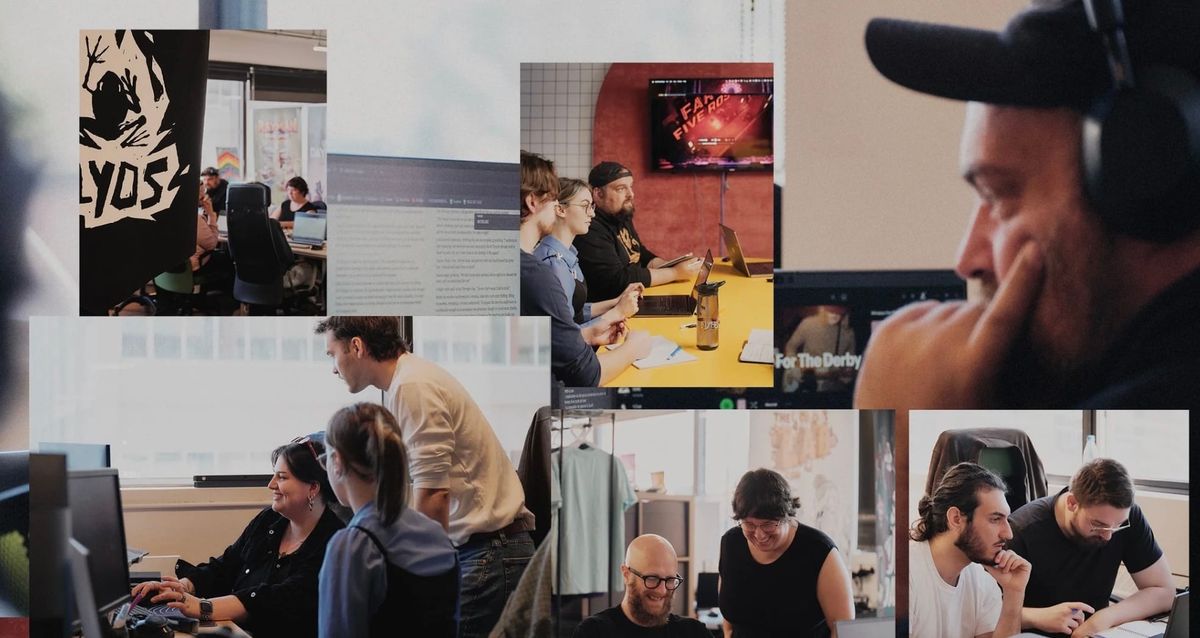
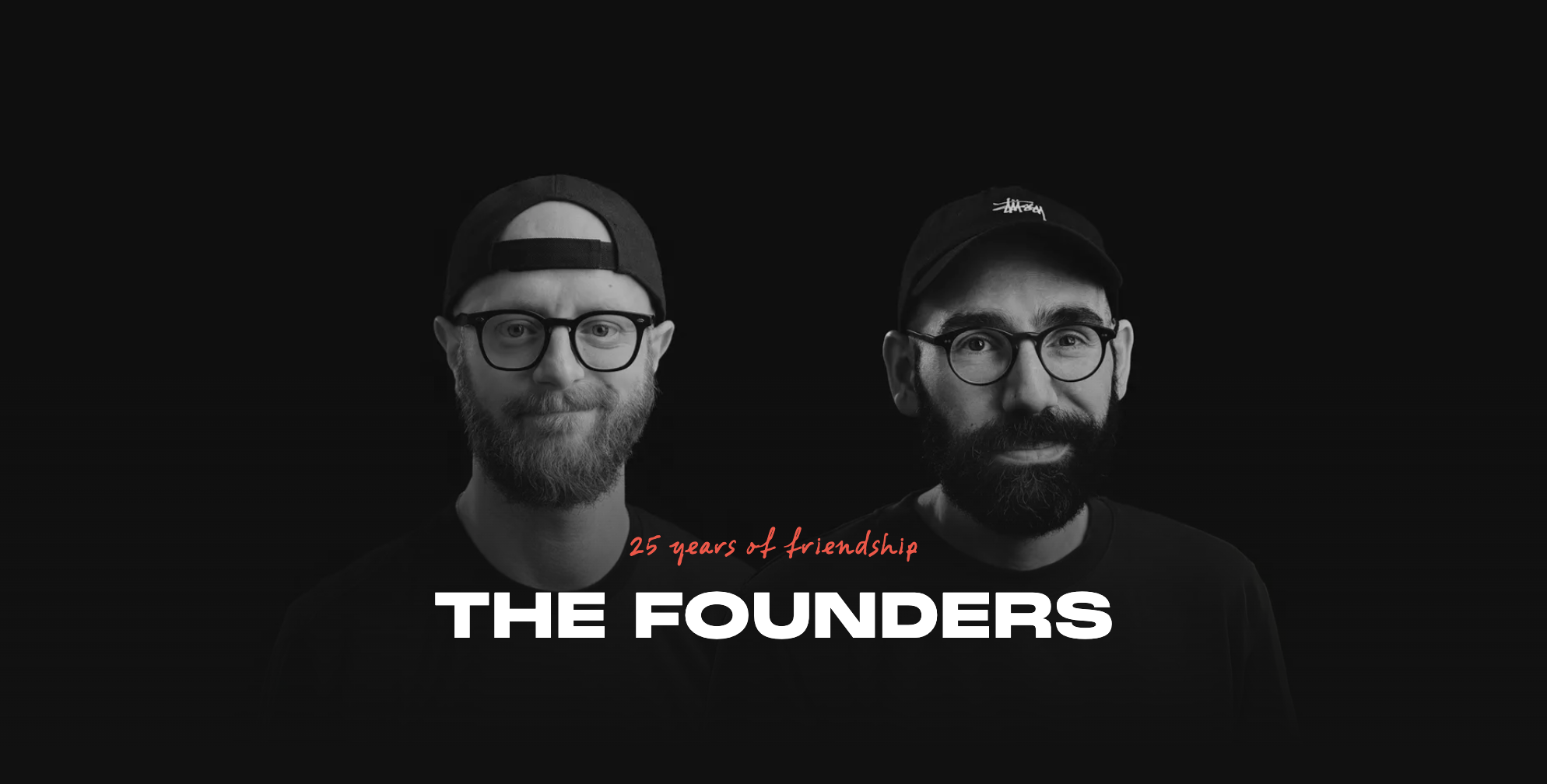
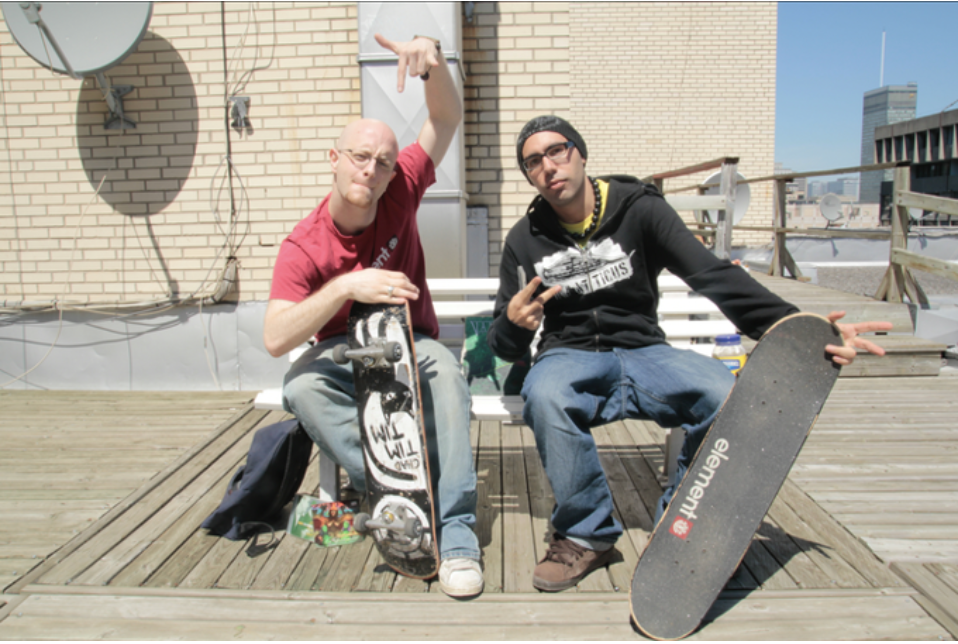
FLYOS games was founded in 2017 by longtime friends Thomas Filippi and Gary Paitre. They'd each built careers in different fields, but eventually those paths came back together around a shared desire: creating games as a team. The two saw FLYOS as this opportunity.
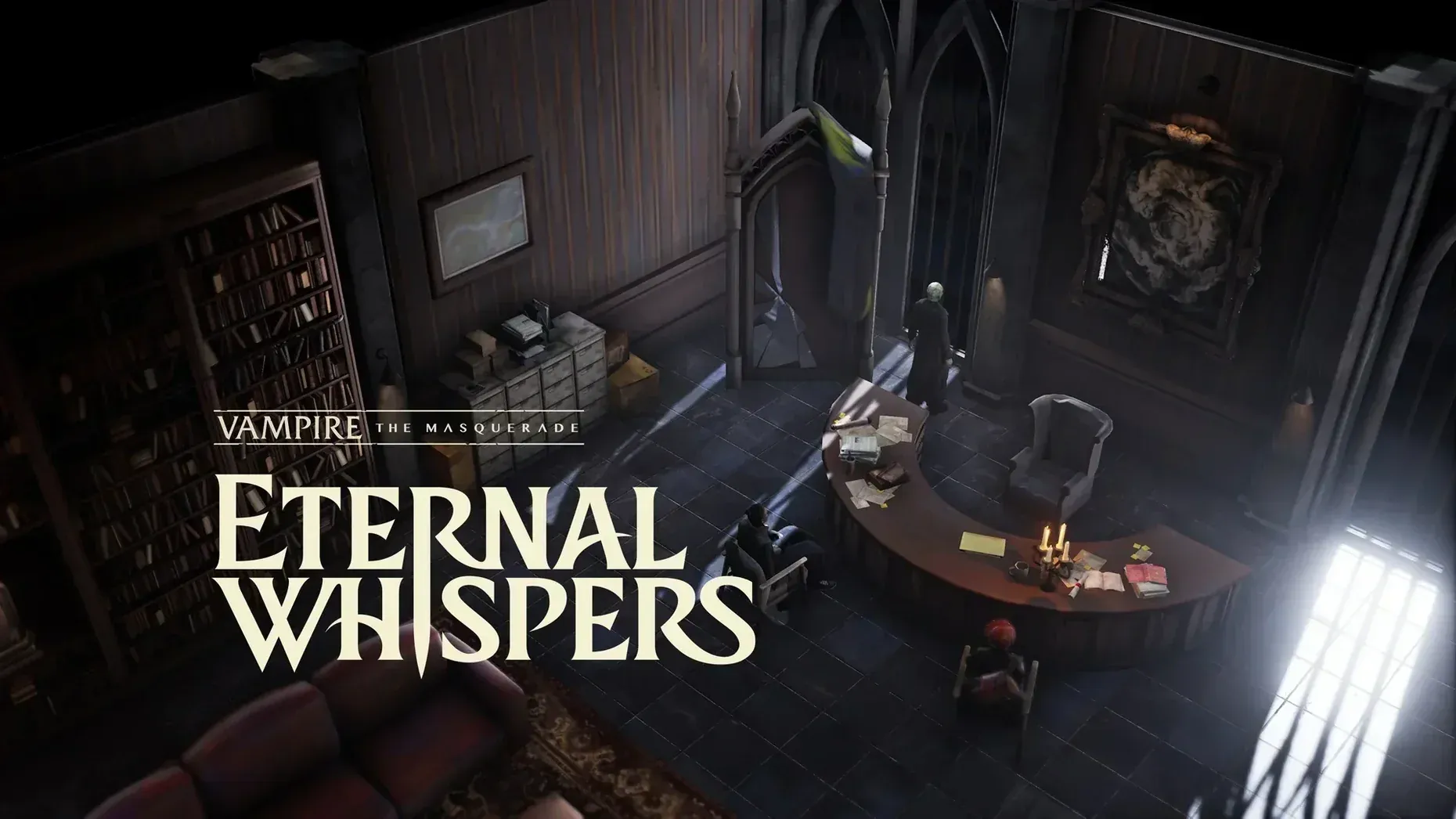
FLYOS is an independent studio "passionate about crafting extraordinary experiences through bold artistic direction, deep narrative design and carefully balanced gameplay." To date, they've run eight successful Kickstarter campaigns, creating acclaimed titles like Vampire: The Masquerade — CHAPTERS and Rayman: The Board Game. And, they're not slowing down. Vampire: The Masquerade — Eternal Whispers, their video game adaptation of Vampire: The Masquerade — CHAPTERS, was officially announced during the PC Gaming Show and Rayman: The Board Game has entered production.
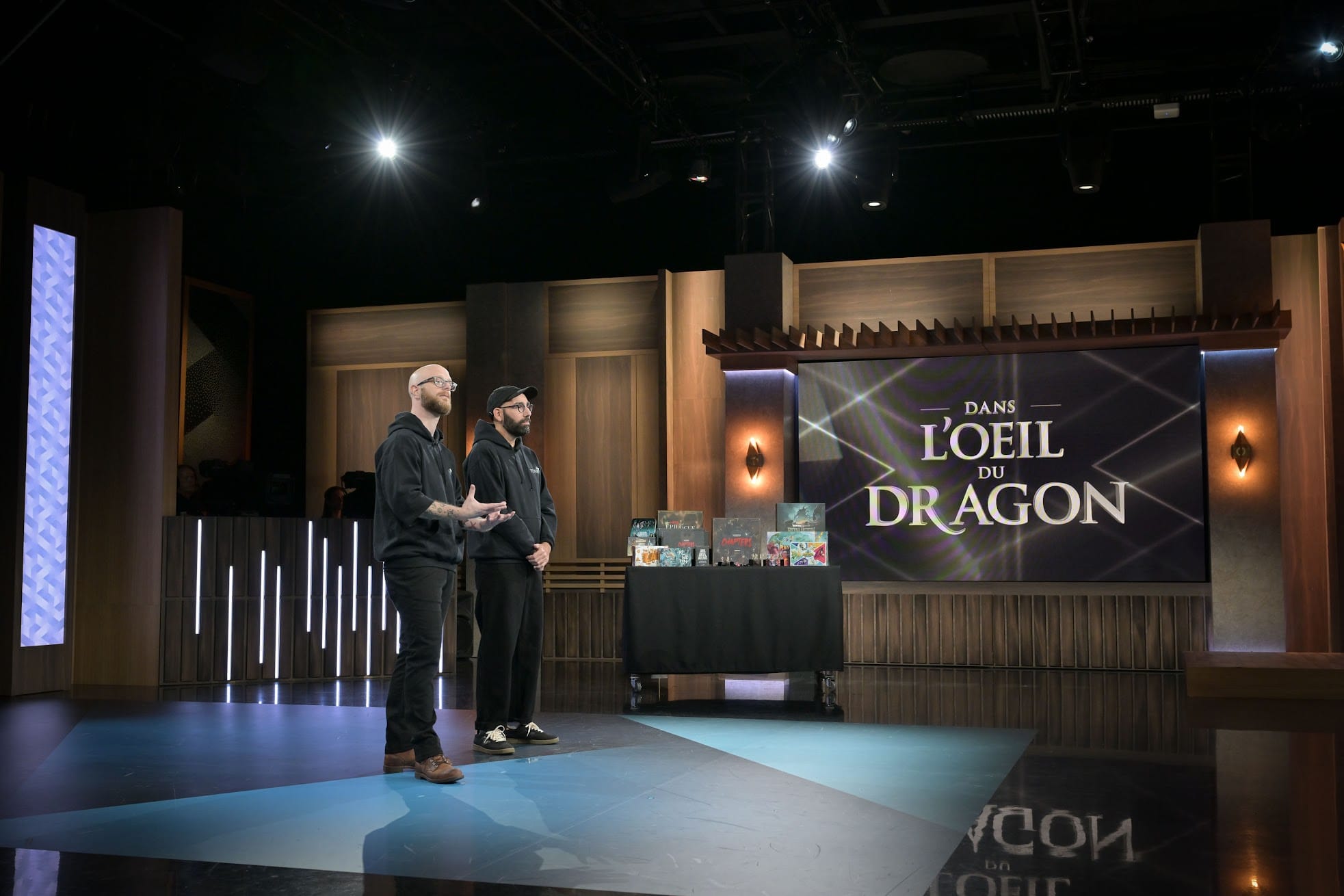
FLYOS recently appeared on the popular television show, Dragon's Den, on June 17th , and signed a deal with the Dominique Brown (founder of Beenox, a video game company sold to Activision for $100m in 2005).
It felt like a good time to ask some questions. So we did. Thomas Filippi answered them with thoughtfulness, care, and wisdom. It's good to see such nice, level-headed folks doing so well. As he puts it, "Success is being able to look back at the journey and still feel grateful for it."
What first drew you to Kickstarter?
When Gary and I discovered Kickstarter, it felt like magic. We were two best friends with a lot of ideas and very little else. No publisher, no distribution network, no industry connections. Just a shared passion for storytelling and a desire to create something together.
What drew us to Kickstarter wasn't funding. It was validation. For the first time, creators could put an idea into the world and ask a simple question: "Does this resonate with anyone else?" The answer, surprisingly, was yes.
Years later, after eight successful campaigns, I still think that's what makes Kickstarter special. It isn't just a marketplace. It's a place where communities help ideas become real.
When Gary and I discovered Kickstarter, it felt like magic... What drew us to Kickstarter wasn't funding. It was validation.
Many things have changed since our first campaign. We've built board games, we're developing a video game, we've developed internal storytelling tools that help us create more efficiently, and we've grown from two friends working on a dream into a team.
We've even had opportunities we never imagined, like signing a publisher for our upcoming video game (Kwalee), welcoming new investors, or appearing on Quebec's version of Shark Tank, Dans l'œil du dragon.
Yet despite all that growth, the feeling is still the same: putting an idea into the world and hoping it resonates with people.
Why do you think your games have had success on the platform? What have you learned from your first project to your most recent project?
The honest answer is that we've made a lot of mistakes.
Every project taught us something new. Manufacturing. Logistics. Communication. Marketing. Retail. Community management. Localization. Technology. Licensing. The list never ends.
When we launched our first campaign, we were amateurs. Today we're more experienced, but we still approach every project as students.
If there is one lesson we've learned, it's that transparency matters. Backers can expect perfection, but they want honesty first.
Our advice to creators would be simple: Start smaller than you think. Communicate more than you think. Ask for help sooner than you think.
Over the last decade, the tabletop industry has faced extraordinary challenges: global shipping disruptions, inflation, rising production costs, tariffs, changing retail habits, increasing uncertainty and economic recession. Every creator has had to adapt. What helped us navigate those moments was treating our backers as partners rather than customers. We've learned that trust is built during the difficult moments, not the easy ones.
Our advice to creators would be simple: Start smaller than you think. Communicate more than you think. Ask for help sooner than you think.
And remember that crowdfunding is about trust before it's about funding. The campaign lasts a few weeks. The relationship with your community lasts years.
Storytelling is central to what you do. What makes a good story?
For us, a good story starts with characters and choices. People rarely remember every detail of a story. What they remember is how it made them feel. They remember a difficult decision, a sacrifice, a betrayal, a moment of triumph, or a character they couldn't stop thinking about.
That's true whether you're telling a story around a tabletop RPG session, a board game campaign, or a video game. We also believe that good stories create conversations. The best moments aren't necessarily the ones the creators planned. They're the moments players share with each other afterward.
At FLYOS, storytelling is really about creating meaningful experiences. The mechanics matter. The art matters. The production quality matters. But all of those things exist to serve the same purpose: helping players create memories together. That's ultimately why Gary and I started creating games in the first place.
I was reading the comments for the Eternal Whispers trailer—they're incredibly positive. People seem to have been waiting for this kind of game, or story, for a long time. Can you explain the process behind developing it, and did you know there was a hole to fill with it?
In some ways, Eternal Whispers started years before the video game itself. One winter evening in Montreal, a snowstorm prevented our tabletop RPG group from gathering for a Vampire: The Masquerade session. Gary and I were talking afterward and one sentence changed everything: "How awesome would it be to have a Vampire campaign already prepared, with miniatures, branching narratives, meaningful choices, and premium production values?" That conversation eventually became Vampire: The Masquerade — CHAPTERS.
The success of CHAPTERS taught us something important: Players weren't just looking for combat systems or game mechanics, they were looking for meaningful stories and difficult choices inside the World of Darkness.
As we continued building games, signing different IP, listening to our community, and working with incredible partners such as Paradox Interactive, we began to see an opportunity. There seemed to be a growing appetite for a deeply narrative Vampire experience that embraced investigation, consequences, roleplaying, and personal horror.
The positive reaction to Eternal Whispers has been incredibly humbling. We had a feeling there was room for this type of experience, but seeing players respond so passionately has been a wonderful surprise. The game recently surpassed 100,000 wishlists, and while we're incredibly grateful for that momentum, we're even more excited by the conversations players are already having around it. We read every comment.
At the end of the day, many of our projects begin the same way: listening to players, listening to trusted partners and the team, but also trusting our instincts when something feels exciting.
How important is community to what you do?
Everything starts and ends with the community. Kickstarter gave us the opportunity to build games, but our community gave us the opportunity to build a company.
Over the years we've received messages from players around the world that remind us why we do this. One of my favorites came from Peru, where a teacher explained that kids were using one of our games to practice English. That's the kind of impact you never expect when you're designing a game around a kitchen table.
Community also keeps you grounded. Sometimes that comes in the form of praise. Sometimes it comes in the form of criticism. We've made mistakes throughout our journey, and our community has never hesitated to tell us when we could do better. While criticism can be difficult to hear, we've learned that most frustrations come from the same place our own ambitions do: people care deeply about the projects.
Everything starts and ends with the community. Kickstarter gave us the opportunity to build games, but our community gave us the opportunity to build a company.
We've also been incredibly fortunate to receive support from people and organizations who believed in us when they had no reason to. Distributors, publishers, retailers, mentors, partners, fellow creators, and countless individuals helped us navigate moments where we simply didn't know the answer. The reality is that no creative project is built alone.
Today, we're entering a new chapter with the launch of our new FLYOS website, new investors, bringing together all of our games, projects, and communities under one roof. In many ways, it's an extension of what Kickstarter helped us build from day one: a direct relationship with the people who believe in our work.
One of the greatest privileges of growing FLYOS is being able to help the next generation of creators. We benefited from countless acts of generosity along the way, and we try to pass that forward whenever we can. We call it "the piggy bank of good-will!"
Community got us here. Hopefully we can help build the next one.
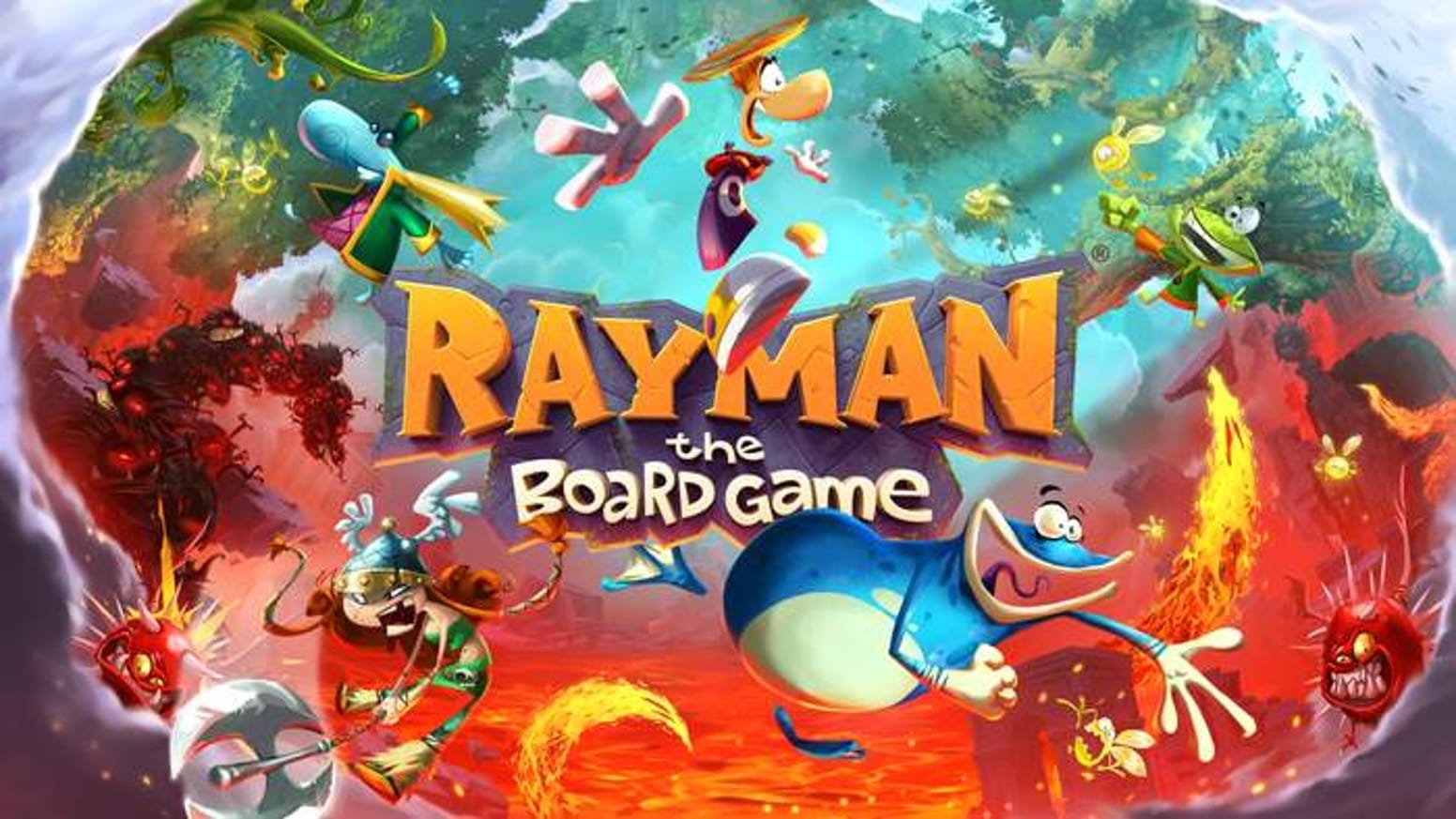
You're in the final stages of Rayman's mass production. What's it like, the moment a game becomes real? Moving from an idea to a physical object.
It's a strange combination of excitement, relief, stress and a bit of pride. For years, a game exists mostly in conversations, prototypes, sketches, spreadsheets, playtests, and late-night discussions. Then suddenly you're reviewing production samples, approving manufacturing files, coordinating freight, discussing distribution, planning marketing campaigns, preparing customer support, and confirming retail partnerships.
The moment a game becomes real is exciting, but it's also the moment where a completely different set of responsibilities begins.
What I love most is seeing something that only existed in people's imagination become something they can actually hold in their hands.That's a special feeling that never gets old.
 Chris Backe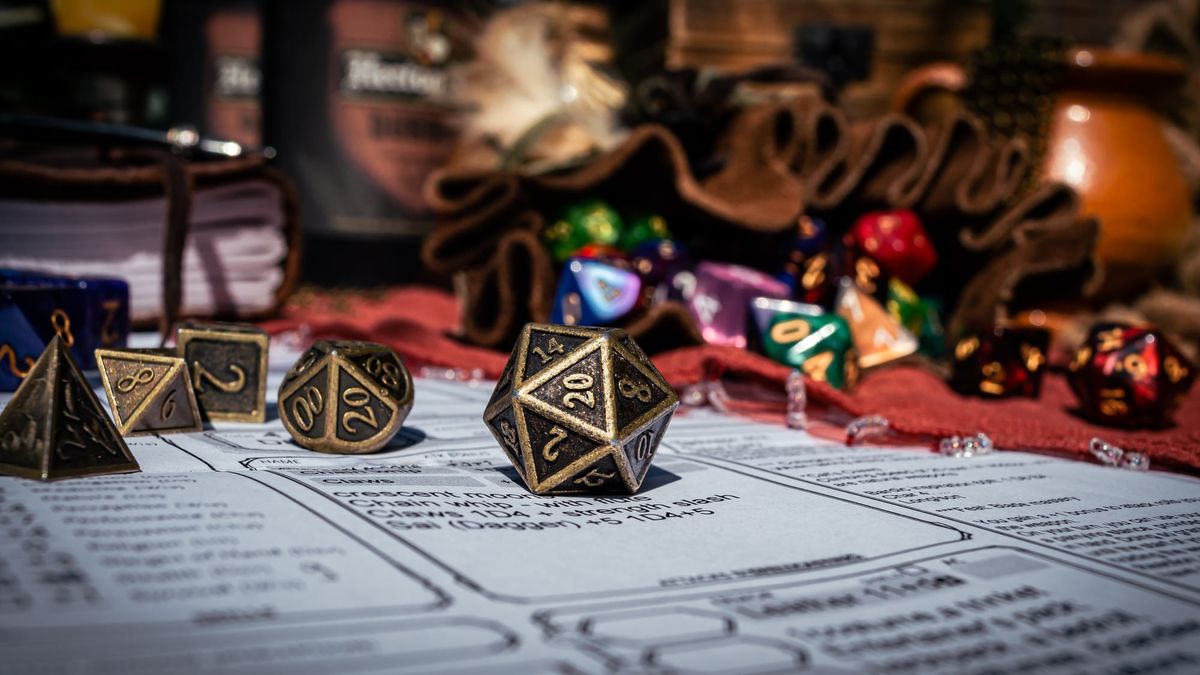
What do you get out of this work and what has it taught you about yourself?
More than anything, it has taught me humility. We don’t come from Ivy league schools. We're immigrants that started a new life far away from "home." When we started, I thought entrepreneurship was mostly about having good ideas. I was wrong.
Entrepreneurship is really about learning. Constantly. Over the years we've had to learn manufacturing, logistics, licensing, finance, technology, marketing, communication, retail, quality assurance, localization, leadership, and countless other skills. Every improvement came from a mistake. Every difficult conversation contained a lesson. Every challenge forced us to grow.
I've learned that growth begins where certainty and comfort ends. I've also learned that building a company is fundamentally a human experience. You spend more time with your colleagues than almost anyone else. You celebrate together, solve problems together, and navigate uncertainty together.
It's challenging, but it's also incredibly rewarding.
What do you do when you're creatively stuck?
I listen. One of the biggest lessons I've learned as a cofounder is that you don't hire talented people so they can agree with you. You hire them because they see things differently.
When I'm stuck, I talk to the team. I talk to our community. I talk to players. I talk to mentors. The best solutions often come from unexpected places.
As companies grow, founders sometimes feel pressure to have all the answers. In reality, good leadership often means creating the conditions for the best answers to emerge from the people around you.
Initiating a creative project takes a certain amount of belief — in yourself and in the project. What did it feel like to have other people believe in your idea, too?
The first pledge is unforgettable. Until that moment, it's your dream. The moment a stranger decides to support your project, it becomes a shared dream. That's a powerful feeling.
What's fascinating is that the feeling never really changes. Whether it's a backer supporting your first campaign, a major partner trusting you with an iconic brand, or investors choosing to believe in your vision on national television, it always comes back to the same thing: Someone is saying, "I believe this is worth building." That's both exciting and humbling.
Every creator experiences moments of doubt. Every project has moments where you wonder if anyone else will care as much as we do.
Then someone you've never met decides they believe in your vision. That support creates responsibility, but it also creates motivation. Even today, after multiple campaigns, I don't think that feeling ever disappears.
Start small. Ask for help. Plan conservatively. Prepare for the worst while hoping for the best. Accept that mistakes will happen.
What would you tell someone who's sitting on a great idea right now?
Start before you're ready. Most people wait for certainty. The reality is that certainty rarely arrives.
Start small. Ask for help. Plan conservatively. Prepare for the worst while hoping for the best. Accept that mistakes will happen.
Most importantly, understand that expertise comes from doing. Nobody starts as an expert creator, entrepreneur, designer, marketer, or leader.
You become one project at a time.
 Kickstarter
What do you consider success?
My definition of success has changed over the years. When we started, success meant launching a game. Then it meant funding a campaign. Then it meant delivering a project.
Along the way, there were milestones we never expected. Raising millions through crowdfunding. Building games with some of our favorite licenses (the teenager that started ttrpg with his best friend on Vampire 25 years ago is still in total disbelief that we impacted the lore of a true obsession). Seeing a video game surpass 100,000 wishlists. Standing in front of the Dragons and sharing our story on national television. Those moments are memorable, but they aren't what define success for me.
Today, success is much simpler. Success is being excited to wake up in the morning. It's seeing our players enjoy something we've created. It's working with people we respect. It's having partners who trust us with their worlds and their ideas. It's having a healthy team that now have equity in the company. It's having the stability to keep creating.
Most of all, success is being able to look back at the journey and still feel grateful for it. Two friends started making games because they loved creating together. Years later, after eight crowdfunding campaigns, multiple games, an upcoming video game, and countless lessons learned, success is still having the opportunity to wake up tomorrow and do it all over again.
