
How to Protect Your Kickstarter Campaign From Scams
What creators should know about impersonation, pledge manipulation, and third-party marketing scams.


Running a Kickstarter campaign takes focus, stamina, and a lot of trust—in your community and in the tools supporting your launch. Unfortunately, scams across the internet continue to evolve, and creators occasionally encounter bad actors trying to take advantage of their momentum.
The good news is that most scams follow predictable patterns. Once you know what to look for, they’re much easier to spot and avoid.
Below are three of the most common issues our Trust & Safety team sees today, along with practical steps you can take to protect yourself and your project.
1. Scammers impersonating Kickstarter
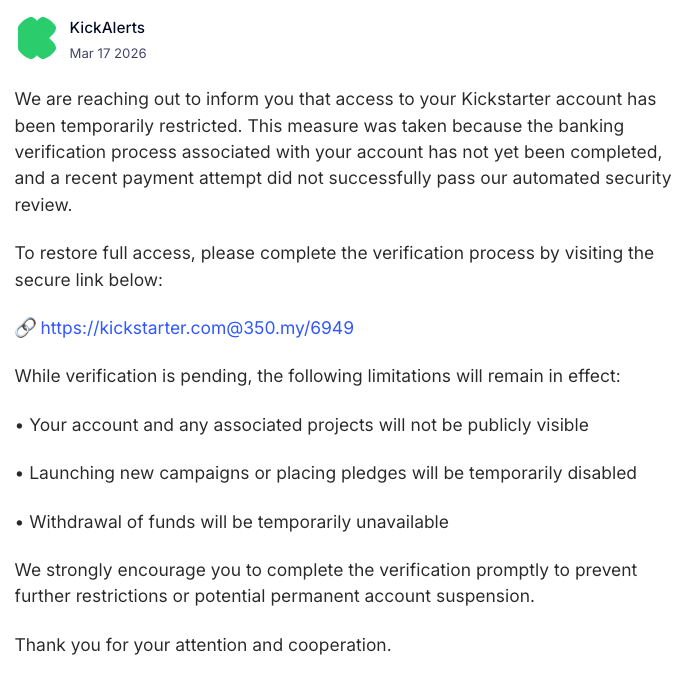
One of the most common tactics is impersonation. Scammers may pose as Kickstarter staff to try to access your account, payment details, or personal information.
What legitimate communication looks like
All official emails from Kickstarter will:
- Come from an @kickstarter.com address, or from @kickstarter.zendesk.com for Support tickets.
- Never ask you to click on third-party links, unless they come from trusted domains like Stripe.com or SendSafely.com.
- Never ask for sensitive information via email or direct message
It’s also important to know that the notification@kickstarter.com alias only sends message notifications between users and is not used for direct outreach from Kickstarter staff.
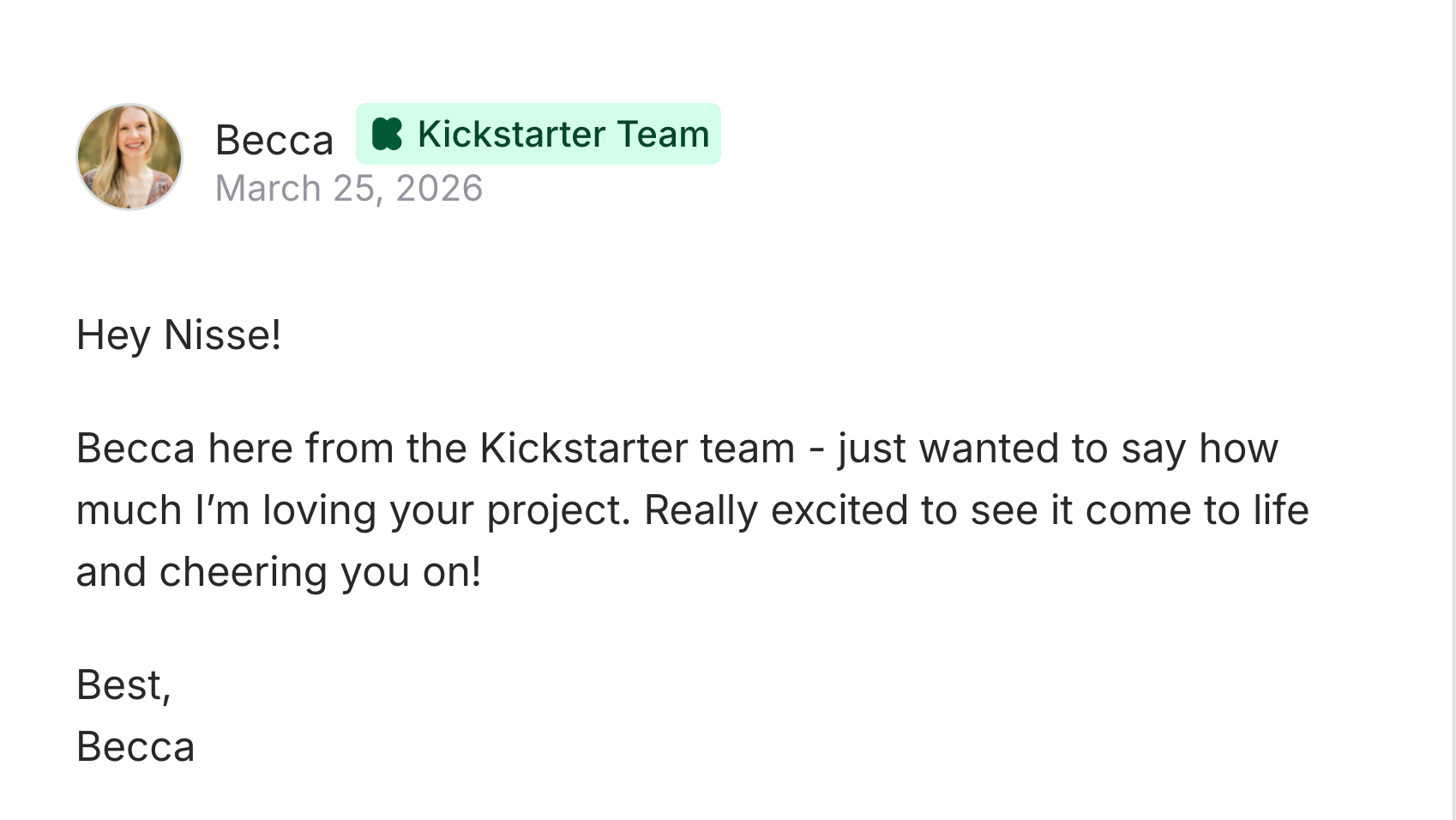
On-platform, verified Kickstarter staff accounts display a green K badge. While we may not message you directly on the platform often, this badge is the source of truth for knowing if the message sender works at Kickstarter. This means that if you receive a message from someone claiming to work at Kickstarter, but they do not have the Kickstarter Team badge, you should not engage with them – even if their profile has the name of a real employee.
Red flags to watch for:
• Messages about “account issues” urging immediate action
• Links to unfamiliar third-party websites
• Requests for passwords, payment info, or verification codes
• Poor grammar or unusual tone compared to official communications
If you receive a suspicious message, don’t respond or click any links. Mark it as spam to move it out of your inbox and into your spam folder.
2. Backers dropping pledges (and pressure tactics)
Creators sometimes receive unusual messages from users claiming to be backers or threatening to withdraw their pledge unless the creator communicates off-platform.
In most cases, this isn’t necessary. Until you enter fulfillment, you generally should not need to communicate with backers outside Kickstarter.
What to do if this happens
If someone:
- Asks to move communication off Kickstarter
- Pressures you with threats about their pledge
- Seems unusually focused on backer data or engagement
Do not engage. Instead, report the comment so our team can review it.
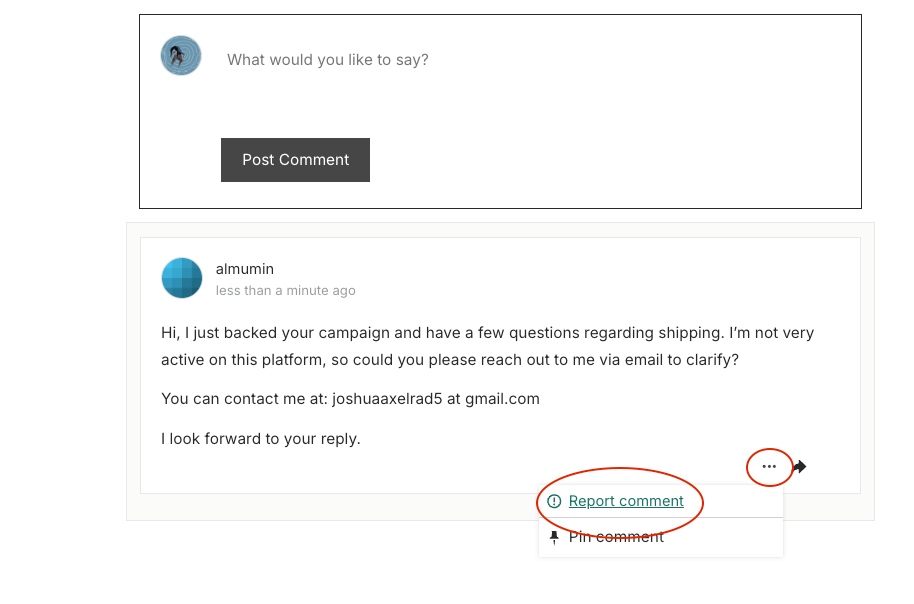
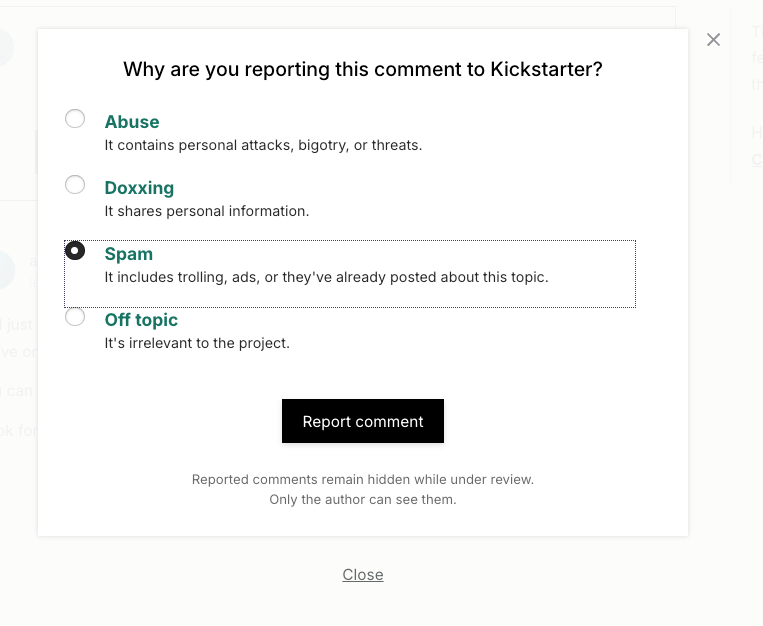
How to report a comment on Kickstarter
3. Third-party marketing scams
Many scammers pose as marketing experts or agencies promising guaranteed success, large numbers of backers, or insider access to crowdfunding audiences.
These offers often involve upfront payments and vague deliverables — and rarely deliver meaningful results.
How to evaluate opportunities safely:
- Be cautious of guarantees around backer numbers or funding totals
- Research collaborators thoroughly before committing
- Ask for references and documented campaign results
- Avoid paying upfront without clear scope and terms
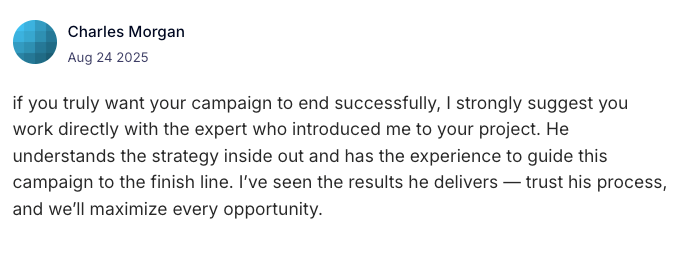
Always research anyone you’re considering working with, and be cautious of guarantees around backers or funding totals. If you’re looking for additional support, learn more about working with trusted, vetted, and experienced partners through the Kickstarter Partner Program.
When in doubt, ask
If something feels off, trust your instincts. Our Trust & Safety team is here to help.
You can always reach out to support@kickstarter.com if you’re unsure about a message, user, or offer. Reporting suspicious activity helps protect the entire Kickstarter community.
Running a campaign is hard enough. A little vigilance will go a long way in protecting your project.
