
Validation: How to Predict Your Campaign’s Success
“My friends love it!” is something every founder has said at least once. But successful Kickstarter campaigns are built on market validation, not friendly encouragement. Here’s how to test demand before you launch.

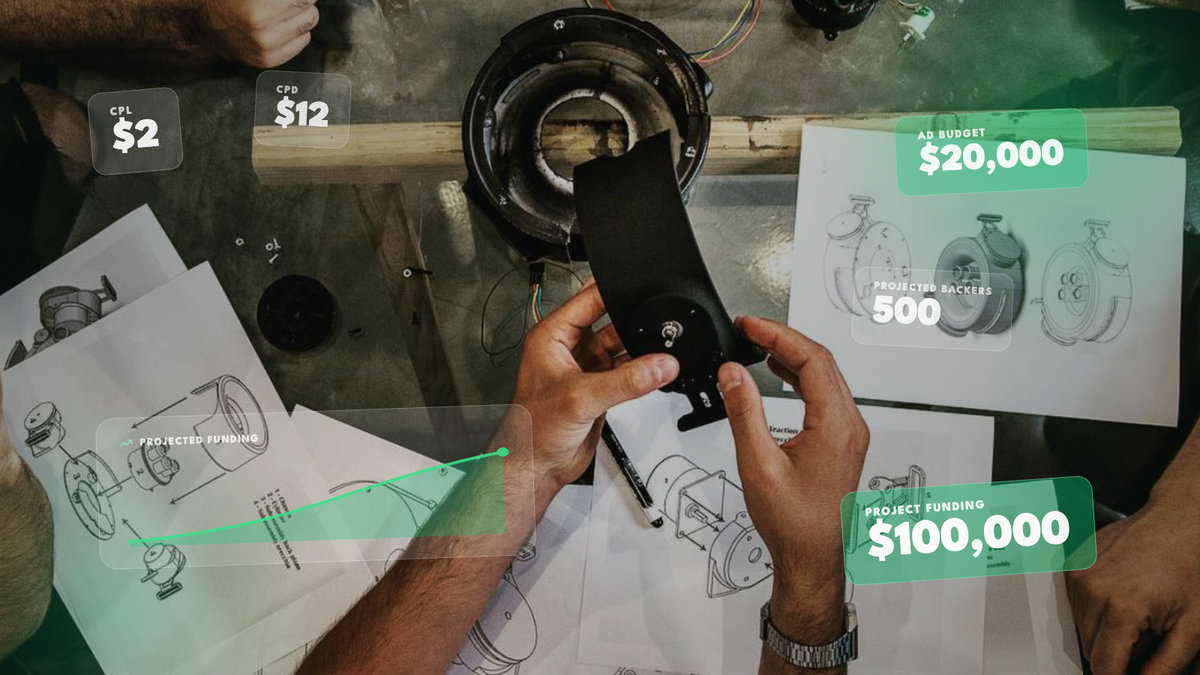
Every year, thousands of creators launch innovative products on Kickstarter. Some of them reach their funding goal within minutes and kickstart the birth of new, exciting businesses.
From the outside, these campaigns can look very different. In reality, they often have one thing in common: the work that happened before launch.
Before launching a crowdfunding campaign, almost every creator hears the same encouraging words: “I’d buy that.” The problem is that most people who say this never actually do. That gap between friendly enthusiasm and real market behavior is where validation becomes essential.
Crowdfunding has changed dramatically over the past decade. In Kickstarter’s early years, publishing a compelling project was often enough to attract attention.
Today, creators are launching into a far more competitive environment, where hundreds of campaigns compete for the same audience every week.
As competition has increased, one phase has become increasingly important: validation.
Validation isn’t simply confirming that a product is “good.” It’s about understanding whether the right audience exists, whether your messaging resonates, whether your pricing makes sense, and whether enough people are willing to support your project before you ask them to. In startup language, it allows you to understand your Unit Economics, which are the numbers that any founder in the world should know by heart.
The creators who validate these assumptions before launch rarely eliminate uncertainty altogether, but they replace guesswork with evidence. That allows them to improve their product, refine their positioning, and launch with far greater confidence.
The Two Metrics That Predict Success
When people hear the word “validation,” they often imagine surveys, interviews, or feedback from friends and family. While these can provide useful insights (sometimes), validation through Paid Ads + Deposit payments offers something much more powerful: real market behavior.
Every founder has heard some version of: “My friends love my idea.”
That’s always great to hear, but unless your business plan is to sell exclusively to your friends, it’s probably not the most objective validation.
Friends want to encourage you. The market doesn’t. That’s precisely what makes market validation so valuable: it replaces well-intentioned opinions with measurable behavior.
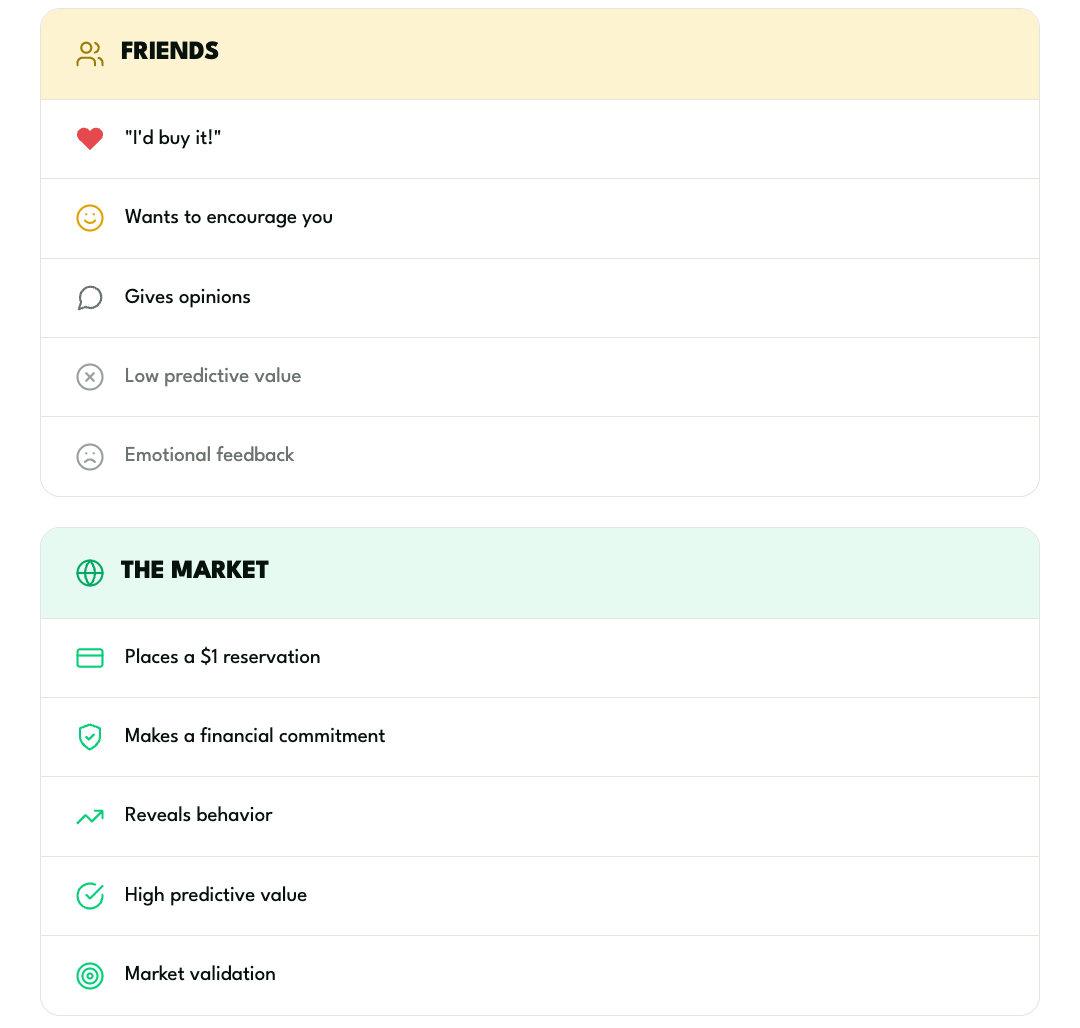
Today, most successful Kickstarter campaigns validate demand through a structured pre-launch process built around two key metrics.
The first is Cost Per Lead (CPL).
By running advertisements on Meta (or any other social media platform), creators can invite potential backers to join a waitlist and measure how efficiently they generate genuine interest. The more your product resonates with the market, the less you'll typically spend to acquire each waitlist signup. This metric is known as CPL (Cost Per Lead).
Leads are generally collected on a dedicated landing page (see the example below):
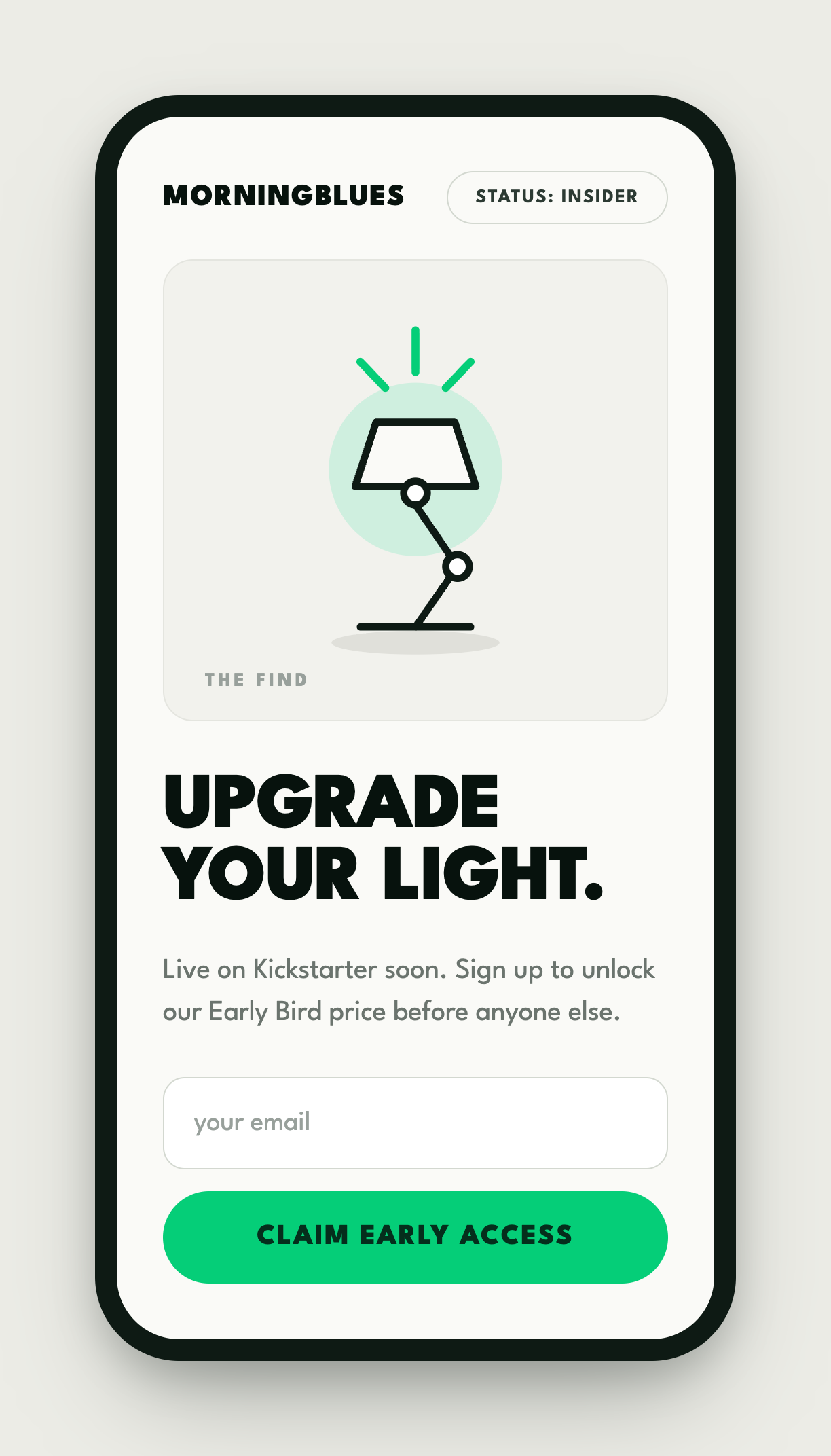
A strong CPL is often the first indication that the product, its positioning, and the creative assets are resonating with the market.
A weak CPL, on the other hand, rarely points to a single problem. It may indicate that the audience isn’t the right one, that the messaging isn’t communicating the product’s value, or even that the product itself needs refinement. The important part is that these insights arrive months before launch, when changes are still relatively inexpensive to make.
The second metric is Cost Per Deposit (CPD).
Rather than asking people to join the waitlist only, today we always invite supporters to reserve an exclusive Kickstarter price with a fully refundable deposit.
That small commitment changes everything:
An email address measures curiosity,
a reservation measures intent.
Reservations are generally collected on a dedicated Reservation Page, or through our Proprietary software, the Future Suite (see below):
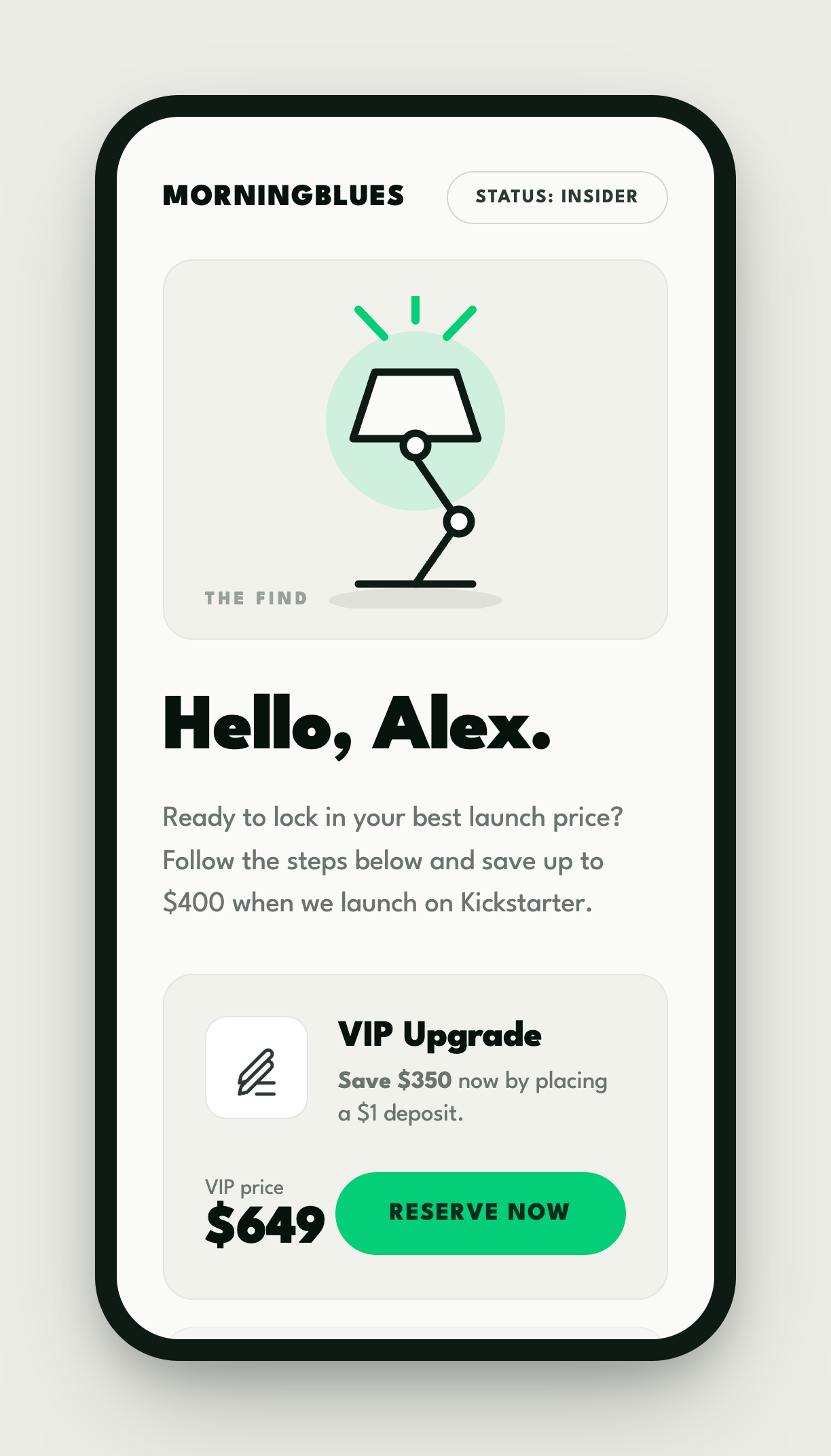
Someone willing to spend even a symbolic amount, months before launch, is demonstrating that they can realistically imagine themselves becoming a backer. As a result, CPD becomes one of the strongest indicators of whether the offer, pricing, and overall value proposition are compelling enough to convert interest into action. Again: the lower your CPD, the better.
Together, these two metrics answer two fundamental questions before launch:
- Does the market want this product?
- Is the offer compelling enough for people to buy it?
Those answers don’t guarantee a successful campaign, but they dramatically reduce uncertainty.
From Validation to Campaign Projections
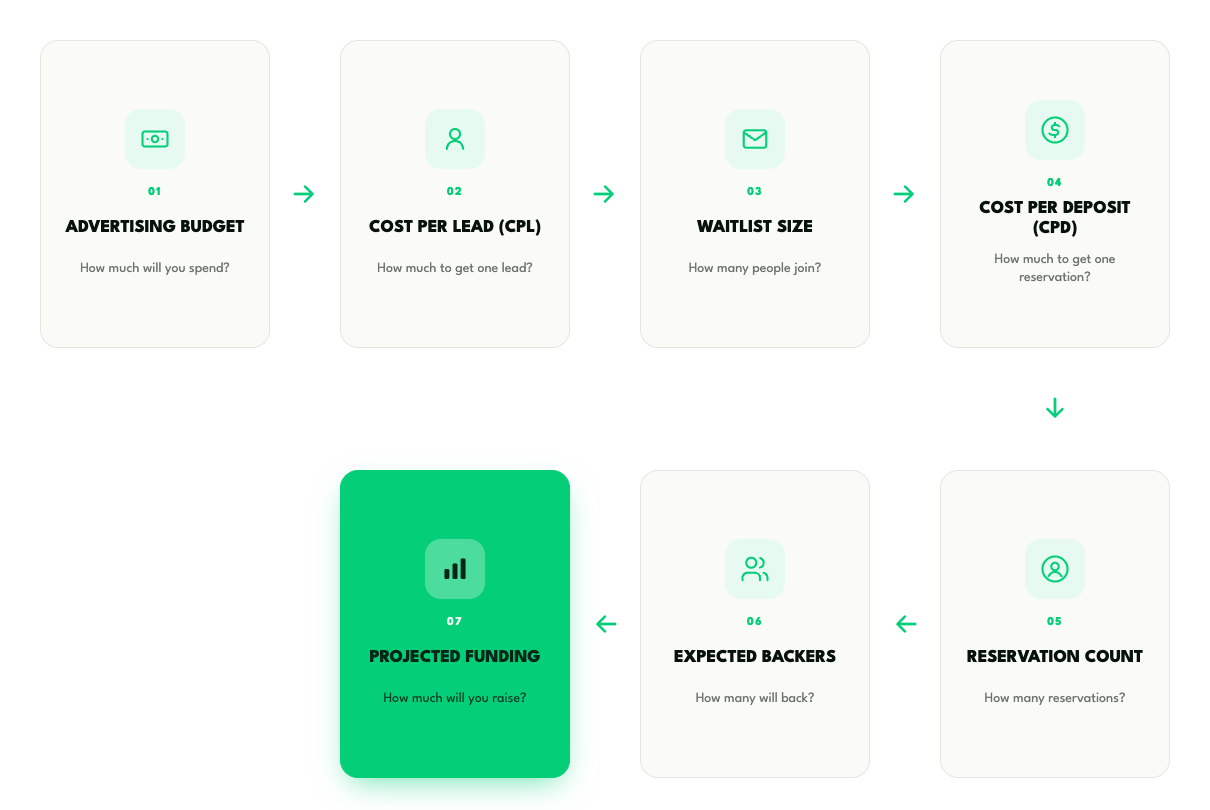
Validation doesn’t end with better marketing decisions. It also provides the data needed to forecast campaign performance with far greater accuracy.
These two metrics combined dramatically improve the accuracy of your campaign projections.
Lead-to-Backer Conversion.
One of the biggest unknowns in crowdfunding is how many people who join your email list will eventually back your project. Depending on the product, campaign, and audience, that conversion rate typically falls somewhere between 0.5% and 5%. While that may seem like a narrow range, it represents a 10x difference in projected campaign performance.
Deposit-to-Backer Conversion.
The picture becomes much clearer when you’re working with supporters who have placed a reservation. Across crowdfunding campaigns, these depositors generally convert into backers at a rate between 20% and 40%.
Not only is that conversion rate significantly higher, but it’s also far more predictable. Compare the two ranges: 40% is only twice 20%, while 5% is ten times 0.5%.
That’s why the reservation model has become such a powerful validation tool. It reduces uncertainty, giving creators much greater confidence when forecasting the number of backers and the funding they can realistically expect at launch.
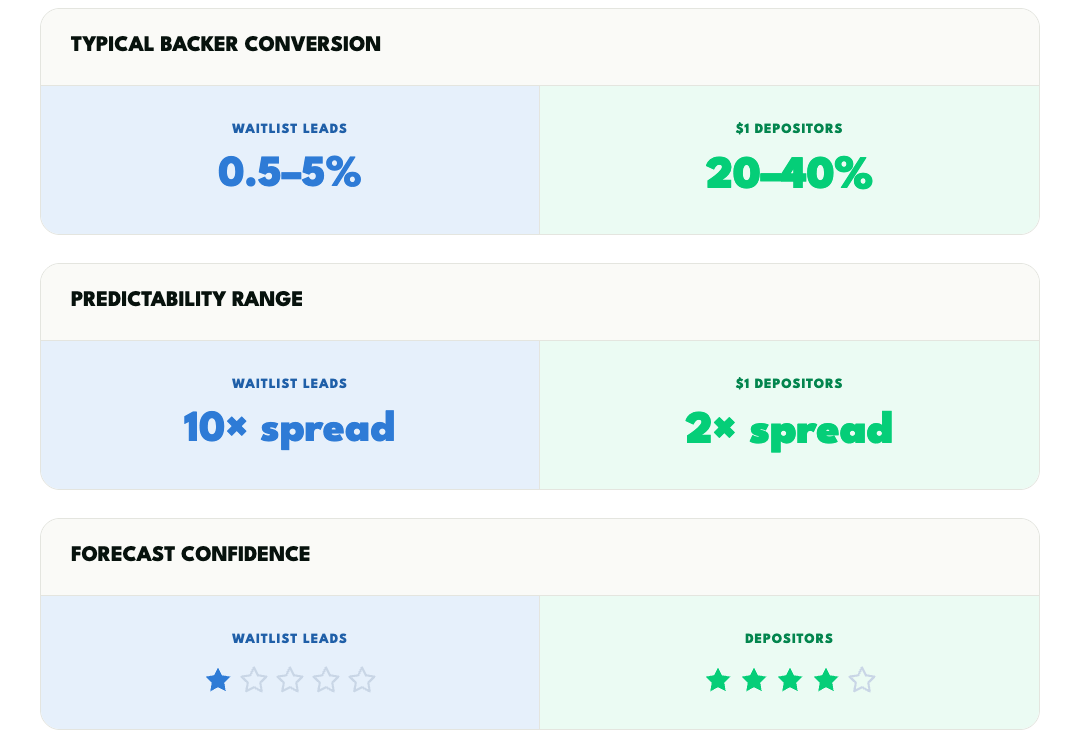
For founders, that increased predictability is invaluable.
Once creators understand how much it costs to generate a lead, how many leads convert into reservations, and how those reservations typically convert into Kickstarter backers, they can begin estimating the potential size of their campaign long before launch day.
Instead of asking, “How much do you think we’ll raise?”, they can ask much more practical questions.
- What happens if we double our advertising budget?
- What happens is we increase our AoV (Average Order Value)?
- What happens if our average newsletter click rate is above 4%?
Each improvement can be translated into expected leads, reservations, backers, and ultimately funding.
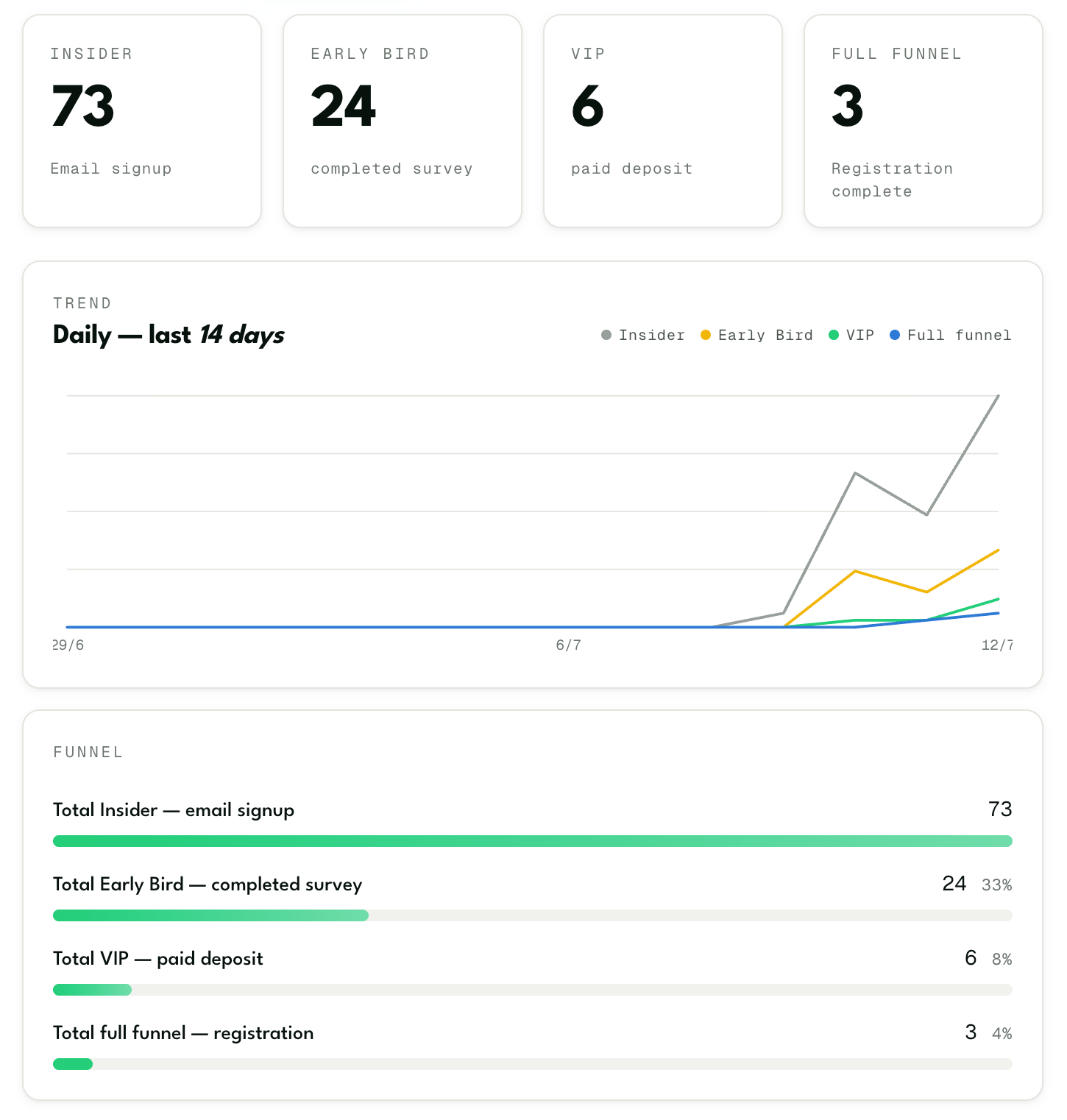
Building Future Finds
My own appreciation for validation didn’t come from spreadsheets or marketing dashboards. It came from experience.
As the founder of Remidi and later the co-founder and CMO of Scribit (along with Andrea Bulgarelli), I experienced firsthand how Kickstarter can transform an idea into a real company. Both products were shaped not only by engineering and design, but also by countless conversations with early adopters, community members, and future backers. Those interactions influenced everything from product decisions to communication strategy.

After those experiences, I founded AB-Launch, where I’ve had the opportunity to work alongside creators across technology, design, games, and consumer products. Together, we’ve helped launch more than 50 products and raise over $25 million through Kickstarter and Indiegogo.
Across all those campaigns, one pattern kept repeating. The products that performed best weren’t necessarily the most innovative or the most technically advanced. They were the products whose creators spent time validating their assumptions before asking people to fund them.
Sometimes, validation confirmed that a product was ready. Other times, it revealed that the audience was different from what was expected, that the messaging wasn’t clear enough, or that pricing needed adjustment. In many cases, those discoveries fundamentally improved the campaign, and occasionally the product itself.
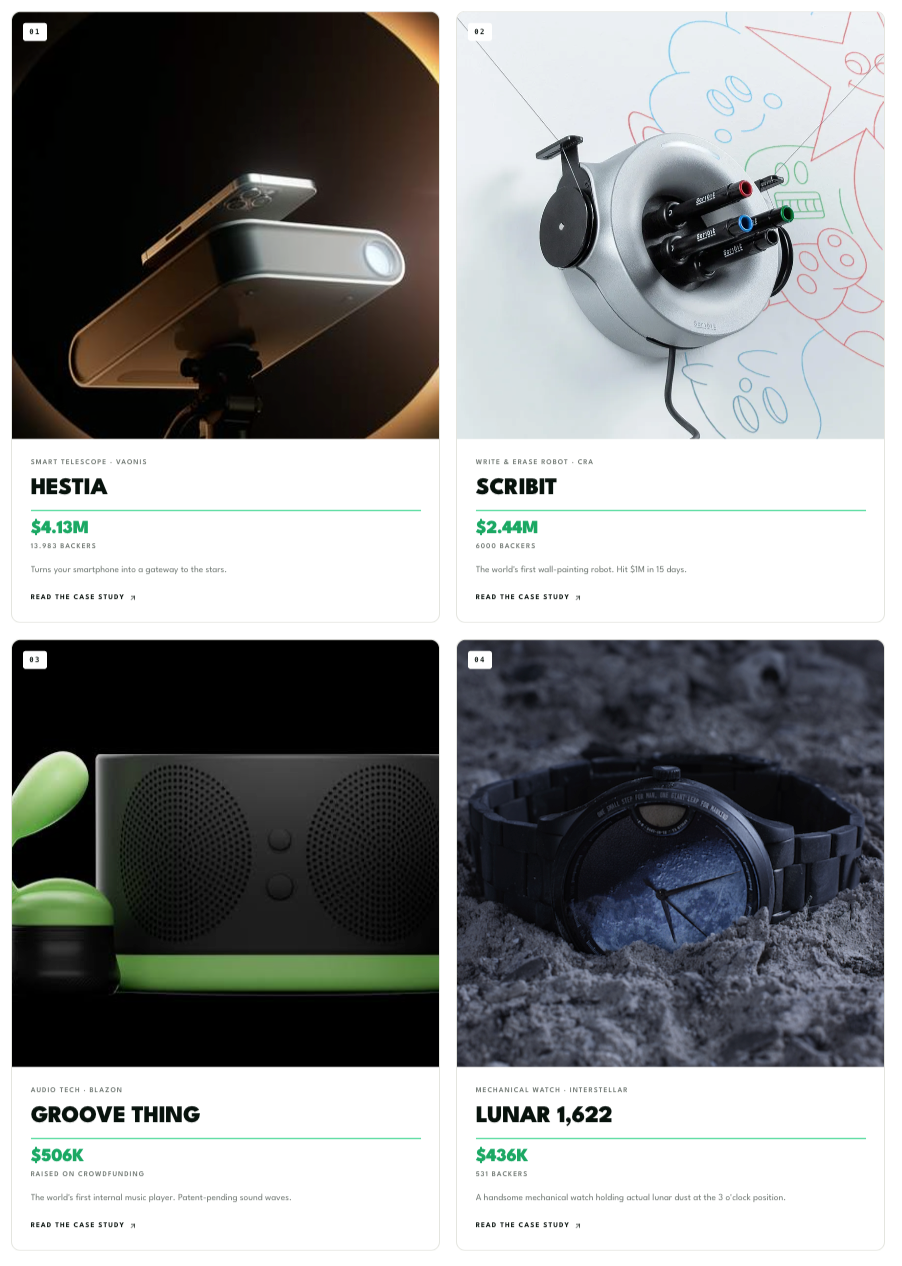
Those observations eventually became the foundation for Future Finds.
The goal wasn’t to replace agencies or traditional crowdfunding services. It was to lower the barrier to one of the most valuable parts of the entire launch process: validation. Through Future Finds, creators can validate their product with a structured pre-launch campaign by investing directly in their validation funnel rather than paying upfront service fees.
Our incentives remain aligned throughout the process: we only succeed when that early validation translates into successful crowdfunding campaigns.
Ready to predict your campaign’s success?
One of the most rewarding aspects of running validation for creators is watching uncertainty gradually turn into confidence.
Validation isn’t about removing all risk. Building something new will always involve uncertainty. What validation does is replace assumptions with evidence.
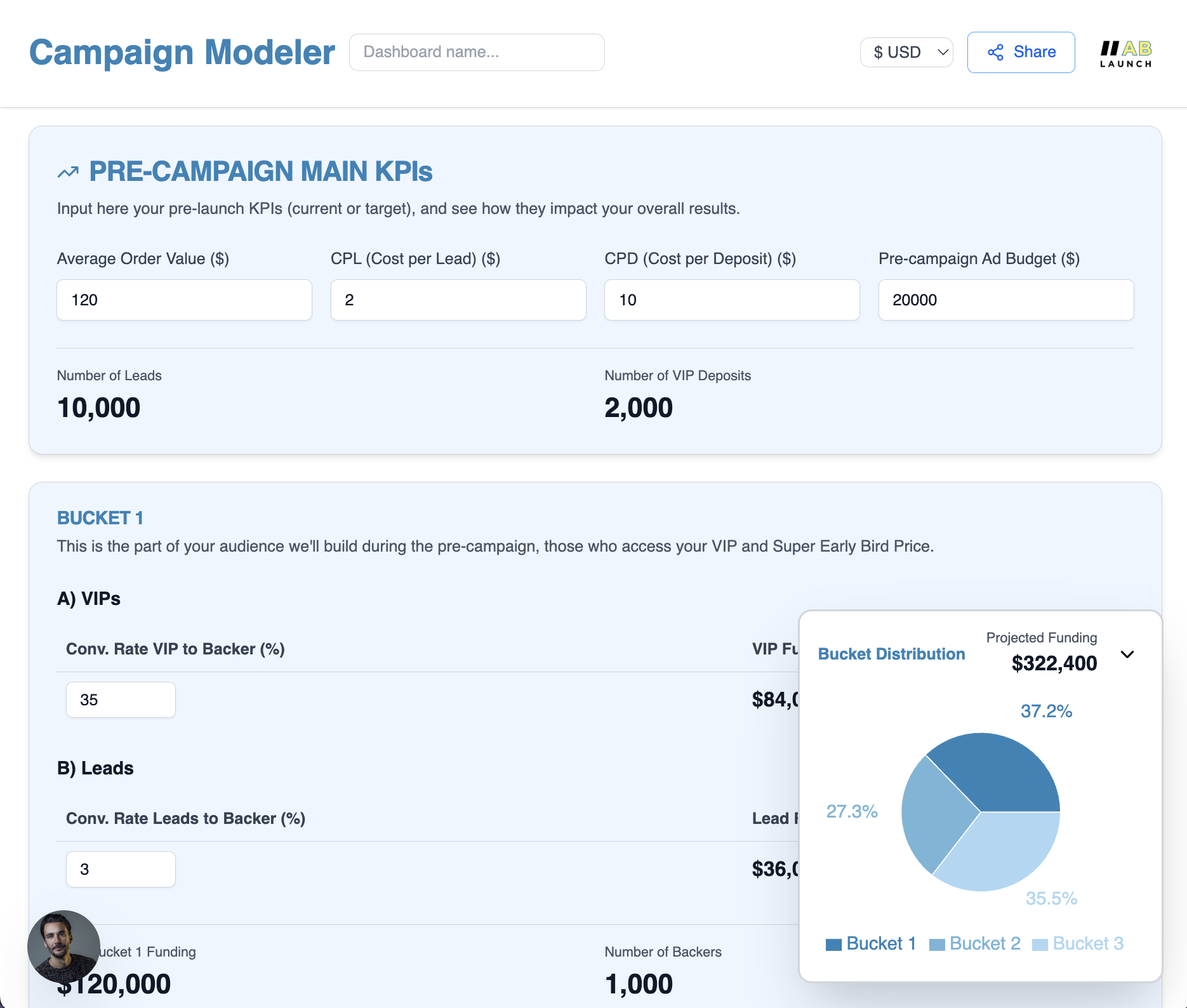
For creators running their own validation campaigns, we've developed the Campaign Modeler: an interactive forecasting tool that helps estimate campaign outcomes based on real validation metrics.
One of the key ideas behind the model is that not all Kickstarter backers come from the same place. In fact, the Modeler is based on the 3-bucket theory, which splits your Kickstarter audience into 3 different buckets:
- Bucket 1: Your Pre-launch audience
- Bucket 2: The live-campaign audience you reach through ads
- Bucket 3: The live-campaign audience you reach through organic traffic on Kickstarter.
By combining the audience split above with inputs such as advertising budget, Cost Per Lead, Cost Per Deposit, and AoV (Average Order Value), Creators can build realistic projections for leads, reservations, backers, and funding. More importantly, they can understand which variables have the biggest impact on their campaign, and where their efforts are most likely to pay off.
The Future of Product Validation
Looking back, almost everything I've learned about crowdfunding came through trial and error. From launching Remidi and Scribit to helping creators raise more than $25M through AB-Launch, every campaign reinforced the same lesson: validate earlier.
That's the idea behind Future Finds. We wanted to turn years of experience, experimentation, and market data into a simple process that helps creators make better decisions before they launch.
Over the next decade, I believe AI will enable millions of people to create products that would have been impossible just a few years ago.
But while AI can help generate ideas, write business plans, or design prototypes, it can't answer one fundamental question: will real people actually buy my product?
Great products deserve more than hope. They deserve evidence. And the earlier creators can gather that evidence, the better the businesses they'll build - not only on Kickstarter, but for years to come.
