
Acclaimed Cartoonist and Kickstarter Creator Juni Ba Discusses His Whirlwind Year
The Eisner Awards has bestowed three of their most prestigious nominations to Juni Ba for his Kickstarter-funded graphic novel, The Fables of Erkling Wood.

In 2021, Juni Ba transitioned into sequential art like he’d been there for decades. His major debut, TKO Studios’ Djeliya, offers a kinetic, winsome amalgamation of lore and heart conjured from the mythologies Ba devoured growing up in Senegal. The intervening five years witnessed a furious parade of new, bright works including Monkey Meat (2022), Mobilis (2023), The Unlikely Story of Felix and Macabber (Dark Horse), and The Boy Wonder (DC Comics).
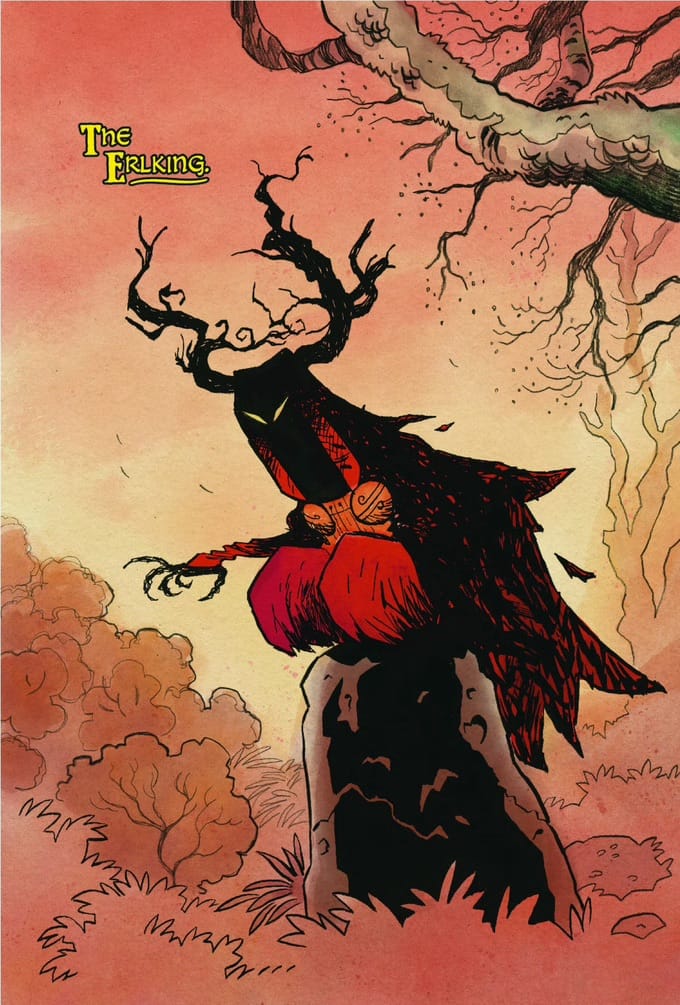
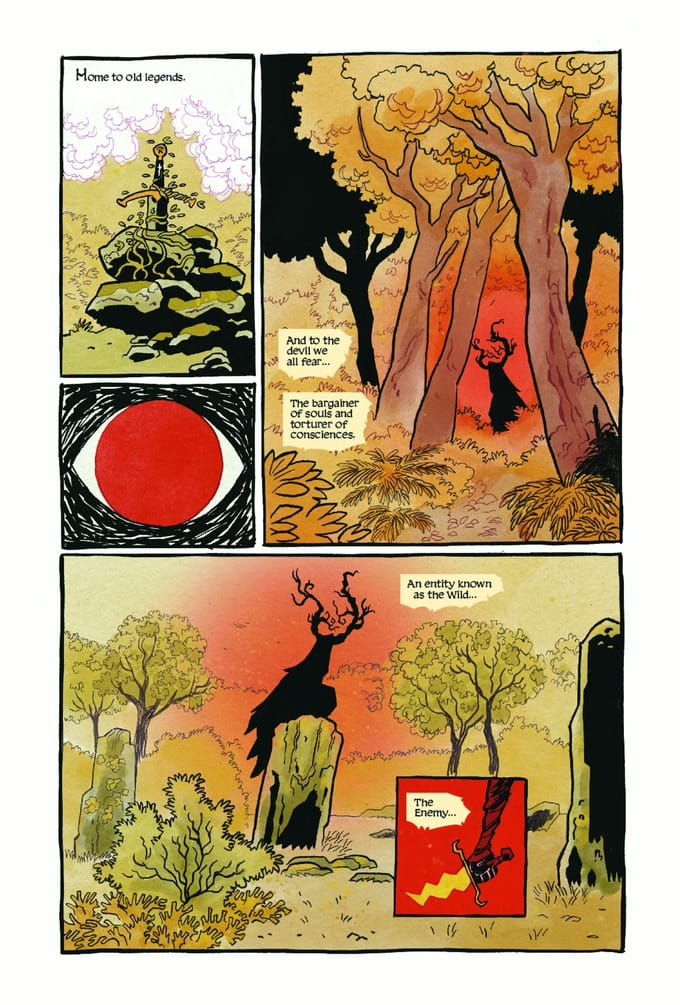
But 2026 is the year that’s made it impossible to ignore Ba. The Eisner Awards, whose ceremony is next week at San Diego Comic-Con, has bestowed three of their most prestigious nominations to the creator—Best Writer/Artist, Best Cover Artist, and Best Graphic Album. That latter nod goes to The Fables of Erlking Wood, a project launched exclusively on Kickstarter from Goats Flying Press. The cottage-core narrative winds through the lives touched by a Faustian figure attempting to lure passersby with intoxicating delights…at the cost of their souls.
Before San Diego Comic-Con, Ba caught up with Kickstarter to walk through his whirlwind year and acclaim.
Juni! THREE EISNER NOMINATIONS? These are also massive categories. What was your initial reaction when you read the news?
Pretty proud! I actually got nominated in exactly the categories I was hoping for. That same morning I was telling a friend I’d like to get those categories specifically, and a few hours later I got the email. Being able to put that Eisner emblem on one’s cover is a bit of a personal milestone.
How would you describe The Fables of Erlking Wood in your own words?
It’s a collection of stories set in a cozy/spooky magical forest. Each fable follows a different character, and we discover more about them as their stories intertwine and add depth and color to one another. Over time it focuses more and more on the devil of the woods, the Erlking, and how his deep loneliness has had various effects on other people’s lives. It’s a sort of meditation on self-inflicted isolation and the desire to find one’s place. In fact it’s part of a thematic throughline with my other books Boy Wonder and Mobilis.
Your bibliography has such an amazing diversity of genre and rhythm. From mainstream superhero projects like Boy Wonder to the hyperkinetic anthology sprint of Monkey Meat. How far out do you know your next project? Are your project choices premeditated or more spontaneous?
It’s based on whichever subject or themes I’m obsessed with right now. I usually know in advance as I’m working on a project, what the next one will be. I recently decided to slow down the pace as I’ve been quite productive in the last six years, but the result is I now have at least three different ideas for new books now. I just haven’t gotten to them all yet. The current one is a big endeavor.
How much do you see Fables as a return to the folk and fantasy established in your first major work, Djeliya?
Oh it’s very much like that. More cozy fairy tale than the more action-oriented Djeliya, but they share a common desire to explore the archetypal qualities of folklore stories. In fact Fables was almost about African folklore, but I decided to keep that aspect for the project I’m currently writing.
What were your favorite fables and folklore growing up in Senegal?
Very much stories involving Leuk the hare. I learned to read through those stories, and adults would try and spook us with threats of the hyena coming to eat us when we misbehaved, so I think it’s the most deeply embedded in my psyche.
The Erlking attempts to steal the souls of those who wander into his woods. Is there anything you'd trade your soul for?
I don’t know what it says about me right now but I think I’m content enough with my life that I wouldn’t need to trade my soul for anything!
I need to talk about your color palette. I love the slightly shifting hues and you (mostly ) seem to work in fills, with very subtle gradients. How did you develop your coloring style?
I think it was by looking at comics with striking and simple art. How they managed to tell the story without needing to be coated in all kinds of details. I really gravitated to that. Animation as well was a big inspiration. I think the key for me was that readability is the guiding principle and aesthetically pleasing, again to me, means going to the most iconic version of a thing you can figure out. Every so often I’d look at an artist and be amazed by the detail in their work though. The funny part is when I tell them so, they reply how much they like to learn to let go of that and emulate my style more. I suspect the lesson here is everyone is different, and no one is ever fully happy with themselves. Grass is always greener, etc.
A lot of comparisons have been made between your work and the 00s Cartoon Network renaissance. How much was animation an inspiration to you?
Oh absolutely. I usually see it as, my brain made a mix between Cartoon Network design sensibilities and the carved statues you could buy on the side of the road in Dakar. I think it subconsciously found a commonality there. In the drive to exaggerate, simplify, and iconize the subject. It scratches an itch in my brain when I can draw a 2D symbol and you still understand it’s a hand, or a head etc. It’s like magic.
