Author Eva St. John on the power of self-publishing
The prolific British author of science fiction and urban thrillers discusses process, everyday curiosity, and why she first used Kickstarter and keeps coming back.

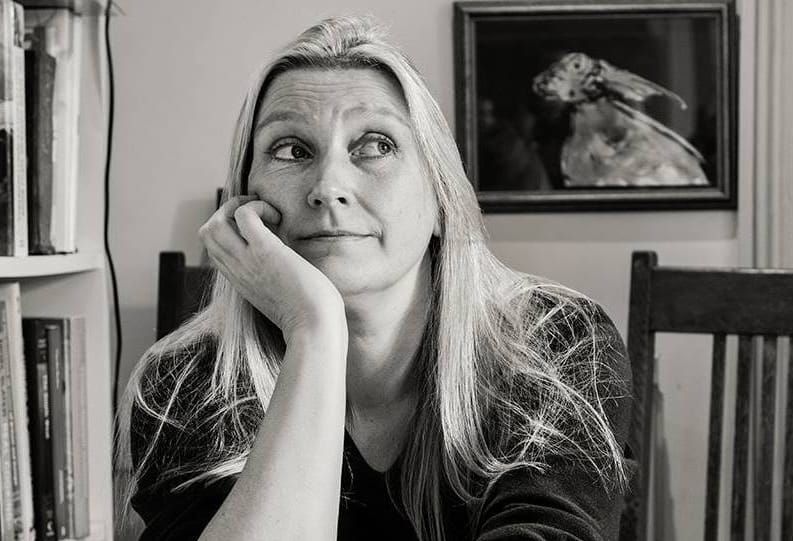
The prolific British author Eva St. John used Kickstarter for the first time for her supernatural thriller, Flint in the Bones. The book went on to win the 2026 Book Brunch Selfies Best Novel award.
St. John, who got her start working in libraries before opening a bookshop in Cornwall, UK, and now writing her own books, knows a lot about the written word. We reached out to her to speak with her about her choice to self-publish, her daily process (or lack thereof), and why she's never had creative blocks.
For you, what’s the value of self-publishing?
Power, control, freedom.
What made you decide to come to Kickstarter for the first time with Flint in the Bones? What surprised you about the experience?
I was watching fellow authors have success and I thought I would explore. I supported a few projects and enjoyed the experience as a consumer so I decided it felt like a good platform. I was surprised to discover a far greater contact with my backers. To me that was the absolute number one selling point. I’m a reserved person but have felt the community that I have built with my readers has been incredible. Trust me, I’m still not touchy feely, but their support and interactions have been so uplifting, and I think we are creating a wonderful team together.
I was surprised to discover a far greater contact with my backers. To me that was the absolute number one selling point. I’m a reserved person but have felt the community that I have built with my readers has been incredible.
You returned for Fire in the Flint as well as the collection edition of your Blood in the Maps series. What's made you come back?
Well, primarily it worked, so that’s always a good thing. But I could also see how much more I could do, as I understood the platform better and my readers desires. Both have been steep learning curves but learning new stuff is fun.
Your reward tiers are very equitable. It feels very inclusive to a variety of different people. Was this intentional, as far as making it a community project?
Absolutely. At every stage I wanted it to be fair. I didn’t want anyone to feel excluded due to financial or geographical restraints. Obviously, there are top tiers, but I wanted to make the first level tiers felt special as well. I also believe in generosity and when I started to hit some big goals I gave stuff away to everyone equally, regardless of their financial input.
 Anthea Sharp

You’re a prolific writer. What’s your daily process?
Winging it. I wish, wish, wish I had a process, but I’m too easily distracted. So, I just wake up and do what I want, bike ride, big walk, 4,000 words, all day edits, social media batching. Put a deadline in front of me where someone else is waiting for something from me, and then I focus. It’s not fair to ruin someone else’s livelihood so if they are waiting on me, I won’t let them down. (Maybe that’s the trick?)
Do you deal with creative blocks? How do you avoid burnout?
I write in a different genre, or swap focus. Words not flowing? Create a flip book. No ideas? Walk 20 miles. I’ve never had burnout. I get shattered but I don’t think that’s the same thing at all. My brain is always buzzing with something, so I just follow that thread. If it all gets too much, I just swap again. Burnout sounds vile.
I’ve never had burnout. I get shattered but I don’t think that’s the same thing at all.
Congrats on the Book Brunch Selfies Best Novel award. Is an honor like that something that keeps you going? What does it mean to you?
Gosh, that was quite the buzz. Obviously, I don’t do it for the awards otherwise I’d have given up ages ago! But I was utterly thrilled.
In your mind, what makes a good mystery?
Personally, it has to engage and surprise. I love it when I don’t see what’s coming, or I do see what’s coming but then left field, bang, something utterly unexpected. I love writing that does that. For me a great mystery engages the brain more than the heart but if it can also engage the heart that’s a bit of a chef’s kiss.
Spares by Michael Marshall Smith does this, as does the episode "18th and Potomac" from The West Wing. Two examples that still stay with me years later.
What does your curiosity look like? How do you explore things?
Well, it looks messy and all consuming. But I find most things interesting, nothing is dull if you find someone that really loves a thing and can tell you all about it. I owned a bookshop for years and my God, the things people would go on about. The rainfall pattern year on year in Swindon, the bus transportation system of Leicestershire. How mould on cheese grows.
In the hands of an enthusiast nothing is boring. I love hearing about it. And I guess that’s how my own curiosity grows, I hear or see something and I like to pull on that thread. Until the next new shiny grabs me.
I find most things interesting, nothing is dull if you find someone that really loves a thing and can tell you all about it... In the hands of an enthusiast nothing is boring.
What do you view as success? Failure?
Being happy is successful, being sad is failure. But both are natural and good for equilibrium. Having a good scream is as beneficial as a belly laugh.
What do you get out of this work and what has it taught you about yourself?
I’m not introspective so I doubt its taught me anything about myself. But I’m happy and so is everyone around me, and on the balance of probability, that sounds good to me.
I'm concerned I have come across as a bit of a Pippi Longstockings, but trust me, I also shout, swear and throw things around. I’m lazy and bad tempered and my family will be the first to attest to that. [laughs]
 Kickstarter