
Why Kickstarter Campaigns Fail After Funding (And How to Avoid It)
There are five common mistakes. Here's how you can sidestep each one.


Most stories about Kickstarter disasters make failure sound dramatic. And drama makes a good headline, no one can doubt that. Tales of impossible products or founders who disappear with the money draw a lot of attention.
But the reality of failure is almost always dull. Dull and avoidable. And this is a very good thing, because it means you can avoid most of it if you know what to look for.
Funded projects that come apart usually do so because of something small: a spreadsheet that was off by a third, a shipping quote nobody got in writing, or an update that was never sent to the backers.
The other good news: failing to deliver is uncommon to begin with. A research study done by Ethan R. Mollick at the University of Pennsylvania estimates that the range of Kickstarter campaigns that never deliver promised rewards ranges from 5 to 14 percent. That means about 9 in 10 campaigns deliver.
The very same research finds that when projects do fall apart, it’s usually not a matter of bad faith. The mistakes that cause failure to deliver don’t vary much between campaigns. Below, I’ll share the five common mistakes I see most often, and more importantly, tell you how you can sidestep each one.
Mistake #1: Treating funding day as the finish line.
The instinct after a big campaign is to exhale. After all, the campaign is a big public event that draws a ton of attention. But it’s after funding is over that the most demanding phase begins: turning pledges into delivered products. This part is only just beginning.
For creators who manufacture overseas, the realistic window from the day the campaign ends to the day the last rewards land is usually about twelve months.
Shipping late is the norm, not the exception, and the evidence for that claim runs far beyond any single study. A separate analysis by researchers Hauge and Chimahusky looked at 288 funded Kickstarter projects and found 61 percent shipped late, with delays turning up in every product category (documented in a peer-reviewed review). When CNNMoney ran its own count of the 50 highest-funded campaigns due by late 2012, only eight hit their delivery date.
And this is no relic of crowdfunding’s early days, either. In 2024, the major board game publisher CMON had acquired two stalled Kickstarter projects that raised a combined $3.2 million, and more than a year later, BoardGameWire reported that backers still hadn’t received an update.
But, crucially: late is not failed. Backers and seasoned publishers alike know that Kickstarter campaigns tend to ship a little on the slow side. Steve Jackson Games, which runs a lot of campaigns and publishes public status reports on each one, once told backers that a roughly one-month slip was “essentially on schedule for the average Kickstarter project.”
To avoid this mistake, the top thing you can do is build slack into your timeline before you launch. And build it into every stage too. The work is sequential, meaning that funds clear, then manufacturing, then freight, customs, and fulfillment. A delay at any step pushes everything else back.
Beyond that, the worst of the trouble starts when missed dates come and go with no explanation. You can avoid this by providing proactive updates if you think you’re going to miss your initial delivery timetable.
 Krista Santiago
Mistake #2: Underbudgeting shipping and fulfillment.
The most common money mistake is to set reward prices before you know what fulfillment will cost. Shipping, customs, duties, packaging, and per-order handling all add up fast. In the excitement of a launch, it’s easy to gloss over all these things.
This catches capable people, not just beginners. Candylab Toys raised $118,000 for its wooden toy cars and still got caught off guard by the hidden cost of fulfillment after the campaign closed. French board game maker FunForge absorbed about $250,000 in unexpected costs on a single campaign. They took it in stride and chose not to pass it on to backers, but they still ran more than three years late on delivery. A campaign that loses money on every shipment is one bad surprise away from not being able to ship, period.
It’s also worth mentioning that you don’t necessarily raise what the public number says. Kickstarter and payment partners collectively take 8 to 10 percent of funds, and not all cards charge. You could lose a few more percentage points of revenue to expired cards, cancellations, and the occasional refund request. Budget and order against funds you actually collect, not the headline total on the campaign page.
To avoid this mistake, start by getting real fulfillment quotes before you finalize reward prices. Then add a contingency buffer on top of your estimate. When in doubt, 20 to 30 percent is a good place to start. The creators who run into trouble here are often the ones who treat shipping as a detail to sort out later rather than a number to lock down early.
 Brandon Rollins
Mistake #3: Letting stretch goals and reward tiers become complicated.
New reward tiers, add-ons, and stretch goals feel like momentum during the campaign. But operationally, they become another item to source, kit, and ship. Each new item and variant is a new SKU. And that can turn generosity into complexity faster than you might think.
One self-published creator wrote a candid breakdown of a failed campaign and put the blame squarely on scope: too many tiers, a limited edition cover, a bundle, stickers, and a pamphlet. Their advice in hindsight was to start with two options, digital and physical, and nothing more.
Perhaps the most famous version of this story is the Coolest Cooler. It raised $13.3 million from more than 62,000 backers in 2014, which was a massive campaign at the time. Then the founder discovered that each cooler cost a whole lot more to build than the $200 he had initially charged. The company still shipped tens of thousands of units, but more than 20,000 backers never received theirs. The project shut down in 2019 after an Oregon settlement left unpaid backers eligible for just $20.
Now, again, that’s a truly extreme case. It probably won’t happen to you, and I’m selecting it because it’s vivid. But even so, to avoid problems like this, treat each stretch goal as a fulfillment commitment. Model the added cost and complexity before you make promises publicly. When in doubt, keep it simple.
 LaunchBoom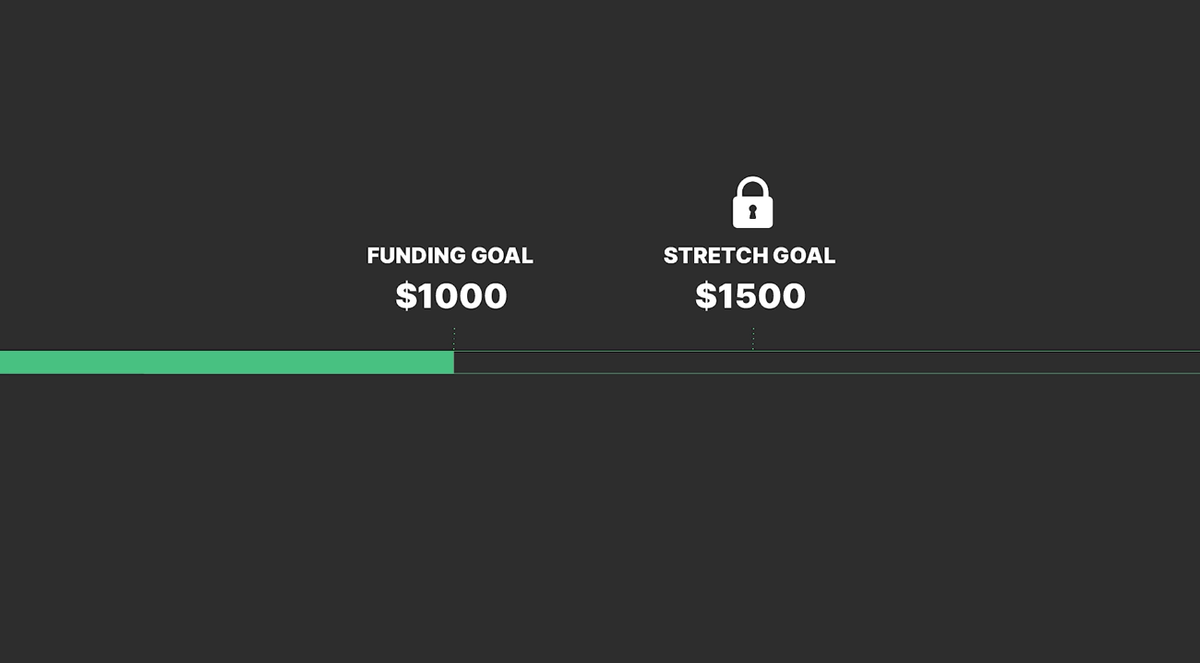
Mistake #4: Going quiet when things get hard.
There is one mistake that turns forgivable delays into lasting anger. Silence.
Backers can live with bad news. They do it all the time. But silence is intolerable.
If you spend time looking at creator and backer communities, you’ll see this pattern. People who back projects expect delays, and they joke about it, especially when campaigns blow past stretch goals. And they’re patient as long as the updates keep coming. The anger shows up during long stretches of silence, when there is nothing to anticipate and no sign anyone is still steering the ship.
The creators who hold onto backer goodwill through long delays tend to share one habit: a steady, public update on a fixed schedule, even if there’s little to say. Monthly is a reasonable floor. But no matter what, remember that a plain and timely update beats a polished one that never comes.
 Kickstarter
Mistake #5: Trying to handle logistics alone.
International shipping is where a lot of good campaigns go off the rails. First-time creators tend to underestimate just how tangled customs, value-added taxes, freight, and all the quirky regional rules of the world can be.
The telling detail here is that even large, experienced fulfillment companies do not take on the whole world alone. They lean on regional partners for the United Kingdom and European Union, Australia, and New Zealand. With every region, there is a different process for taxes, customs, and even biosecurity. For example, you generally need to register for VAT and an EORI number to ship into the UK, and your fulfillment partner is not legally allowed to act as your importer of record. (And how on earth would a creator just have that arcane information rattling around in their head?)
Unless your campaign is very small, this is where the right help pays for itself. Fulfillment is a business function to plan for and not a chore to improvise once pallets arrive at your apartment.
To avoid trouble here, you can choose one or more fulfillment partners before the campaign. Ask about their tracking rules and how they handle taxes and customs. And above all, get their quotes early so you can price your rewards accurately.
 Brandon Rollins
But Remember: Most Projects Deliver
I don’t want this to be lost in the negative framing of this article—failure is the exception. Most campaigns deliver. They might deliver a month or two late, but they deliver.
The creators who treat fulfillment as repeatable tend to keep coming back for more. Calamityware is a good example. It started in 2014 with a single porcelain plate decorated with flying monkeys. The team has since run more than 70 Kickstarter campaigns, scaling their fulfillment right alongside the business. Each campaign is built on a process that already worked.
The deeper lesson hiding in the stats is simple. There are two differences between campaigns that deliver and those that don’t: planning and communication.
 Kickstarter Staff
Final Thoughts
Kickstarter is not a traditional eCommerce environment. That’s why the phrase you’ll see around here is “Kickstarter is not a store.” Backers know that backing campaigns is at least a little risky.
The flipside is that the risks are knowable and largely avoidable. The five most potent actions you can take are to set honest timelines, price in fulfillment, keep your rewards simple, communicate even when it’s hard, and hire help when you need it.
And if you do that? You’re putting yourself squarely in the category of the 9 in 10 campaigns that deliver, with backers who will be glad to have taken a chance on you.
Need help shipping? Fulfillrite has helped ship thousands of Kickstarter campaigns for creators like you since 2010. If you need help with U.S. order fulfillment, including tariff assistance, contact us today for a free quote.
Brandon Rollins, MBA, is the Director of Marketing at Fulfillrite, proud provider of order fulfillment you can trust for eCommerce and crowdfunding.
