How An Annual Kickstarter Campaign Helped This Astrologer Grow His Business
Adam Elenbaas of Nightlight Daily Horoscopes explains why his yearly Kickstarter Campaign has become essential to what does.

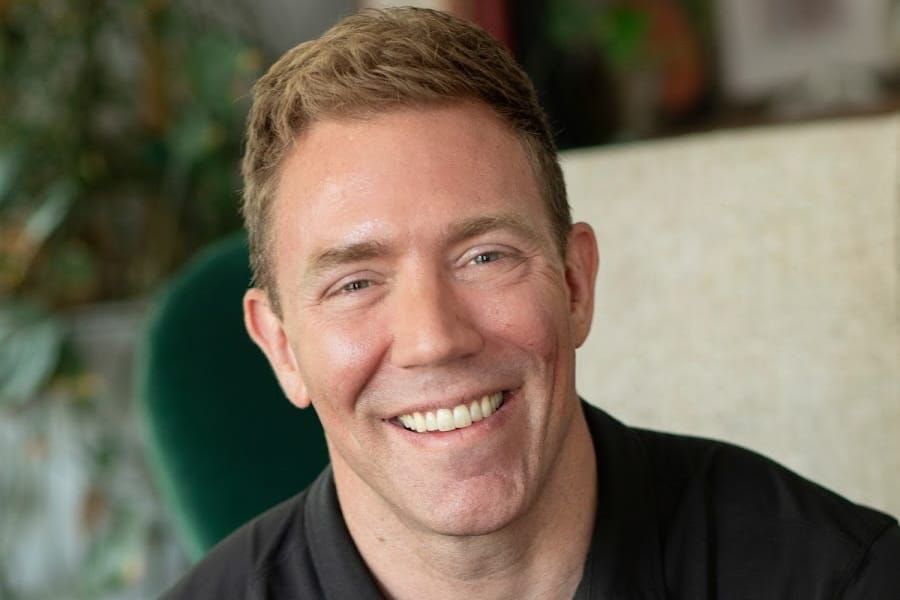
Adam Elenbass founded Nightlight Astrology in 2010, creating 300+ daily astrological horoscopes for his audience—an audience that keeps growing. As he puts it, "What began as a commitment to sharing astrology has become my spiritual practice, my livelihood, and a daily conversation with a community I’m deeply grateful to serve."
For the past 13 years, he's run a Kickstarter campaign, something that's become essential to his process (and his expanding business). As he explains on this year's campaign page: "During the final 40 days of the year, viewers, students, and friends come together to make the year ahead possible. Your generosity has sustained this work and helped it reach people around the world."
We were interested to hear more about what led Adam to Kickstarter in the first place and why he keeps coming back. We also wanted to dig into the path that led him to where he is today and what he gets from astrology and his Nightlight community.
What path led you to where you are today? What’s been the most surprising thing you’ve realized along the way?
Boy, finding a short answer to that question is hard. I grew up a preacher’s kid, and I was always drawn to the mystical, esoteric, and experiential dimensions of Christianity. Starting in 2005, I spent much of my twenties participating in ayahuasca ceremonies in South and Central America. Those experiences helped me recover from addiction and opened me up to a broader, more ecumenical view of spiritual life. I became interested in world religions and in folk and Indigenous traditions from around the world. Somewhere in the midst of all that, I fell in love with astrology.
At the time, I was in graduate school studying creative writing, first in a master’s program and then in an MFA program. One of the most surprising things was how naturally these parts of my life came together. I would encounter an image in a ceremony and recognize something of it in a myth or a piece of literature. Astrology gave me a language of archetype, myth, and metaphor that could hold all of those experiences together.
After graduate school, I was living in New York City and working as a social worker. I’d just written a book about my faith and my recovery, and I started practicing astrology and writing a daily blog. That was before podcasts and YouTube became the natural places to do this kind of work. Little by little, the daily writing became part of how I practiced astrology. There’s always something happening in the sky, some pattern you can spend time with and begin to notice in ordinary life. Over time, that daily attention became a spiritual practice in its own right.
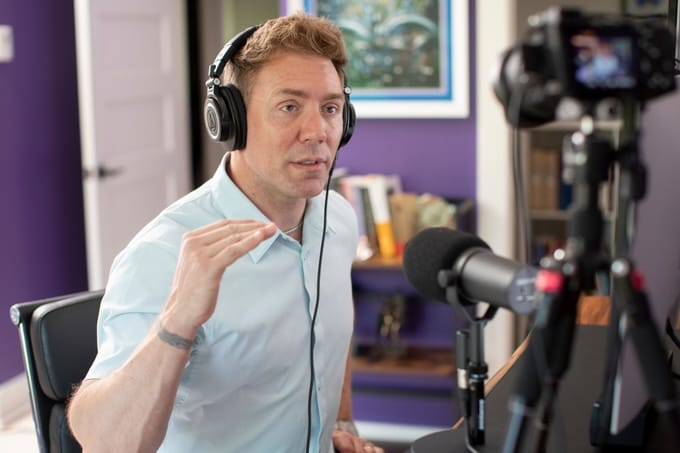
What first drew you to Kickstarter, and how has the platform contributed to your practice?
My blog had developed a following, and I was spending several hours a day writing it. I needed to figure out how to make a living doing it while keeping the work accessible. I was already offering readings by donation and classes on a sliding scale. I felt strongly that people shouldn’t be priced out of exploring a spiritual subject they were curious about.
So the idea for that first Kickstarter was pretty simple. I’d ask people to help fund another year of free astrology writing. If we reached the minimum I needed, I’d show up and do the work for the full year. That was the promise. The first campaign did better than I ever imagined, and I’ve come back to the same idea every year since. The generosity of the people who can give keeps the work available to everyone.
This is my 13th annual Kickstarter, and I really wouldn’t be here without it. It’s at the heart of how I make a living. Once a year, I ask the people who find value in the work to help fund the year ahead. It takes trust on both sides. People give because they trust that I’ll keep showing up, and I get to spend the rest of the year making something that anyone can sit down and read, watch, or listen to for free.
You talk about astrology as a daily activity, like meditation or writing. It feels like so much of your practice is about creating ritual through consistency. Can you speak to that?
What I love about some of the older astrological traditions, including traditions still practiced in India, is how closely the study of the sky can sit alongside a life of contemplation. That’s how astrology feels to me. It’s a kind of moving meditation. You sit down with the sky each day, notice what’s changing, and then go about your life and see where those same patterns of meaning show up. You learn something by doing it again tomorrow, and the next day, that you could never learn from looking at a chart once.
There’s something monastic about that rhythm for me, even though I’m a householder. I have a family, I have kids, and I have bills to pay. I’ve had to find a way to give that kind of regular attention to something I love in the middle of an ordinary family life. The daily writing and recording give me a way to do that. They’re how I sit down with the astrology, and they give other people a chance to sit with it, too.
I’ve been doing some version of this for seventeen years. The blog became a podcast and a YouTube channel, and there are little variations in how I work. But the part I love is still pretty simple. I sit down, look at the sky, and see what there is to notice today.
Speaking of your daily and annual work, do you deal with creative blocks? How do you avoid burnout?
All the time. Anyone who plays music, writes, makes art, or has any kind of daily practice knows there are days when you just don’t feel on. I’ve meditated daily for seventeen years, and I’ve been going to the gym for five. Some days I feel amazing after a workout. Other days I feel like trash. You keep going, and over time you get to know the practice in a way you couldn’t if you only showed up on the good days.
I think of those off days as the bitter herb that makes the soup taste good. I don’t enjoy them while they’re happening, but they’re a crucial ingredient in developing any real depth as a creative person. The thing that helps me with burnout is remembering how long the path is. I try to look at what’s developing over two, three, or four months. When I look at it that way, I can have a week where I feel off and let it be a week where I feel off. There’s usually still something growing that I can only see with a little distance.
You talk about wanting to grow your practice each year, even by one backer. How do you think about success and failure?
So far, we’ve had more backers with each Kickstarter. Even one more person matters to me because it tells me that the people who value the work are still willing to help sustain it. And this fall we passed 100,000 subscribers on YouTube. After all these years of showing up and making something every day, that felt wonderful.
The financial picture varies from year to year. We’ve had years where we raised more, years where we took a step back, and years where we grew again. From what we’ve seen, if we’re in the neighborhood of the previous year’s backer count, we’re likely to raise enough to be in good shape. The business has room for that variation. I care most about whether I’m still making work I’m proud of and whether there’s enough support to keep doing it well.
I also go into each campaign knowing what I’ve promised. If we meet the all-or-nothing funding goal, I’m going to make that full year of free content, even if the total falls short of what I’d hoped to raise. I’d feel like I’d failed if I stopped honoring that promise or let the quality of the work slip. Keeping my end of the bargain is what makes the generosity I’m asking of people feel real to me.
You’ve made astrology more accessible through Zoom and through financial support for people who couldn’t otherwise afford it. Why is that important to you?
I grew up a preacher’s kid. The people in my father’s congregation voted on whether he would get a raise, and they often voted it down. Some of them genuinely believed that if a minister earned more money, he’d become less focused on spiritual life. Watching that happen helped form my belief that people who do spiritual work deserve the chance to earn a good living and be as successful as anyone else.
That being said, I also believe that when you work with a spiritual tradition, you’re responsible for how you share it. I’ve spent a lot of time asking myself how to build a healthy business and be a good steward of a practice I find beautiful and spiritually powerful.
That’s where the free daily work, lots of free classes, free daily meditation meetups, sliding scales on readings and classes, and financial help with tuition all come from. I can meet people where they are and ask those who have the means to give generously. What I’ve learned is that I can earn a good living doing spiritual work and still make sure someone who has nothing to spend has a place to start.
For the kind of work you do, what are the most valuable resources?
Hands-on experience, without a doubt. Keeping an active client practice matters enormously to me. There’s a kind of insight you get from sitting down with someone and talking about how the astrology is showing up in the actual circumstances of their life. Teaching does something similar. Students ask real questions, and sometimes a question makes me look again at something I thought I understood.
Then there’s living with the transits day by day and paying attention to what I see. Working with clients, teaching, and living with the astrology are what drive the daily content. And of course I’m always reading, studying, and learning from other astrologers. All of that goes into what I have to say when I sit down to write or record.
 Kickstarter
What do you get out of this work?
Everyone on a spiritual path has their own way of drawing water from the well. For some people it’s prayer or time in nature. For others it’s journaling, therapy, or exercise. I’m fortunate that a significant part of my work feeds my soul. Every job has its share of chop wood, carry water, and mine certainly does. But I also get to live in what feels to me like an enchanted cosmos. I get to notice meaningful patterns and have some sense of the mystical in ordinary life. Astrology gives me a symbolic context for difficult experiences. It helps me stay centered when things are going really well or really poorly.
What the work has taught me about myself is that I’m someone who sticks with things. I see things through. And if I keep doing the best I can at something I deeply love, something I get to share with other people, the work keeps bringing out the best in me. It still teaches me. It still guides me. Seventeen years in, I’m still finding out what it has to teach me.