
What Creators Should Do When Rewards Arrive Damaged (Or Don't Arrive at All)
Most fulfillment advice stops at shipping. Here's what to do about the 1–5% of orders that won't make it in one piece.

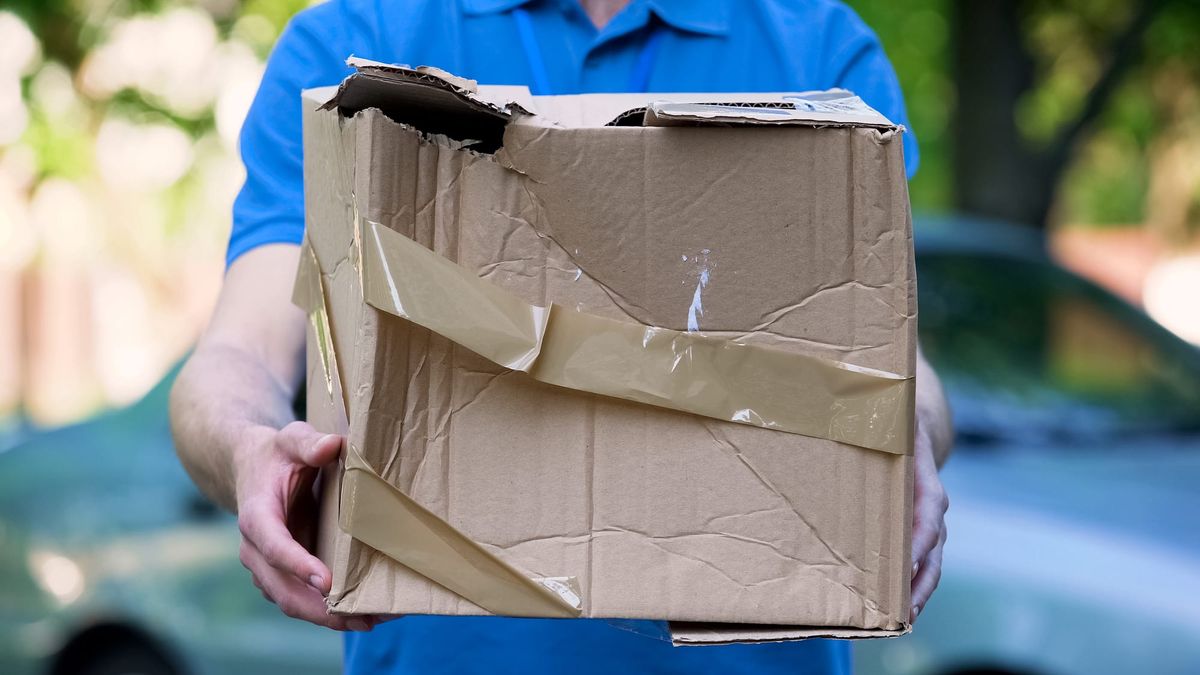
Most fulfillment advice stops when your rewards leave the warehouse. That sounds like a natural end, but it’s leaving something important out. Because the messy fact is that there is some percentage of orders that won’t go where they need to. And even the ones that do will sometimes show up in bad shape. So what do you do when this happens?
Depending on your product, packaging, and destinations, the damage rate for parcels ranges from 1% to 5%. Carriers lose and misdeliver more on top of that.
The occasional damaged or lost shipment is not a sign that your campaign failed. It’s simply a known and budgetable cost that comes along with shipping physical goods. The creators who handle it well have one thing in common: they planned early.
This guide talks about how you can set a replacement policy in advance, how to figure out what went wrong, what carrier claims cover (and don’t), and why making more stock than you need is the cheapest insurance you’ll ever buy.
The occasional damaged or lost shipment is not a sign that your campaign failed. It’s simply a known and budgetable cost that comes along with shipping physical goods.
Set Your Replacement Policy Before You Ship
It will probably happen at some point. A backer will email you a photo of a crushed box. You don’t want to have to invent a policy from scratch when that happens. So here are five things you’ll want to figure out before you start fulfilling orders:
- What you replace for free. Manufacturer defects and transit damage, typically.
- What you charge for. If the backer gives you the wrong address, you may choose to charge for replacements.
- Your claim window. How long do people have to notify you? A time frame of 30–60 days from delivery is a reasonable place to start.
- The evidence you need. Do you need photos of the item and the packaging? You’ll need both for carrier claims. But if someone doesn’t have proof, you need to know in advance: will you take them at their word?
- How backers reach you. A simple form beats email and direct messages.
Once you settle on your answers, publish your policy in your campaign FAQ and your pledge manager confirmation emails.
It’s also worth remembering that you are legally on the hook to ship what you say you’ll ship. Kickstarter's Terms of Use require creators to fulfill each reward or refund backers whose rewards they can't fulfill. Likewise, Kickstarter's creator obligations page spells out the expectation of honest communication throughout. If you need a model to study, check out the Stonemaier Games replacement parts policy.
 Kickstarter
The 3 Kinds of Fulfillment Problems
When a backer reports a problem, the first thing you will need to do is diagnose the problem. Every damaged or missing reward falls into one of three buckets. What you do next depends on what caused the problem in the first place. You have:
- Manufacturer defects. The item was wrong, broken, or incomplete before it entered the shipping box. That’s something you need to take up with the manufacturer.
- Carrier damage. The item was fine when it shipped and broken when it arrived. You can sometimes get the carrier to reimburse you.
- Lost or missing. The package never showed up, or tracking says “delivered” but the backer never received it. Sometimes you can file a carrier claim. Other times, you’ll simply need to send a reshipment.
To decide what you’re looking at, first check to see if tracking shows delivery. Then determine whether the outer box is damaged too, or just the contents inside. Are other backers reporting the same issue?
That last question matters the most of all. One warped game is bad luck. But if fifty backers report a missing component, that’s a production problem and you need to handle that through a different path.
 Eric Steuer
Manufacturer Defects
Isolated defects are simple. All you need to do is apologize and send a replacement from your reserve stock (which I talk about more below). Then you move on.
But if you have lots of defects, that’s a different story. If the same component is missing or broken across your support inbox, there’s a factory problem. You need to get in touch with your manufacturer. Your leverage at this point depends on your contract, your quality control documentation, and whether you approved a pre-production sample. If you photographed and approved a correct sample, you have a factual baseline to point to.
With that said, if you have products with multiple components and only one is regularly broken: ship the part, not the product. Stonemaier's policy exists partly because replacing an entire game over one missing token wastes money and effort for everyone involved. Mailing a single component in a padded envelope costs a few dollars. Reshipping a full reward costs you full freight, twice.
Isolated defects are simple. All you need to do is apologize and send a replacement from your reserve stock (which I talk about more below). Then you move on... But if you have lots of defects, that’s a different story.
Carrier Damage
If you give the carrier a good reason to believe they made a mistake, you have a chance of recovering some money as a result. But this is complicated, so it’s worth breaking down further.
Major US carriers assume your package is worth $100 unless you say otherwise. USPS includes up to $100 of insurance with Priority Mail and Ground Advantage, while UPS and FedEx include $100 of liability coverage per package. If your reward is worth more, you can pay to declare a higher value at label creation.
Declared value is not insurance. FedEx’s own declared value page is unusually candid about this. To be reimbursed, the shipment must be properly packed and the damage has to have resulted from the carrier’s negligence. That means if the carrier decides your packaging was insufficient, they will deny your claim. This is one of many reasons to invest in good packaging up front.
You also don’t have long to file claims, with USPS giving you just 60 days after the mailing date to act. And you need to have photos of the damaged shipment and proof of its value too.
Successful claims only recover declared value of the product. It won’t recover your time and it’s not fast. Treat claims as a partial cost recovery mechanism that runs in the background. It’s not as easy as filling out a form and getting reimbursed. It’s comparable to a credit card chargeback.
If you're working with a fulfillment partner, ask how they handle carrier claims. Most will file on your behalf.
 Brandon Rollins
Lost or Missing
Before you reship anything, you will need to know: Is the package lost, or just slow?
International shipments are especially bad about this. They can go dark for weeks. Customs holds and handoffs between carriers routinely result in two to four weeks of tracking silence. Of course, most of those packages still arrive (eventually). Set a waiting rule and hold yourself to it: for domestic shipments, 7–10 days past the delivery estimate is reasonable. For international, 3–4 weeks is more reasonable.
For US shipments, USPS offers a free Missing Mail Search that should be your first step before any claim. It finds a surprising number of packages sitting in sorting facilities.
Then you have tracking that says “delivered,” but the backer has nothing. This is either an address problem or a theft problem. According to SafeWise’s annual package theft report, US losses due to porch piracy are greater than $37 billion once retail replacement costs are counted. It doesn’t help that once carriers scan packages as delivered, they owe you nothing and there’s no claim to file. Your replacement policy is the only thing that governs what happens next.
Address errors deserve their own prevention plan. They’re very avoidable. Use your pledge manager's address validation, and lock addresses as close to your ship date as possible. Our post-campaign fulfillment timeline will help you decide when in the process to do this.
Why Overproducing Stock Is Always a Good Idea
Everything above gets dramatically easier when you have extra units on hand. Manufacturers build a small buffer already. PrintNinja, for example, produces an additional 2% overrun free of charge on board game runs so defective units can simply be discarded.
But 2% isn’t much of an overrun. You need more stock than just what’s required to fulfill the campaign. You need to also account for:
- Replacements for the damaged, defective, and lost rewards this article is about.
- Late pledges, which most campaigns now accept and which can meaningfully extend your sales.
- Post-campaign sales, especially if you plan to keep marketing after fulfillment.
For a campaign with no late pledges and no post-campaign push, it’s reasonable to overshoot your backer count by 15%. If you’re running late pledges, 25–30% is a better place to start. And if you intend to advertise aggressively after the campaign, you’ll need more still. (That’s something you will want to model out separately. Inventory planning is deeper than I can cover in one post.)
 Brandon Rollins
Talking to the Backer
When shipments show up damaged or go missing, most backers are understanding. You have an opportunity to not only win back their goodwill, but even make them like you better for handling a problem that, in their eyes, might not even be your fault.
A few rules of thumb to follow:
- Respond fast, resolve second. Always acknowledge issues within 24–48 hours even if you don’t have an answer yet.
- Don’t litigate fault with the backer. It might be the factory or the carrier. That’s not the backer’s concern. Get a working product in their hands first, then recover your costs second.
- Remember public relations. Most people will send a DM or email, but some will respond in the comments. Other backers can read that. If you handle the error quickly and positively in public, it wins trust with everyone else who reads it. This is the same basic concept I explored at length in this article on how to communicate Kickstarter delays without losing backer trust.
- Make reporting easy. Put copy-paste instructions in your FAQ telling backers what to send: order number, photos of item and packaging, and a short description of what happened. It cuts down on the back-and-forth.
When shipments show up damaged or go missing, most backers are understanding. You have an opportunity to not only win back their goodwill, but even make them like you better for handling a problem that, in their eyes, might not even be your fault.
Final Thoughts
If you ship enough products, some will be damaged and some will go missing. Even Amazon and Walmart deal with the same problem. What separates creators who handle shipping issues well from those that don’t is preparation.
Having a policy written before you start shipping is one of the best things you can do. Then from there, once you learn to triage problems, you can take the right action to fix them.
That can take a potential crisis and turn it into a rounding error. And your backers will certainly appreciate your attention to detail.
Brandon Rollins, MBA, is the Director of Marketing at Fulfillrite, proud provider of order fulfillment you can trust for eCommerce and crowdfunding.
