
What 30+ Crowdfunding Campaigns Taught Me About What Gets Funded
After losing $100,000 in a distributor deal, I turned to Kickstarter. More than 30 campaigns later, here's what I've learned about building products people want to back.

In 2018, I thought I had finally cracked it.
My porcelain kitchenware brand was selling through major department stores across Asia. Around 65 percent of my revenue came through distributors in Taiwan. Business was growing.
Then my distributors disappeared.
They vanished owing me a five-figure sum. Worse, they had quietly found my manufacturer in China and begun buying directly—cutting me out entirely. My S$100,000 manufacturing investment was gone. My retail relationships collapsed almost overnight.
"I went from growing to scrambling. It all fell apart at once."
What I did next—and what I've learned from running more than 30 crowdfunding campaigns since—is what this article is about.
How Kickstarter Became My Launchpad
After losing my distributor network, I moved production in-house, simplified my product lineup, and committed to selling directly to customers.
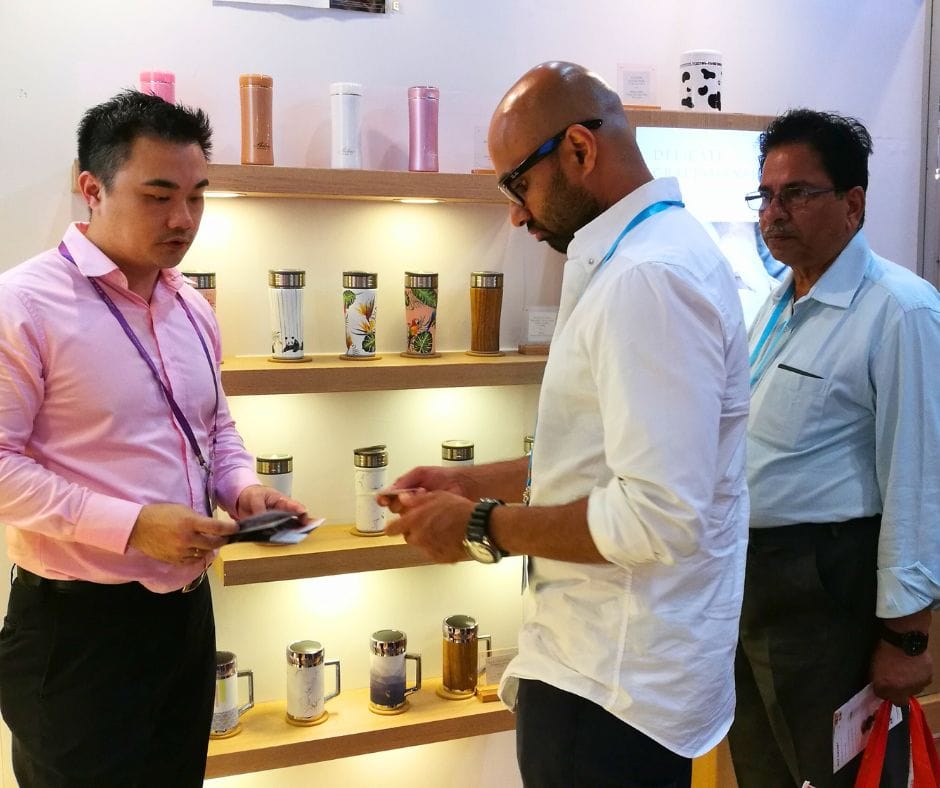
My first Kickstarter launch was Swanz, a premium porcelain drinkware and bento essentials brand I'd been developing. There were no retail agreements to negotiate and no middlemen who could walk away. Just a product page, a clear problem to solve, and a community of backers to convince.
That first campaign, built around a porcelain bento box, raised nearly S$250,000.
Not because the product was revolutionary.
Because it was familiar and meaningfully better.

Since that first Kickstarter campaign, I've led more than 30 successful crowdfunding campaigns across multiple international markets. Along the way, I've helped bring new products from concept to backers around the world, including two Taiwan campaigns that each raised NT$10 million.
Here are the lessons those campaigns taught me.
Lesson 1: The "Boring" Product Has an Unfair Advantage
My biggest Kickstarter winner wasn't a gadget, an app, or a disruptive new technology. It was a porcelain bento box.
"People laugh when I say porcelain. It's not exciting. But it solves a problem people have every single day."
That daily-use quality is a structural advantage. Backers don't need to be convinced they want a better lunch container—they already do. Your job is to show why yours is worth backing.
The mistake I see creators make is chasing "innovative" when "better" is often more fundable. A product that solves a familiar, recurring problem—eating, drinking, sleeping, organizing—already has an audience. A product that solves a problem people don't yet know they have must first create awareness before it can sell.
Lesson 1: The "Boring" Product Has an Unfair Advantage
My biggest Kickstarter winner was not a gadget, not an app, not a disruptive technology. It was a porcelain bento box.
"People laugh when I say porcelain. It's not exciting. But it solves a problem people have every single day."
That daily-use quality is a structural advantage. Backers don't need to be educated on why they want a better lunch container. They already want one. Your job is to prove yours is worth backing.
The mistake I see creators make is chasing "innovative" when "better" is more fundable. A product that solves a familiar, recurring problem — eating, drinking, sleeping, organizing — has a built-in audience. A product that solves a problem people don't know they have must first create awareness before it can sell.
Lesson 2: Validate Demand Before You Build
After losing my distributor network, I had no budget for guesswork. Every decision had to be grounded in real signals, not optimism.
I learned the hard way that believing in a product isn't the same as knowing people want it.
Kickstarter is a powerful validation platform, but the real validation begins before your campaign goes live. Here are a few tactics I rely on:
- Build a pre-launch page. If you can't attract around 1,000 interested subscribers before launch, your campaign may struggle to build momentum.
- Run consumer research. Tools like PickFu let you test your campaign image, headline, and messaging before investing in production or photography.
- Study what's already been funded. Look at successful campaigns in your category, identify the patterns behind them, and then find opportunities to improve on what's already out there.
A campaign that raises $700 against a $13,000 goal isn't necessarily a failure. Sometimes it's the cheapest market research you'll ever buy. It tells you something important before you invest even more time and money in the wrong direction.
Lesson 3: Market Customization Is Not Optional
My bento box raised nearly S$250,000 on Kickstarter. But when I launched essentially the same product in Taiwan, Japan, and Hong Kong, it didn't perform nearly as well.
That's when I realized something important.
"I expected that if something works in one market, it'll work everywhere. That's completely wrong."
Here's what customization actually looks like in practice:
- Visuals and messaging: Japanese backers often respond to minimalist product photography and precise, technical language. U.S. backers tend to respond more strongly to lifestyle imagery and emotional storytelling. The same photo won't perform equally in every market.
- Product details: Portion sizes, grip dimensions, color options—small changes can determine whether a product feels designed for a specific audience or adapted from somewhere else.
- Platform culture: Every crowdfunding platform has its own community, pricing expectations, and content norms. A Kickstarter campaign shouldn't simply be copied and pasted onto another platform.
Today, I build localized campaigns for every market. The production pipeline stays largely the same, but the creative, messaging, and strategy are tailored for each audience.
Lesson 4: Your Pre-Launch Page Is Your Most Underrated Asset
Before spending on production, ads, or creative, build a pre-launch page.
It's one of the most overlooked parts of preparing a Kickstarter campaign. Many creators spend months perfecting their campaign page but far less time building the audience that will actually be there on launch day.
"Most creators focus on making the campaign beautiful. Fewer focus on whether anyone is actually waiting for them on Day 1."
A strong pre-launch page serves three purposes. It builds your email list, lets you test your messaging before launch, and gives you an engaged audience to notify the moment your campaign goes live.
Why does Day 1 matter? Campaigns that build strong momentum in their first 48 hours are more likely to gain visibility on Kickstarter, creating a compounding effect that can help attract even more backers. Launching without an audience means you're starting that climb from scratch.
For larger consumer product campaigns, I typically aim to collect between 5,000 and 10,000 email subscribers before launch. It's not a guarantee of success, but it meaningfully improves your chances.
Lesson 5: Solve a Real Pain Point—Then Let Your Prototype Prove It
My most recent product, a graphene-coated lunch box developed in collaboration with the National University of Singapore (NUS), was built around one specific, testable problem: food sticking to the inside of conventional lunch containers.
The prototype took months to develop.
That time was the whole point.
"At the end of the day, it is always about solving a pain point for consumers. The prototype is how you prove that your solution actually works."
Backers believe what they can see.
A working prototype—even an early-stage one—is far more persuasive than a rendering or concept deck. When I'm preparing a campaign, I focus on three things:
- Show the problem before the solution. If your product eliminates mess, show the mess first. Help people experience the frustration before demonstrating how your product removes it.
- Film the product in use. A 30-second video of your product solving the exact problem it was designed to solve is often more compelling than a three-minute feature overview.
- Be transparent about where you are. Early backers understand they're supporting products that are still in development. Pretending a prototype is production-ready only creates problems later, when it's time to fulfill rewards.
What I'd Tell Every Creator Starting Out
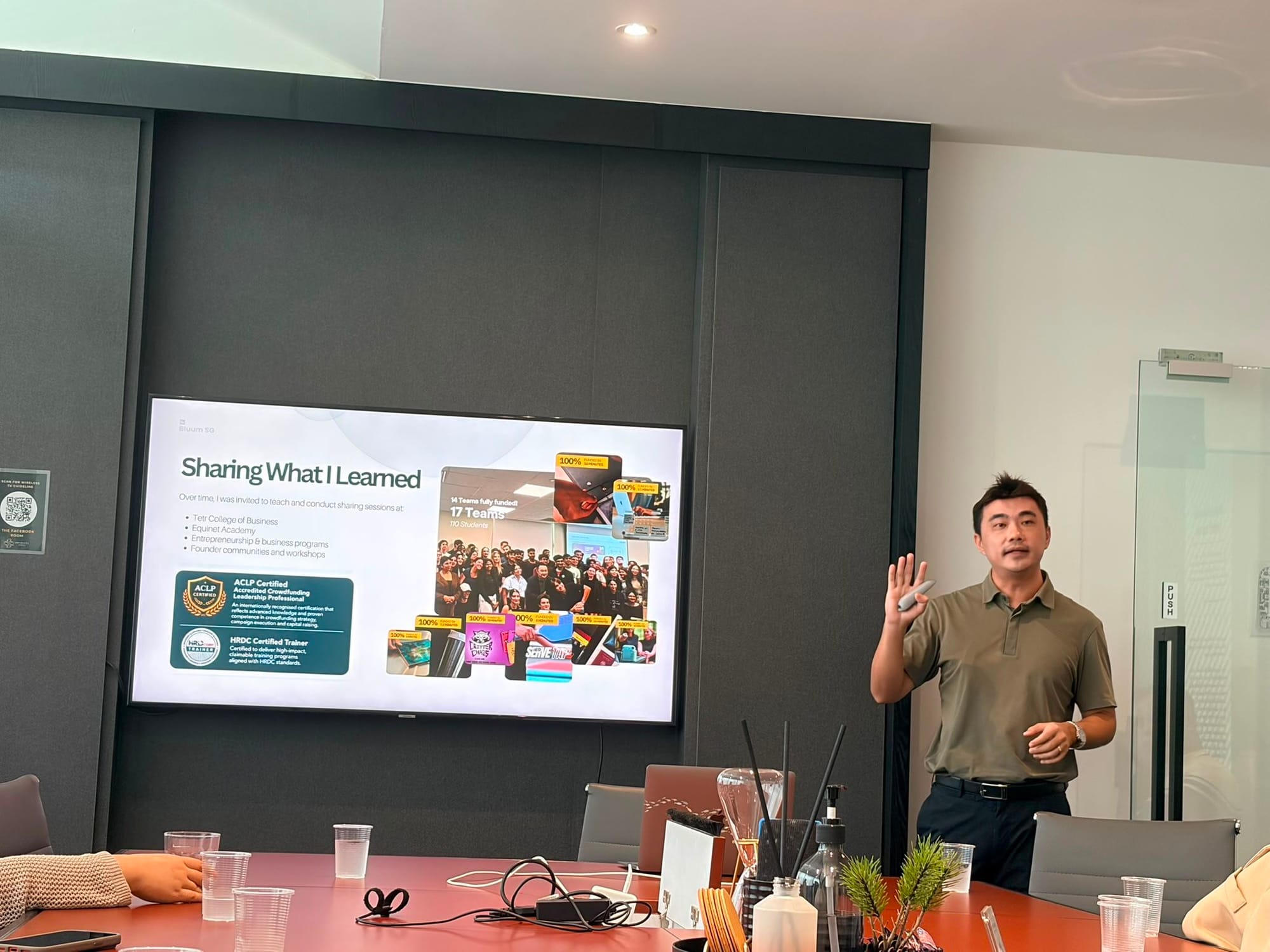
Today, my work spans more than 30 crowdfunding campaigns across five countries and six crowdfunding platforms. Along the way, my work in product innovation and crowdfunding has been recognized by the World Intellectual Property Organization, Nanyang Technological University, and the National University of Singapore.
But none of that started with a breakthrough invention.
It started with a porcelain bento box, a pre-launch email list, and a decision to sell directly to the people who wanted what I made instead of relying on middlemen who could disappear overnight.
"Kickstarter was the platform that let me go from near-zero to building something real. But it's not magic. It rewards the work you put in before you launch."
Looking back, I've seen the same principles repeat themselves across dozens of campaigns, multiple markets, and years of iteration:
- Build something people already want.
- Validate demand before you invest.
- Adapt your strategy for each market.
- Build your audience before launch.
- Prove your product works before asking people to believe in it.
That's the framework.
The product is yours to build.
